Contents
Cycling Koh Samui means one loop and one honest warning. Route 4169, the island’s ring road, circles the coast for about 51km, mixing a flat, easy north shore with a broken bottleneck through Nathon and interior spurs that ramp past 20% gradient. A fit rider clears the whole loop in a morning from a 6am start; the real risk on this island is the road itself, not the distance.
Key takeaways
- Route 4169 runs about 51km around the island; a fit road cyclist covers it in roughly 3-3.5 hours moving time, a casual rider in 5-7 hours with stops.
- Interior access roads above Chaweng and Lamai, and the spur toward Na Muang, include broken-concrete ramps riders commonly report at 15-20%+ — gear for it or plan to walk sections.
- Sunrise sits at 5:50-6:00am March-September and 6:15-6:25am October-February, so a 6am start is the only way to get real riding done before the heat and traffic both build.
- Thailand’s road traffic death rate is 25.4 per 100,000 people (WHO, 2021 data) — nearly double the global average of 15.0 — and a bicycle shares that same road with no separate lane for most of the loop.
- Convenience stores line the developed east and north coast every few kilometres; they thin out to 8-10km apart on the quiet southwest stretch near Taling Ngam.
What This Actually Is
This is a routes-and-risk page, not a rental guide — for scooter, car and village bicycle-hire prices, see Getting Around Koh Samui. It covers the one thing Samui offers a road or gravel cyclist: a full-island loop, a short list of genuinely steep interior climbs, and a road environment that must be taken seriously, not romanticised. There is no dedicated cycling infrastructure, no marked bike lane on Route 4169, and no purpose-built mountain-bike park — just a small, self-organised scene that has worked out which roads are worth riding and which hours are survivable.
Who Is In It
Five overlapping groups ride here, none with a public schedule. Thai club riders — the early-morning paceline groups common across provincial Thailand — turn up on the flatter coast sections before 7am, though no single Samui-based club with a public page could be confirmed. Resort-hire tourists on single- or three-speed hybrids stick to short, flat stretches around Maenam, Bophut and Choeng Mon — transport to the beach, per the getting-around guide, not ring-road transport. A small, serious expat contingent rides the full loop or interior climbs before work on proper road and gravel bikes. A triathlon and multisport crowd trains here too, feeding the Koh Samui sport year’s calendar. And a handful of independent mountain bikers treat the interior’s steep concrete lanes and dirt tracks above Chaweng and Lamai as an improvised trail network, since no formal one exists.
How It Works
The pattern is dawn-driven, not calendar-driven: riders are out and back before most of the island is awake, since both heat and traffic worsen by the hour after sunrise. A typical session is the full Route 4169 loop, a shorter out-and-back on the flat north coast, or an interior session stacking the climbs above Chaweng, Lamai and the Na Muang road into a smaller, harder loop. Nobody organises starts publicly; riders who know each other message directly rather than post a time and place.
What It Costs
Riding costs nothing beyond water and a bike. Village-level rentals run about 150-250 THB (~4.50-7 USD) a day per the getting-around guide — fine for a flat coastal potter, useless for the ring road or the climbs below, since these are single-speed beach cruisers, not geared machines. A rider planning the full loop or the interior needs a proper road or gravel bike, which on Samui almost always means owning one (see The Scene, below).
How to Join
There is no club to sign up for and no confirmed weekly ride. The honest way in is to ride the loop yourself from a north-coast beach town at first light, visibly out on the coast road before 6:30am if you want a chance of crossing paths with the resident contingent — the same “just be there” logic that governs Koh Samui’s dawn paddleboarders. A decent bike, lights and an early start matter more than any introduction.
The Loop — Riding Route 4169
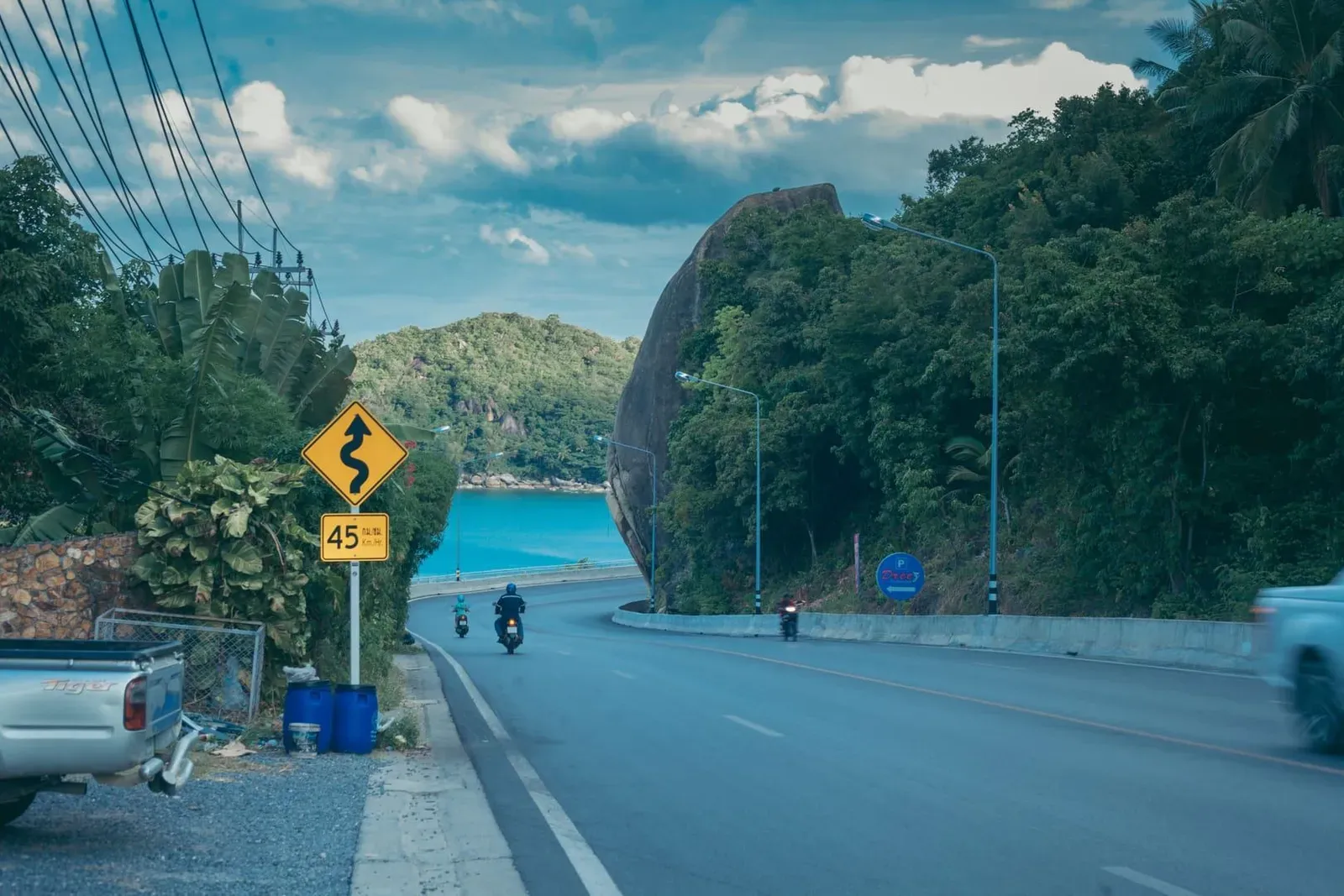
Route 4169 is a single paved two-lane road circling the island for about 51km, linking Nathon, Lipa Noi, Taling Ngam, Lamai, Chaweng, Choeng Mon, Bophut and Maenam — the same loop the getting-around guide clocks at 1.5-2 hours non-stop by scooter or car. Most serious riders go counter-clockwise from the north coast: the stretch past Bophut and Maenam is flat, well-paved and quiet at dawn, so it makes sense to bank those easy kilometres first, take the short, unavoidable pinch through Nathon’s port traffic once it can’t be timed away, then close along the quieter southwest past Taling Ngam and Thong Krut before the late-morning heat peaks. Riders consistently rate Nathon’s narrow lanes and port-bound buses and trucks as the stretch they like least — distinct from the evening congestion the getting-around guide flags through central Chaweng and Lamai.
Climbing on the loop itself is modest and rolling rather than mountainous, concentrated around the Taling Ngam-Lipa Noi headland and the low ridge between Lamai and Chaweng; riders commonly estimate 400-600m for the full circuit, though no official survey figure exists. A fit road cyclist covers the full 51km, Nathon pinch included, in roughly 3-3.5 hours moving time; a casual rider on a hybrid, stopping for photos, food and heat, should budget 5-7 hours as a full day out.
The Climbs — Where the Interior Bites
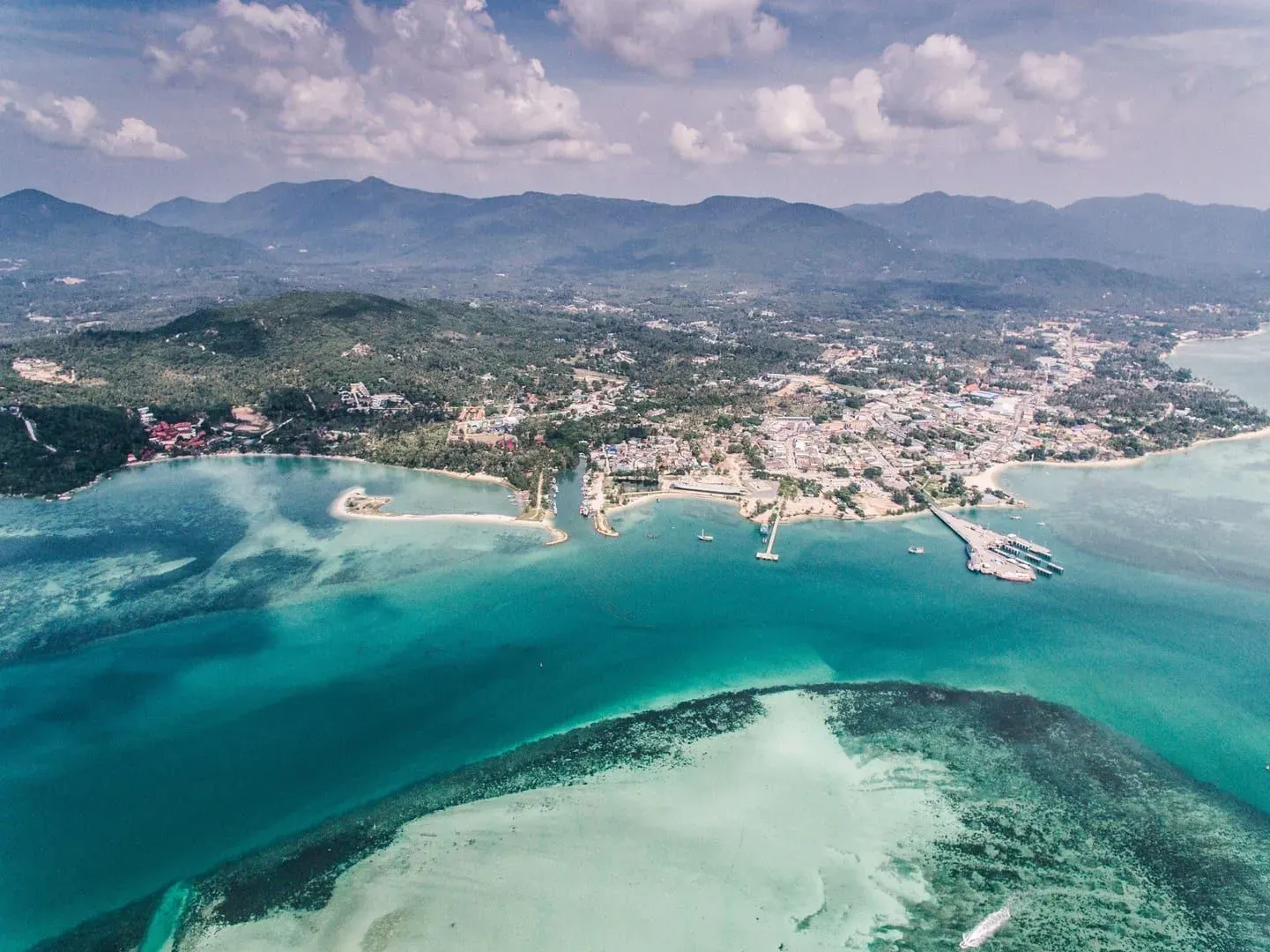
The flat coast road is not where Koh Samui’s cycling gets hard — the interior is. Hillside access lanes above Chaweng and Lamai serve resorts and viewpoints on genuinely steep monsoon terrain, and because asphalt erodes fast on these grades, most were laid in concrete instead. Riders who have climbed them consistently report ramps of 15-20%+ on the steepest sections — enough to stop standard road or hybrid gearing dead, and to demand a compact or gravel-range crankset plus a willingness to walk short pitches. No official gradient survey exists; treat these figures as rider-reported, not measured.
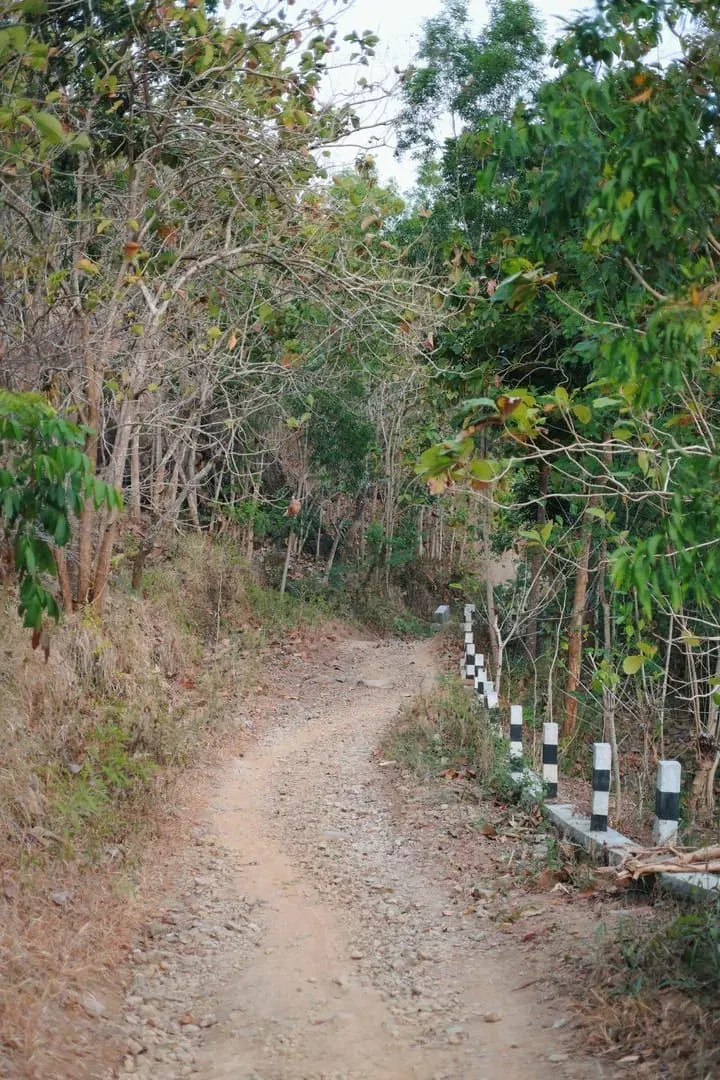
The paved spur toward Na Muang Waterfalls is a gentler, fully rideable climb into the interior — a reasonable introduction before anything steeper. Samui’s viewpoint roads are more mixed: the paved lanes to Overlap Stone and the Lamai Viewpoint turnoffs stay rideable as far as their car parks, but the access road to the Secret Buddha Garden climbs steeply enough that even the site’s own guide recommends a scooter, 4WD or tour over self-drive — a fair warning for a cyclist too. Beyond the paved sections, tracks toward the island’s higher interior points degrade to cracked, algae-slick concrete or bare dirt that wants a gravel or mountain bike, and in the wet season, a hike-a-bike rather than a ride.
The Heat, With Numbers
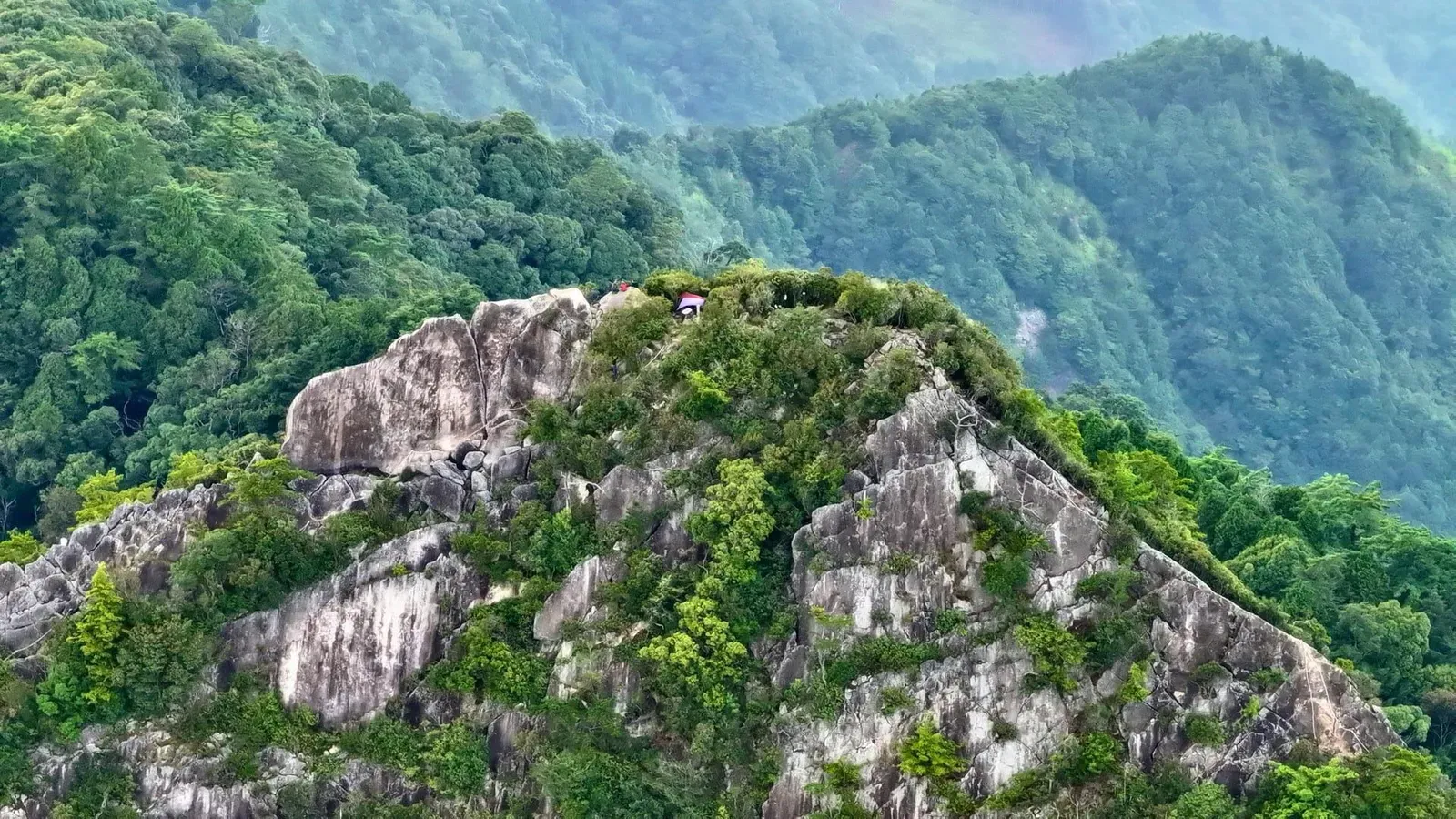
Koh Samui sits close enough to the equator that sunrise barely moves across the year — 5:50-6:00am March-September, 6:15-6:25am October-February, per Wikipedia’s climate summary for Ko Samui — and dawn air temperature tracks the island’s average overnight low of 24.0-26.0°C year-round. Daytime highs climb fast after that: 29-30°C through the December-February dry season, rising to a 32.9°C May peak, per the site’s own month-by-month climate table. An exact dawn humidity reading for Samui wasn’t found in sources checked, but the effect is well documented in tropical climates generally: sweat evaporates poorly in humid heat, so a rider loses fluid and sodium faster than the air temperature alone suggests. A 6am start isn’t a nice-to-have for most of the year — by 8-9am, UV intensity and traffic are both climbing fast this close to the equator.
Plan fluid and electrolyte intake on anything over 90 minutes — plain water doesn’t replace the sodium lost to tropical sweat rates, and cramping riders here are usually under-salted, not under-hydrated. Convenience stores, overwhelmingly 7-Eleven, are dense from Chaweng through Bophut, appearing every few kilometres; they space out to roughly 8-10km apart on the quieter southwest run past Taling Ngam and Thong Krut, so carry more water than feels necessary before that stretch. See Is Koh Samui Safe? for the island’s broader heat guidance.
The Scene
Samui’s cycling scene splits by equipment and intent. Village and resort bicycle-hire (150-250 THB/day) means a basic single- or three-speed beach cruiser suited to short, flat trips — the getting-around guide is explicit that Route 4169’s narrow-to-nonexistent shoulders and heat make this impractical for ring-road distance, let alone the interior climbs. No dedicated performance road- or gravel-bike rental operation with a public website could be confirmed on the island, which means a rider planning the full loop or the interior is, in practice, riding their own bike.
That makes flying a bike in worth considering for anyone past a village potter. Most international carriers accept a boxed bike as a single piece of oversized sports luggage for a fee, and Samui International Airport handles this kind of baggage routinely. Given the interior’s gearing demands, bringing a properly geared bike beats trusting rental quality. On repairs: basic parts (tubes, chains, brake pads) are stocked at small hardware and motorbike shops in Chaweng, Lamai, Nathon and Maenam, but specialist road or MTB parts — tubeless sealant, hydraulic disc pads, a particular tyre size — are not reliably available, so bring spares rather than count on a local supply.
The Danger — Read This Before You Ride
This section is not softened, because the numbers don’t allow it. Thailand’s road traffic death rate is 25.4 per 100,000 people (WHO Global Status Report on Road Safety, 2021 data) — nearly double the global average of 15.0. Nationally, Thailand recorded 17,447 road deaths in 2024, 14,144 involving motorcycles, per WHO Thailand data cited in the site’s own road-safety guide. Samui itself records roughly 3,000 road accidents and about 50 deaths a year, tourists among ~30% of fatalities — see Getting Around Koh Samui. No source separately tracks cyclist deaths or injuries here; the data is overwhelmingly motorcycle-dominated and doesn’t disaggregate a pedal cyclist on the same road.
Route 4169 has narrow or nonexistent shoulders for long stretches, exactly as the getting-around guide notes for bicycles specifically. Scooters undertake on the inside without warning, tour vans and songthaews overtake on blind coastal bends, and stray dogs — a rabies risk per the island’s safety guide — chase moving bikes. Tarmac and concrete both turn slick in the first rain after a dry spell, when accumulated oil rises to the surface before the downpour washes it away — treat those first ten minutes as more dangerous than the storm itself.
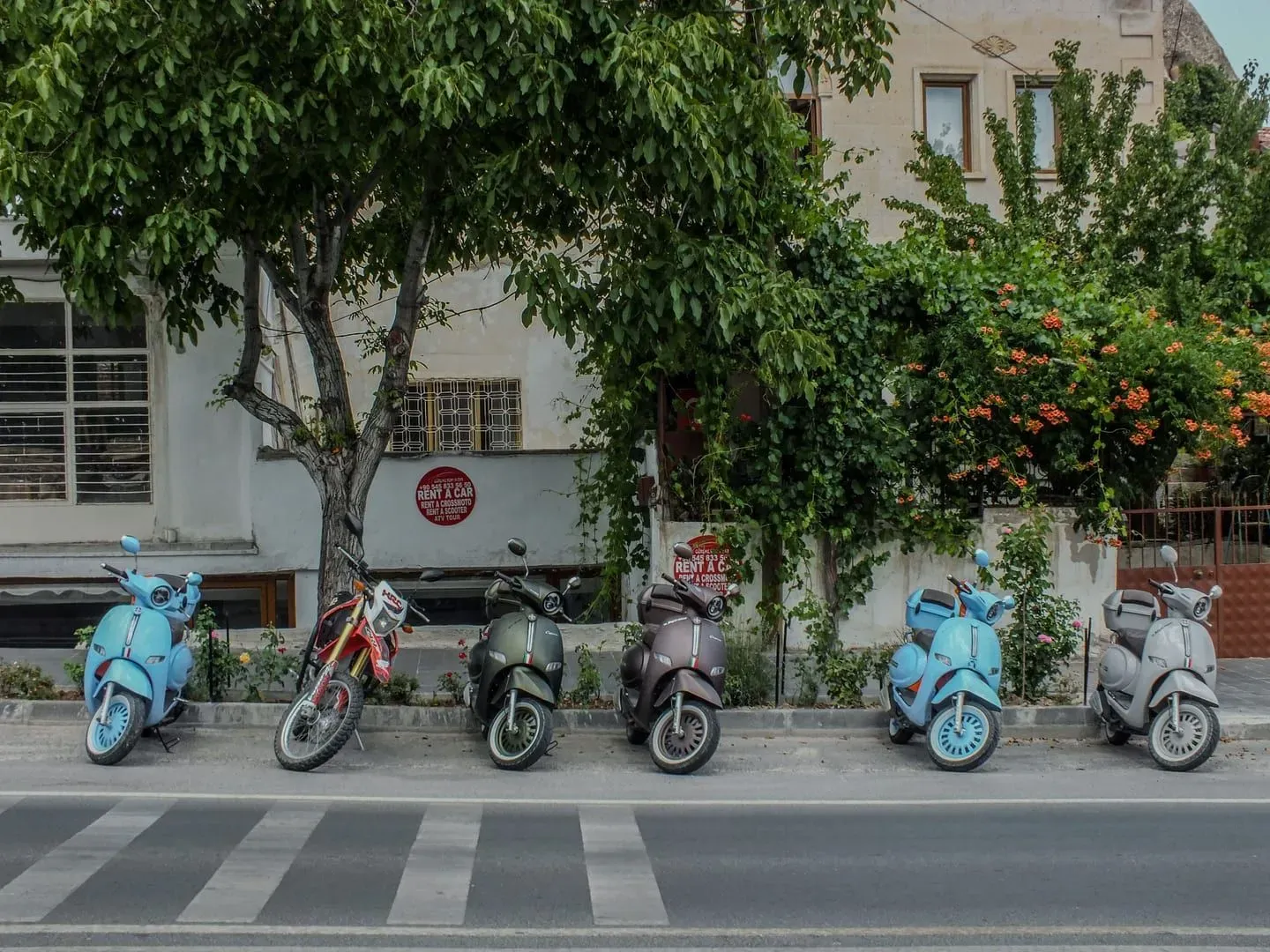
Ride accordingly: lights front and back even by day, since a rider in dappled shade is harder to see than it feels; a helmet, which Thai law doesn’t mandate for pedal cyclists but which isn’t optional in practice; and single file, always, given how little shoulder exists to share. Avoid the road between roughly 16:00 and 19:00, when returning traffic, fading light and no functional street lighting combine into the worst conditions of the day. On insurance: the widely-cited figure that ~90% of standard travel policies exclude motorbike accidents doesn’t automatically apply to a pedal bicycle, but many still exclude off-road or “hazardous activities” without an upgrade — read the wording. The cost of getting this wrong is real: a private-hospital consultation starts around 800-2,000 THB, a moderate injury needing sutures and an X-ray commonly runs into the tens of thousands, and anything needing surgery or an overnight stay can exceed 100,000 THB (~2,857 USD) without cover — see Hospitals & Clinics in Koh Samui for the full breakdown and the cheaper, slower government alternative.
FAQ
Is it safe to cycle around Koh Samui?
It can be done safely, but the road itself is genuinely dangerous by international standards — Thailand’s road death rate (25.4 per 100,000, WHO 2021 data) is nearly double the global average. Riding at dawn, wearing lights and a helmet, staying single file, and avoiding the 16:00-19:00 window cuts the real risk substantially, but this is not a casual, low-stakes ride.
How long does it take to cycle the Koh Samui ring road?
A fit road cyclist covers the full 51km Route 4169 loop in roughly 3-3.5 hours of moving time. A casual rider on a hybrid, allowing for the heat, photo stops and the Nathon traffic pinch, should budget 5-7 hours and treat it as a full day rather than a quick morning ride.
What is the best time of day to cycle Koh Samui?
Start at or before 6am. Sunrise sits at 5:50-6:00am from March to September and 6:15-6:25am from October to February, and both heat and road traffic build fast after that — by 8-9am, UV intensity and vehicle volume are both climbing, making a dawn start the only realistic option for most of the year.
Can you rent a proper road bike on Koh Samui?
Not reliably. Village and resort bicycle rental (150-250 THB/day) means basic single-speed hybrids suited to short, flat village trips, not the ring road or the interior climbs. No dedicated performance bike-rental operation could be confirmed on the island, so serious riders generally bring their own bike.
Are Koh Samui’s interior climbs really that steep?
Riders who have climbed the concrete access lanes above Chaweng and Lamai commonly report ramps of 15-20% or steeper on the worst sections — no official gradient survey exists, but the consistency of these reports, and the terrain itself, make it a credible figure. Standard rental-bike gearing will not get up them; a compact or gravel-range crankset is close to essential.
Do I need a helmet to cycle in Thailand?
Thai law does not currently mandate a helmet for pedal cyclists, unlike motorcyclists, for whom it is compulsory. That legal gap doesn’t change the practical case for wearing one on Samui’s narrow-shouldered, mixed-traffic roads — treat a helmet as non-negotiable regardless of what the law technically requires.
Turning Up
There’s no club meeting point and no posted schedule — this is a ride you start yourself. The most reliable way in is to be on the coast road near Maenam or Bophut before 6am, bike lit and carrying more water than feels necessary, heading counter-clockwise to bank the flat north coast before the Nathon pinch and the interior heat. For a fixed date instead, the Koh Samui sport year carries the one calendared multisport event serious cyclists here train toward; everything else on this island’s roads is ridden alone, at dawn, by choice.
Published on
About the author

Mike Brochlowski
Travel photographer & writer
Travel photographer and island explorer. Mike has spent years documenting Southeast Asia's hidden gems, from secluded beaches to jungle waterfalls.
Articles by Mike →More in Island Life
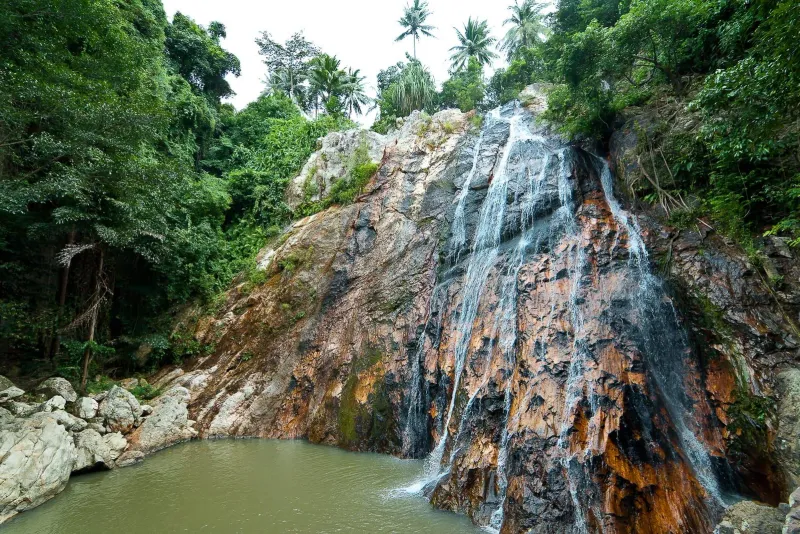
Na Muang Waterfalls — Samui's Purple Cascades and Jungle Pools
Explore Na Muang Waterfalls on Koh Samui — the accessible 18m Purple Waterfall with its swimming pool and the 80m jungle trek to the isla…
Wat Phra Yai — Big Buddha Temple on Koh Samui
Visit Wat Phra Yai (Big Buddha) on Koh Samui: a 12-meter golden Buddha, naga staircase, panoramic views, and market stalls.
Apirom Viewpoint — Koh Samui's Closed Hillside Lookout Above Ban Tai
Apirom Viewpoint: a ~304m hilltop lookout inland of Ban Tai, Koh Samui, its restaurant closed since the pandemic but the hillside track s…