Contents
Overview
Free pickup sport is the cheapest way onto Koh Samui’s social map, and almost nobody writes it down. Evening football on school and municipal pitches, beach volleyball at Chaweng and Lamai, sepak takraw in a village yard, badminton in a covered hall, a game of petanque under the trees — none of it costs more than a share of pitch hire, and all of it is open to a stranger who turns up and asks properly.
Key takeaways
- Every sport is joined the same way: turn up near the usual time, stand at the edge, wait to be waved in — never argue a call.
- Badminton and petanque have real, findable venues; football and beach volleyball run on pitches and sand used informally by the hour; sepak takraw and Sunday games are the least documented and most walk-up.
- Cost is your share of pitch hire (football) or nothing at all (volleyball, takraw, badminton drop-ins, petanque).
- This is a directory of how to find a game, not a fixed schedule — informal groups move and dissolve within a season.
- Checked September 2026: hours below are confirmed where a business or listing exists; everything else is an honest general pattern, not a guaranteed fixture.
What This Actually Is
This page is a directory of the free and near-free games that run on the island every week without ever being marketed: evening football on turf pitches, sand volleyball at dusk, sepak takraw wherever a net and flat concrete exist, badminton in a covered hall, petanque under shade trees, pickup basketball, and the loose Sunday games at temple and school grounds. None of it is a business with a booking page — which is also why this page describes patterns, not a timetable. For the coached, paid version of any of these sports, things to do on Koh Samui and free things to do on Koh Samui point at the commercial options; this page is for the version you join instead of buy.
Who Is In It
The crowd on any pitch is mixed without anyone planning it. Thai locals, Burmese and Myanmar migrant workers employed on the island’s building sites and resorts, and long-term expats all play evening football in Thailand’s tourist towns, and Samui follows the same pattern — teams form around who’s free, not nationality. Beach volleyball skews toward expats and long-stay travellers who already know each other, with a real intermediate-to-advanced game at its core rather than a beginner’s knockabout. Badminton halls and petanque courts draw Thai regulars, resident families and the odd committed expat. Sepak takraw is the most local of all — you’ll rarely see another foreigner playing it, which is exactly why watching first matters most here.
How You Actually Get In
The etiquette is the same across every sport here, and it matters more than any rulebook. Arrive a little before the game usually starts, stand at the edge, and watch before doing anything else. If older or senior players are present, a small wai — palms together, slight bow — when you catch their eye reads as respect. Wait to be waved in rather than jogging on or asking loudly; a nod, a gestured spot, or the ball kicked your way is your invitation.
Once you’re in: bring your own water, don’t expect spare kit, and never argue a call — disputes get settled by whoever’s oldest or loudest agreeing and moving on, and a stranger arguing a line call is the fastest way to not get invited back. If the pitch or court was rented by the hour, a share of the cost is expected without being asked — watch what regulars pay and match it quietly rather than making an event of it. Thank people, wai or shake hands at the end, and ask when they’re usually back rather than assuming — “usually” is the honest answer, because these are informal groups, not fixtures.
Evening Football
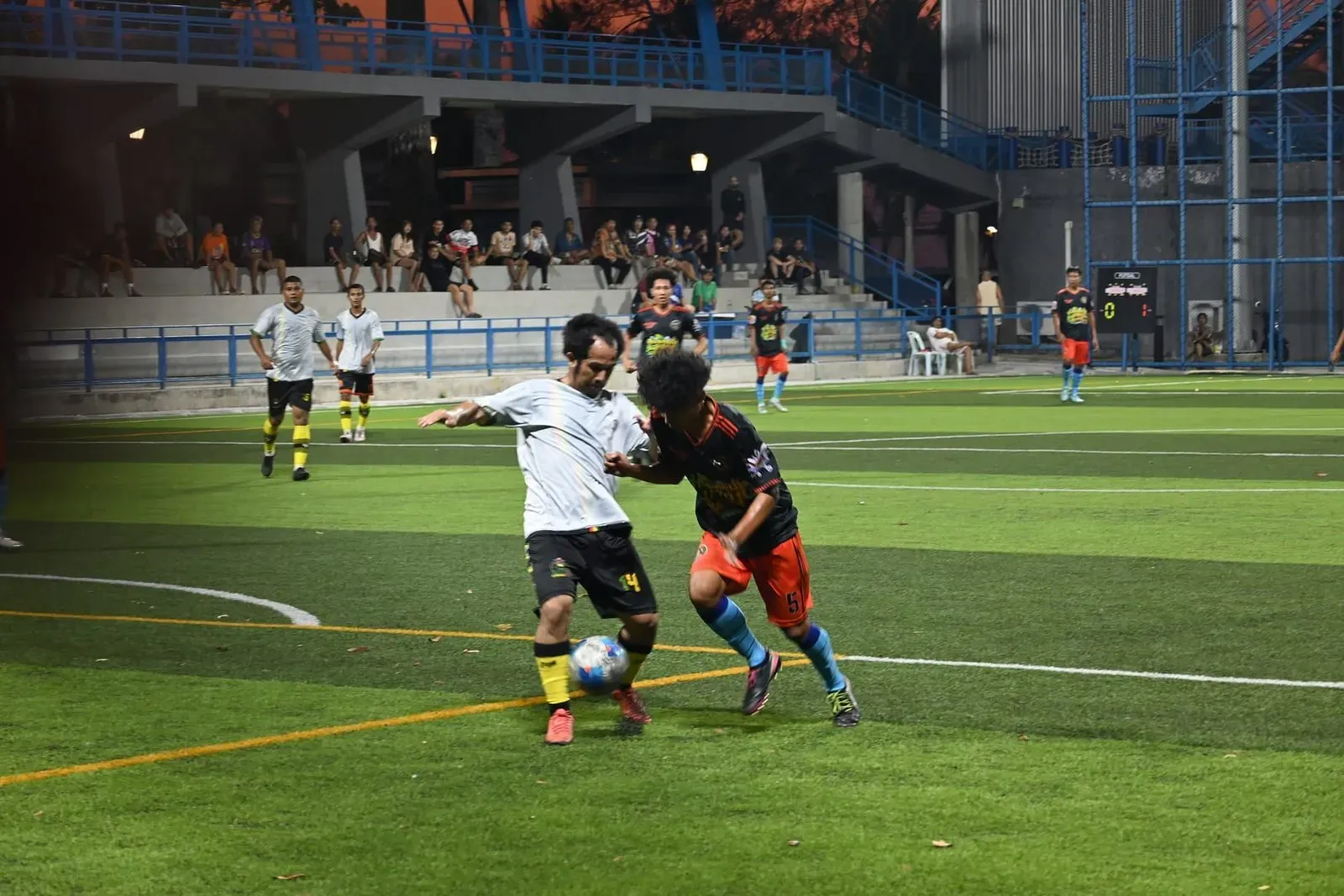
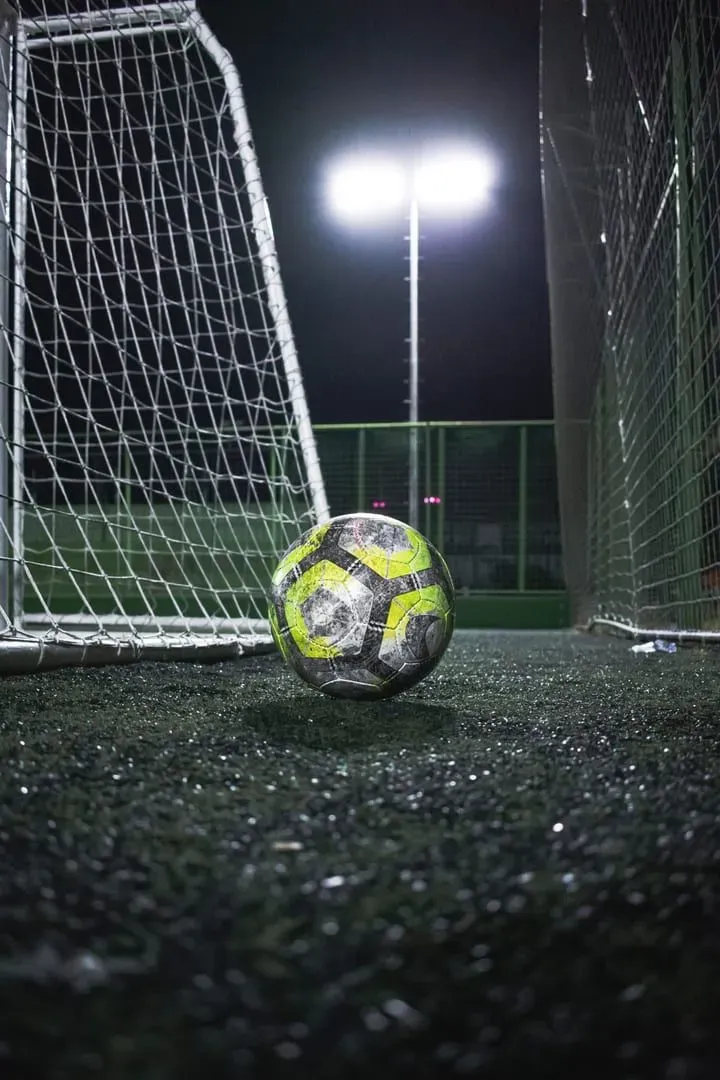
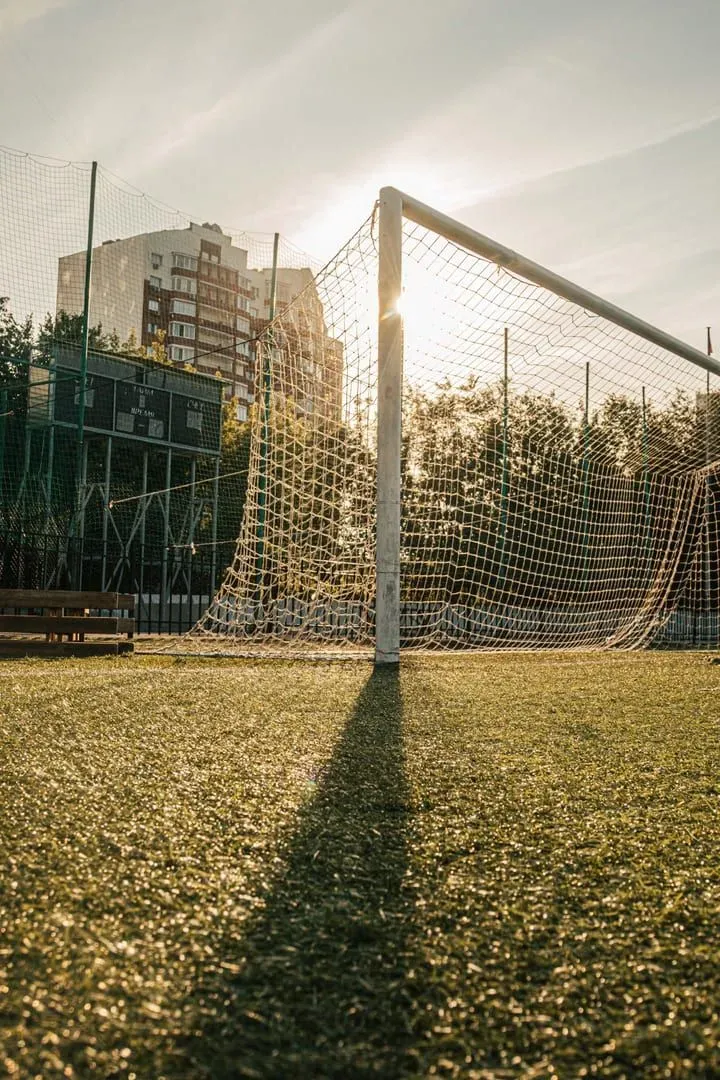
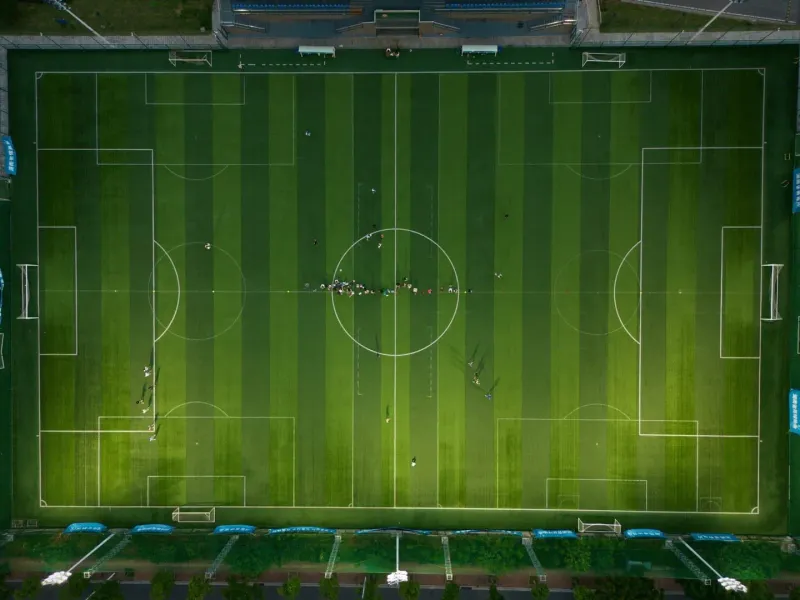
Evening football on Koh Samui runs on the same small, artificial-turf pitches found in every Thai town, rented by the hour and filled by whoever shows up. These 5-a-side and 7-a-side pitches — floodlit, fenced, rubber turf — sit near Chaweng, Bophut and the ring road, alongside school fields that host informal games once the school day ends. Teams form from whoever’s there: Thai staff off an evening shift, Burmese and Myanmar workers from the island’s construction and hospitality jobs — a well-documented presence in pickup football across Thailand’s tourist islands — and expats who found the pitch by word of mouth rather than a website.
There’s no single documented pitch or fixed weekly game we could confirm as current — these change with the seasons, and a specific address here would likely be wrong within months. The honest version: ask hotel or hostel staff about a nearby “sanam football” turf pitch, walk past around 17:00–19:00, and watch for a game short a player. Pay your share in cash on the spot — nobody invoices you.
Beach Volleyball
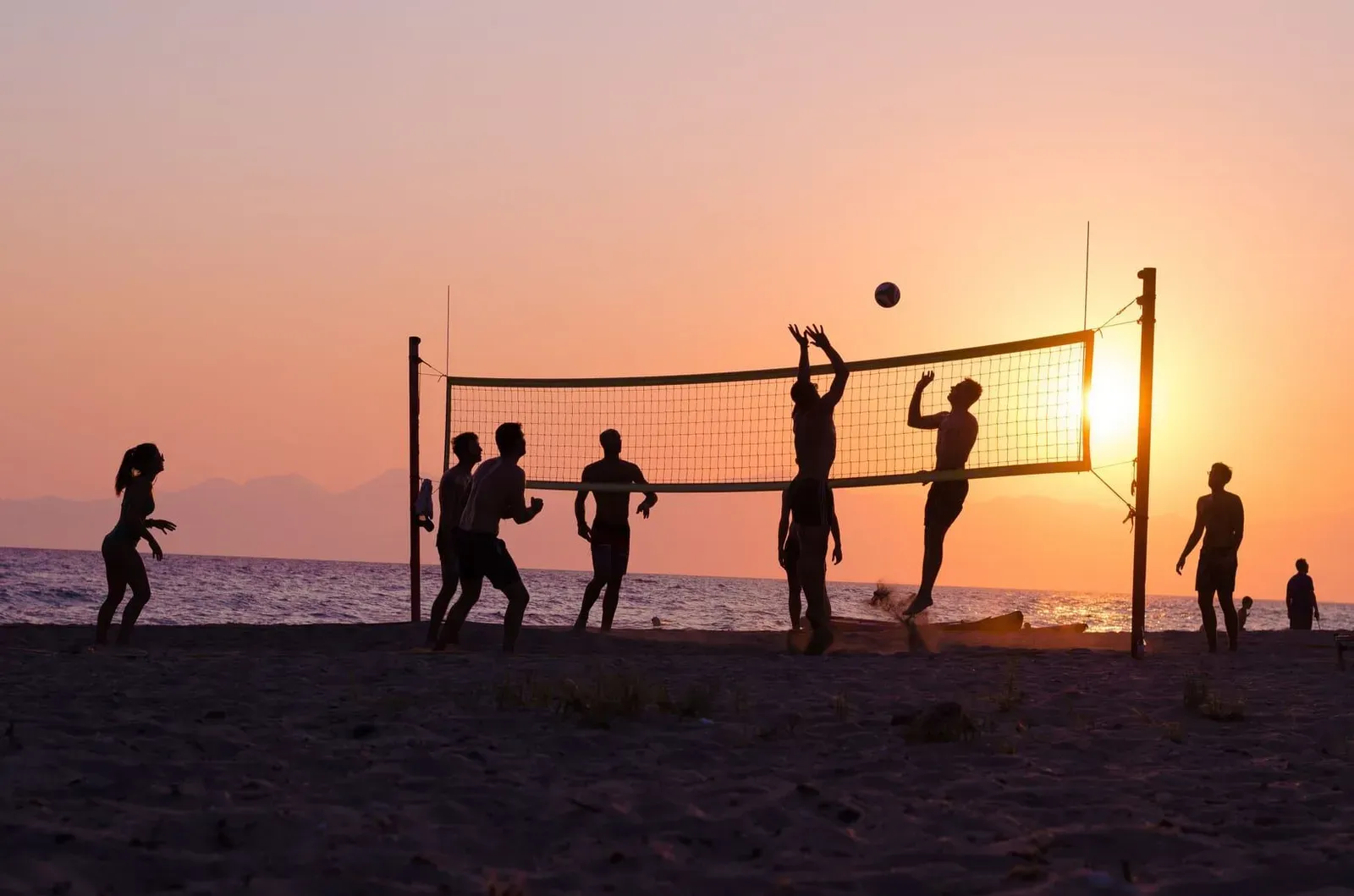
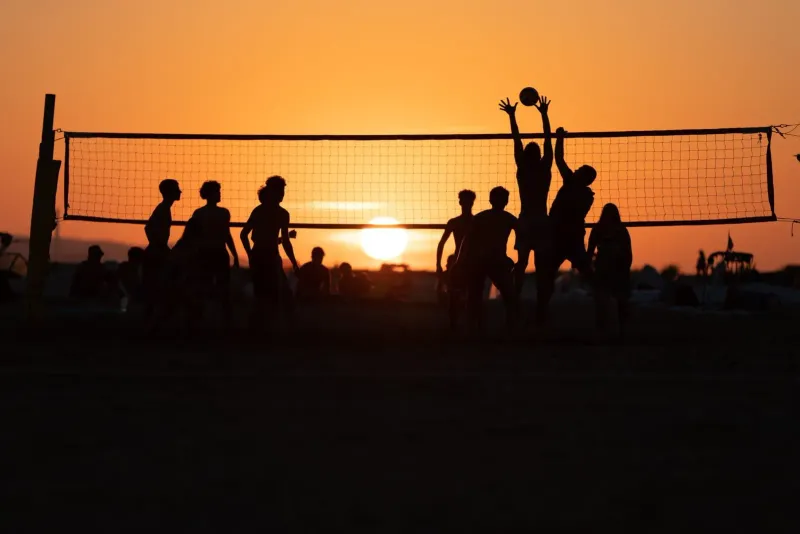
Chaweng beach has the island’s one documented, regular game: open doubles play most days roughly 16:00–18:00, intermediate-to-advanced, under full beach-volleyball rules. It runs informally rather than through a business — the way in is the public Facebook group “Beach Volleyball Koh Samui”: search it, ask to join, and introduce yourself before turning up. There’s no fee; donations toward gear are welcomed, never demanded. An annual tournament runs in February, and a spectator event, the Samui Open, has been held at a Chaweng beach club.
Lamai Beach’s volleyball is looser and far less documented — an ad hoc net and whoever’s on the sand that evening, not a standing group, which makes for a much more casual game than Chaweng’s. Either way, the entry test is the same worldwide: turn up, ask to rotate in, and don’t expect a serious point until you’ve shown you can pass and set.
Sepak Takraw
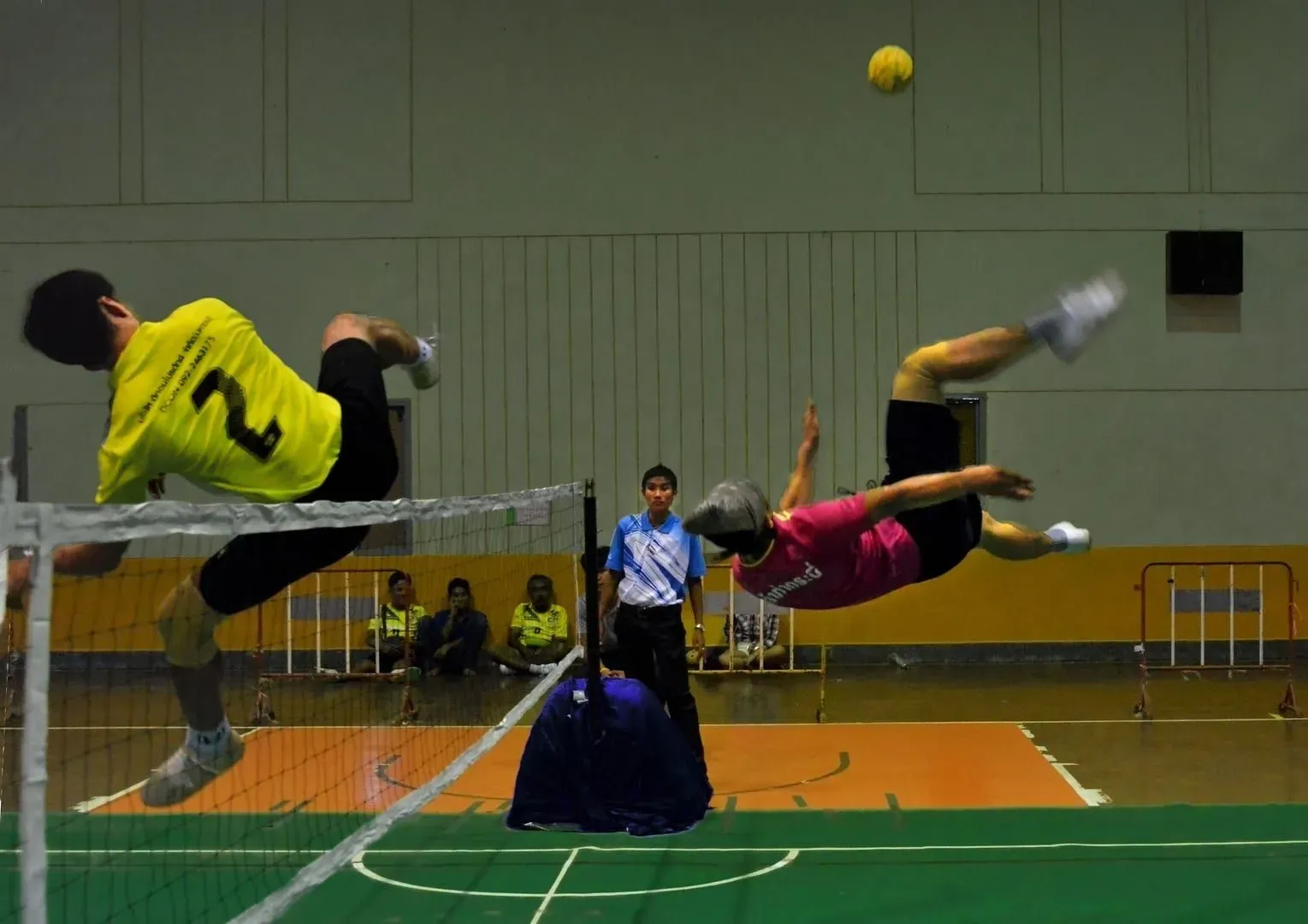
Sepak takraw is Thailand’s own game — volleyball played entirely with feet, knees, chest and head over a net the height of a badminton net, using a light woven ball — and you’ll find a court, or at least a painted rectangle and a net, in almost every Thai village, school yard and temple compound, Samui included. No single Samui venue is documented online with a name or schedule, and that’s consistent with how the game works: nobody runs it, it just happens wherever flat concrete and a net exist, usually around dusk.
This is the sport where being invited matters most and happens least predictably. Foreign players are rare, and a Thai team is more likely to wave over a curious watcher than one who walks up confidently asking to play — the kicks and headers take real practice, and watching a full game first is itself a form of respect. If a team gestures you in, expect to be terrible at first and to be laughed with, not at.
Badminton
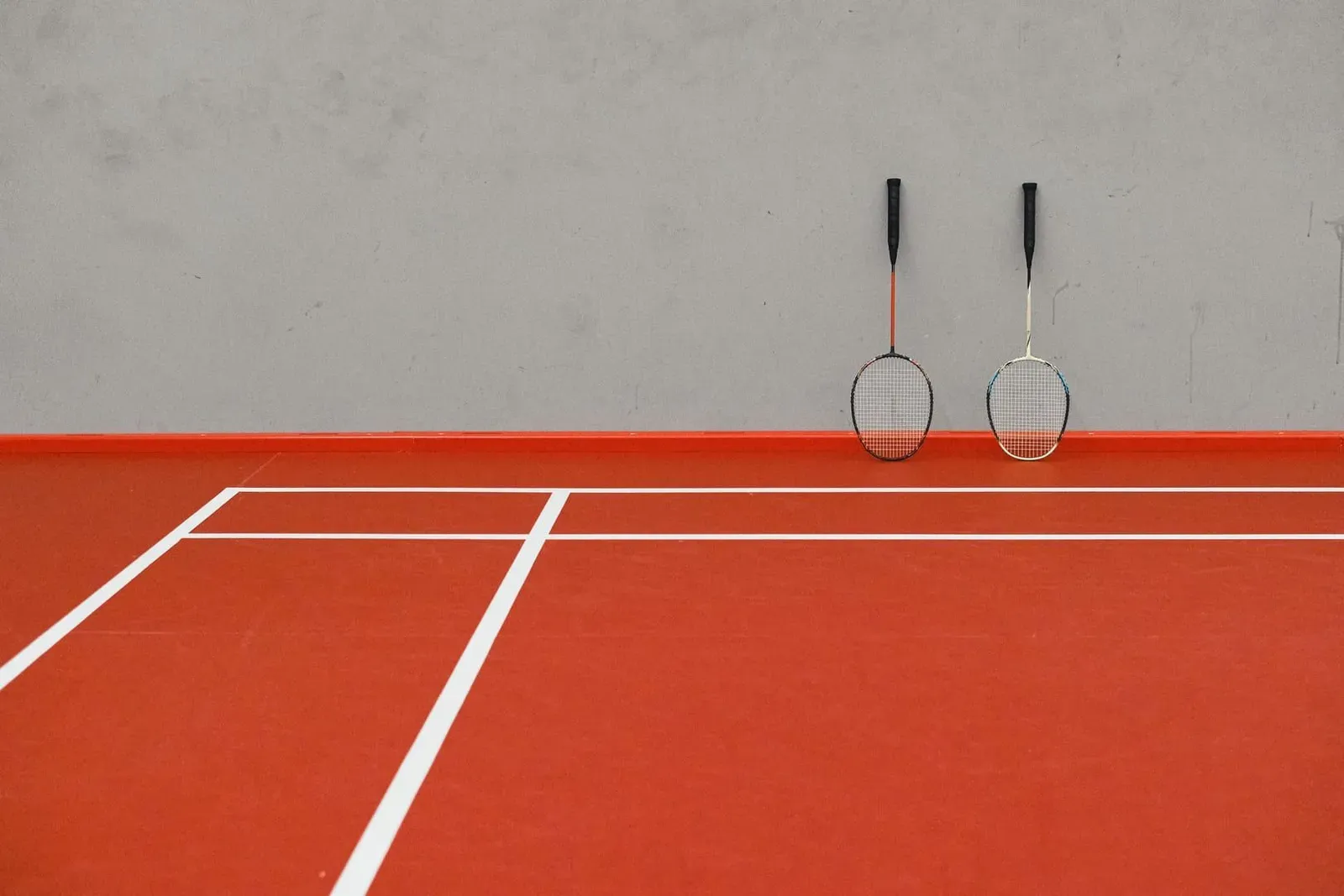
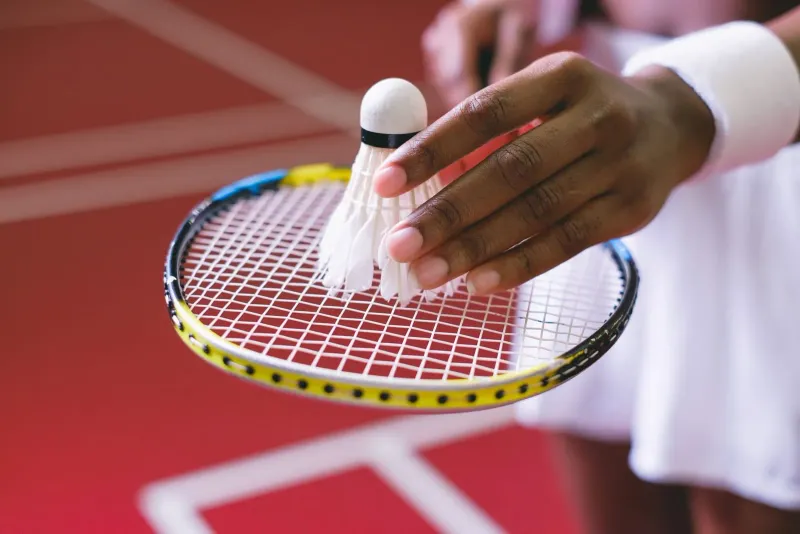
Badminton is genuinely huge in Thailand, and Samui has at least one dedicated, publicly documented hall: Samui Badminton in Bophut, open roughly 07:00–22:00 Sunday–Thursday and 07:00–21:00 Friday–Saturday, welcoming casual walk-in play. Courts are covered, which matters here — badminton is one of the few racket sports playable through a downpour or the worst midday heat.
Beyond that one confirmed hall, several gyms and resorts list a badminton court as a secondary facility; treat those as a lead to call ahead on, the same caution padel and tennis on Koh Samui gives resort courts generally. Bring your own racket for a first visit — shuttles are usually available, rackets less reliably so.
Petanque
Petanque — throwing metal boules toward a target ball, known in Thai as เปตอง (petong) — has a real following on Samui, half French-expat pastime, half a sport Thailand has played competitively for decades. A Samui Pétanque club exists as an active community group with over a thousand followers, organising informal games, occasional tournaments and social meals rather than a bookable venue. Lamai is also reported to have a bar with several outdoor and indoor petanque courts drawing walk-in players from around 16:00 — worth confirming locally, since we couldn’t independently verify its current schedule.
The unspoken rule of petanque holds here too: a spare set of boules gets lent to anyone who looks interested, a triples game is happy to take an odd player, and the pace is slow enough that asking quietly between rounds beats interrupting mid-throw.
Basketball and Sunday Games
Free outdoor basketball is the thinnest-documented sport here — a court or two exists at schools and gyms, but nothing we could confirm as a reliably open public court with a regular game. Ask locally, check the courts at any school you pass in Nathon, Chaweng, Lamai or Maenam, and expect the same after-hours, weekend pattern as the football pitches above.
Sunday is the island’s loosest sporting day. Temple grounds and municipal fields across Thailand routinely double as informal community space once the working week ends, and it’s common — though nobody publishes a schedule — to find a mixed game of football, takraw or badminton on a school or temple court on a Sunday afternoon. Treat it like every other sport here: walk past, watch, and let yourself be waved in.
A Few Words of Thai
A little Thai goes further in a pickup game than in almost any other tourist interaction on the island, because it signals you’re here to join in, not to be served. A few phrases worth learning:
| Thai | Romanized | Meaning |
|---|---|---|
| ขอเล่นด้วยได้ไหมครับ/คะ | khǎaw lên dûay dâi mǎi (khráp/khâ) | “Can I join in?” |
| สวัสดีครับ/ค่ะ | sà-wàt-dii (khráp/khâ) | Hello |
| ขอบคุณครับ/ค่ะ | khàwp khun (khráp/khâ) | Thank you |
| ขอโทษครับ/ค่ะ | khǎaw thôht (khráp/khâ) | Sorry / excuse me |
| เล่นดีมาก | lên dii mâak | ”Well played” |
| ไม่เป็นไร | mâi pen rai | ”No worries” / “it’s fine” |
Use khráp if you’re male, khâ if you’re female — it’s the small marker that turns a phrase from correct into polite, and Thai players notice it.
FAQ
Is pickup sport really free on Koh Samui?
Mostly. Beach volleyball, sepak takraw, casual basketball and drop-in Sunday games cost nothing. Football on a rented turf pitch, and some badminton halls, involve a small shared cost for court time — a modest per-person amount split among whoever’s playing, paid in cash on the spot.
How do I find a pickup football game on Koh Samui?
There’s no single documented pitch or fixed schedule. Ask hotel or hostel staff about a nearby “sanam football” turf pitch, walk past around 17:00–19:00 when evening games typically start, and ask quietly at the edge if a team’s short a player.
Where is the best beach volleyball on Koh Samui?
Chaweng beach has the island’s one well-documented game, played most days roughly 16:00–18:00 at an intermediate-to-advanced level; join through the public Facebook group “Beach Volleyball Koh Samui.” Lamai’s is looser, more casual, and has no fixed group behind it.
Can a tourist really join a Thai sepak takraw game?
Yes, but it’s earned, not assumed — watch a full game first, since the kicks and headers take real skill, and wait to be waved in rather than asking outright. A team short a player often invites over someone who’s clearly been watching with genuine interest.
Is there a badminton hall on Koh Samui open to visitors?
Yes — Samui Badminton in Bophut runs covered courts open roughly 07:00–22:00 most days (07:00–21:00 Friday–Saturday) and welcomes casual walk-in play, making it the most reliably open free-to-drop-in sport on this page.
Do I need to speak Thai to join a pickup game?
No, but a greeting, “can I join,” and “thank you” change how you’re read at the edge of a pitch — from a tourist watching to someone who wants to play. The politeness particles (khráp for men, khâ for women) matter more than grammar.
Turning Up
Two fixtures here are dependable: Chaweng beach’s volleyball, most days around 16:00–18:00, found through the “Beach Volleyball Koh Samui” Facebook group, and Samui Badminton’s covered courts in Bophut, open daily to walk-ins. Everything else — football, sepak takraw, petanque, basketball, the Sunday games — means walking to the nearest turf pitch, temple yard, school court or patch of sand at the right hour and seeing who’s there, exactly as the people who already play do it. That uncertainty is the honest trade for a version of the island that costs nothing and isn’t for sale.
Related reading: run clubs on Koh Samui, padel and tennis on Koh Samui, climbing, CrossFit and functional gyms, free things to do on Koh Samui, things to do on Koh Samui, Chaweng Beach and Lamai Beach for the sand these games are played on.
Published on
About the author

Mike Brochlowski
Travel photographer & writer
Travel photographer and island explorer. Mike has spent years documenting Southeast Asia's hidden gems, from secluded beaches to jungle waterfalls.
Articles by Mike →More in Island Life
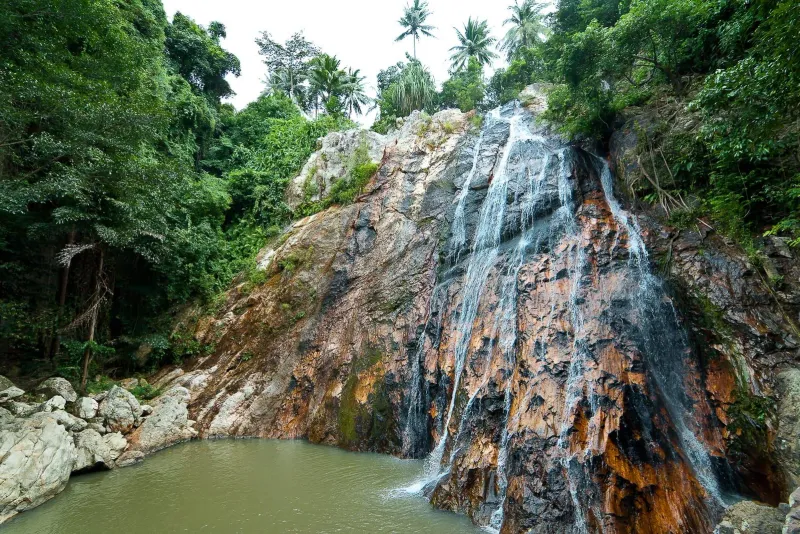
Na Muang Waterfalls — Samui's Purple Cascades and Jungle Pools
Explore Na Muang Waterfalls on Koh Samui — the accessible 18m Purple Waterfall with its swimming pool and the 80m jungle trek to the isla…
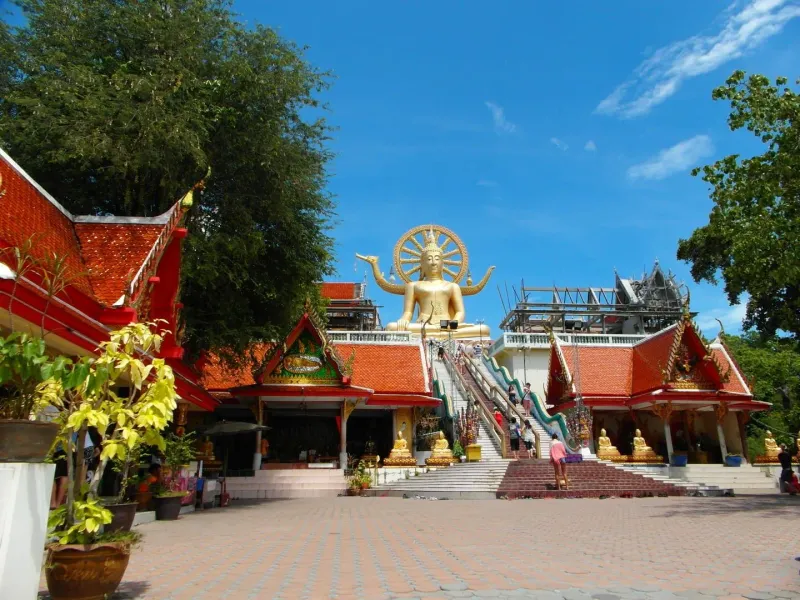
Wat Phra Yai — Big Buddha Temple on Koh Samui
Visit Wat Phra Yai (Big Buddha) on Koh Samui: a 12-meter golden Buddha, naga staircase, panoramic views, and market stalls.
Apirom Viewpoint — Koh Samui's Closed Hillside Lookout Above Ban Tai
Apirom Viewpoint: a ~304m hilltop lookout inland of Ban Tai, Koh Samui, its restaurant closed since the pandemic but the hillside track s…