Contents
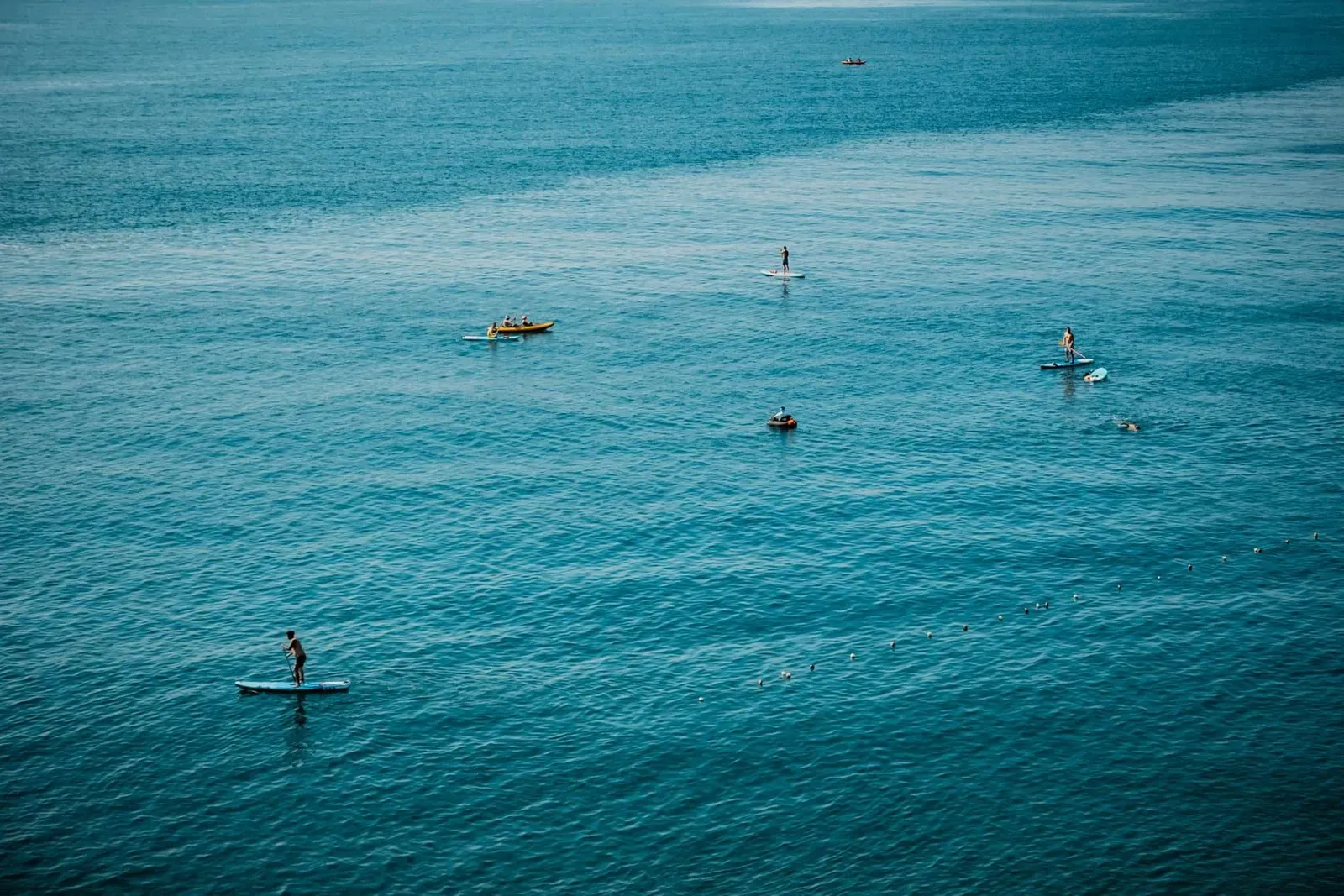
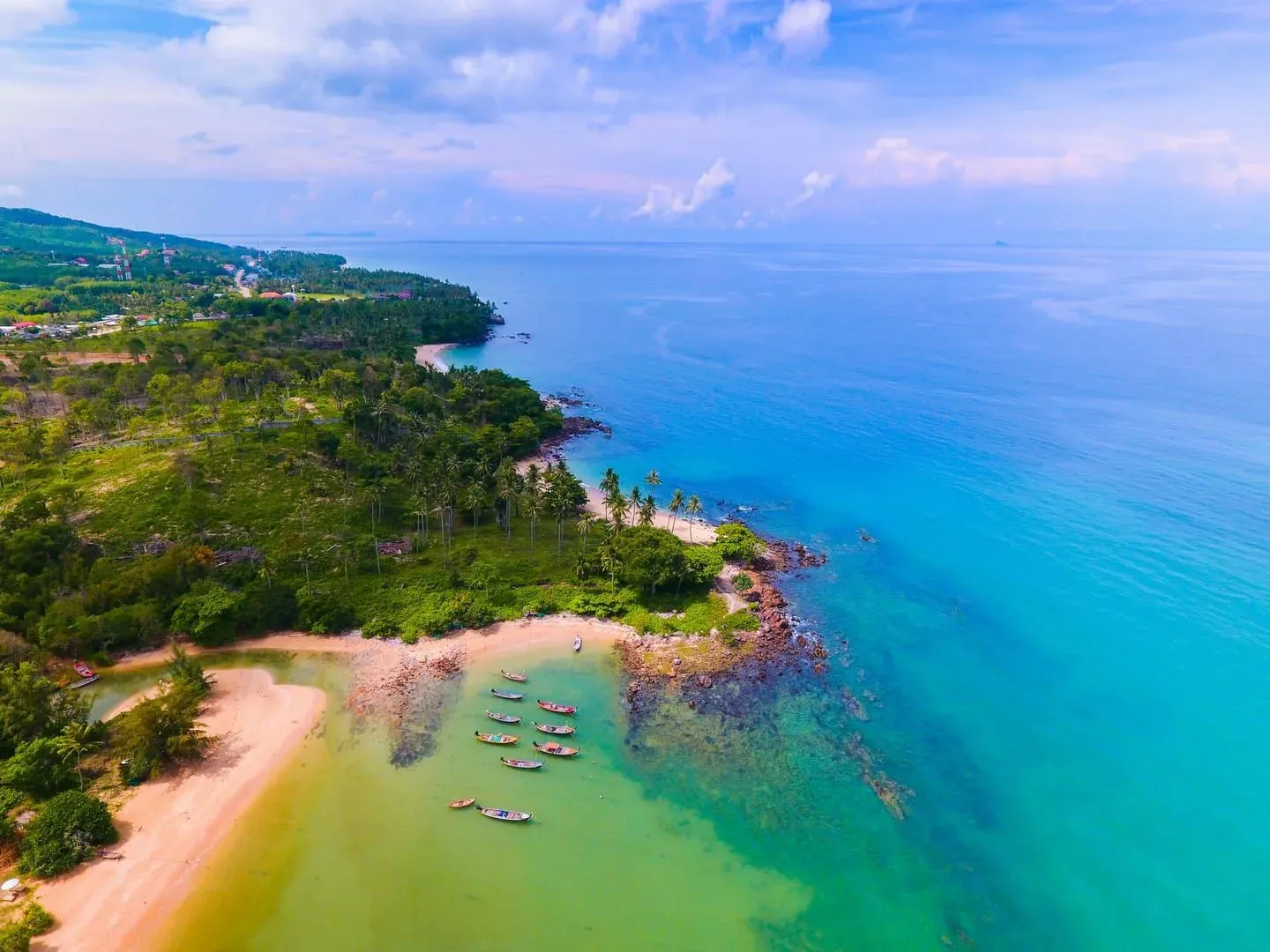
Stand-up paddling on Koh Samui runs on one rule: get on the water before 7am. The Gulf of Thailand’s sheltered north coast — Maenam, Bang Po, Bophut and Choeng Mon — sits close to glass-flat at first light and turns choppy by mid-morning as the sea breeze fills in, which is why a loose, unofficial crew of residents paddles at dawn instead of after breakfast.
Key takeaways
- North-coast water is flattest in the first hour or two after sunrise, before the daily sea breeze builds.
- The real hazard on a Samui SUP is offshore wind, not waves — it can carry a paddler out into open water faster than they can paddle back against it.
- The northeast monsoon (roughly October to December, peaking in November) turns the Gulf choppy island-wide; the calm season runs January through September.
- Board hire is cheap and walk-up at every north-coast beach — Kayaking, SUP & Watersports has current rates and operators.
- Sea temperature never drops much below 28°C (82°F), so cold water is never the reason to stay in.
What This Actually Is
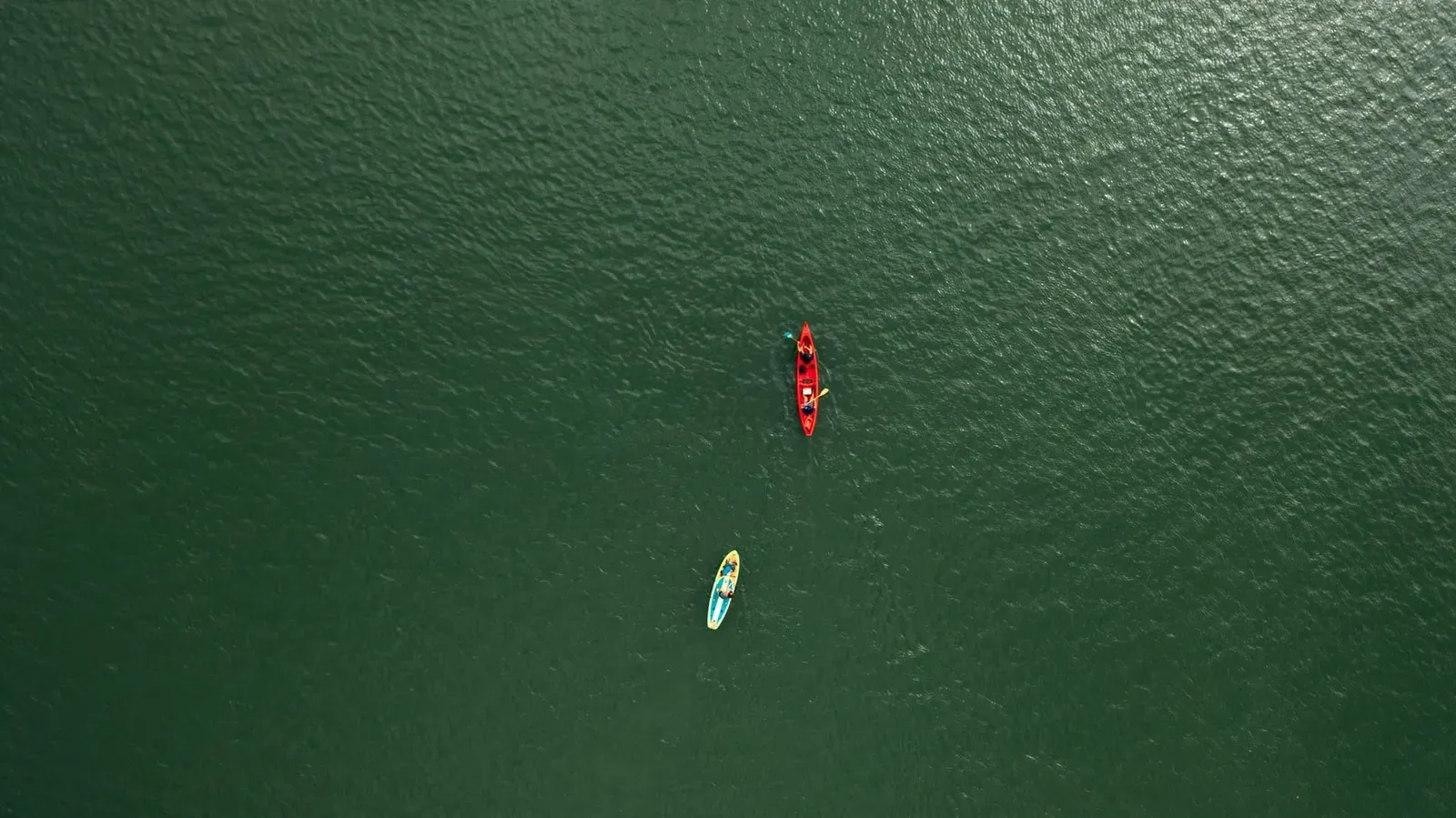
This is a routes-and-conditions page, not a rental guide — for prices, board types and operators, see Kayaking, SUP & Watersports. What it covers instead is where the water actually behaves, and who is already out on it. Three things happen under the “SUP” label here: short dawn loops off the calm north-coast beaches, a handful of longer point-to-point crossings between beaches and offshore landmarks, and a slower, tide-dependent poke around the mangroves near Thong Krut. None of it is organized. There is no club, no schedule board, no instructor roster — just a stretch of coastline that is genuinely good for this one activity for a few hours a day, and a small number of people who have worked out exactly which hours those are.
Who Is In It
The dawn paddlers are a mixed, informal group — hotel and dive-shop staff getting a session in before their shift starts, long-term residents who treat it as a fitness habit, and the occasional early-rising visitor who asks at a beach hut and gets pointed toward whoever else is already out. Nobody runs it. There is no named group to join and no sign-up, which is also the point: showing up at the right beach at the right hour is the entire membership process. Numbers thin out fast once the sun climbs — most of the crew is off the water and gone before a typical hotel breakfast service ends.
How It Works
The daily pattern is tidal and thermal, not tied to the calendar. Wind is usually lightest in the hour either side of sunrise, builds through the morning as the land heats up faster than the sea, and peaks as a proper onshore-to-cross-shore sea breeze by early-to-mid afternoon — the same afternoon breeze the sea conditions guide tracks coast by coast. Tide matters just as much as wind on the shallow north coast: a falling tide at Maenam or Bang Po can strand a paddler on an exposed sandbar or force a longer wade to open water, so regulars check a tide chart alongside the forecast, not instead of it.
What It Costs
This is one of the cheapest ways to spend a morning on Samui. A board and paddle rent by the hour from beach kiosks on every north-coast beach for not much more than a couple of coffees, with no season pass, no membership fee and no booking system — you simply turn up. See Kayaking, SUP & Watersports for current hourly and half-day rates; they vary little from one beach hut to the next.
How to Join
There is nothing to sign up for. Bring your own board if you have one, or rent from any beach-hut operator at Maenam, Bang Po, Bophut or Choeng Mon — ask the hut whether anyone else is already out that morning, since regulars tend to know each other by sight rather than name. A first-timer should treat the first few sessions as a supervised activity: rent from a hut that can point out the day’s wind direction, stay within sight of the beach, and don’t attempt any of the crossings below alone until self-rescue (climbing back onto a swamped board in open water) is second nature.
Where the Water Is Flat at Dawn
Four beaches make up the core of the dawn circuit, and each is calm for a slightly different reason. Maenam and Bang Po face northwest across a stretch of the Gulf sheltered from the main monsoon swells, with a gently sloping, shallow seabed that keeps chop from building even when a breeze is up — but both also carry wide reef and sand flats that dry out at low tide, so the paddle-out point shifts by tens of meters depending on the tide chart, and a falling tide can leave a board grounded well short of the water’s edge. Bophut is calmer still at the surface but busier underneath it, with moored longtail boats to weave around near the pier. Choeng Mon, tucked behind the offshore islets of Koh Fan Noi and Koh Fan Yai on the northeast tip, is the most consistently sheltered of the four and the easiest for a nervous first session.
The Bophut to Big Buddha Crossing
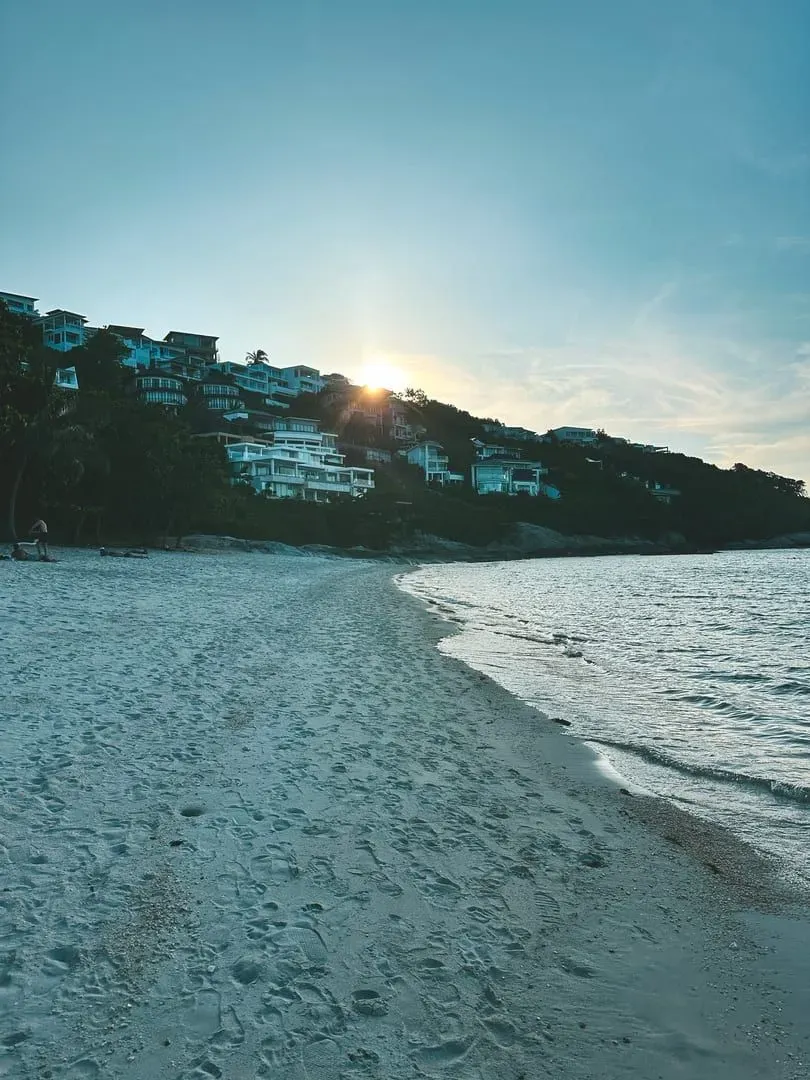
The best-known open-water route on the island runs from Bophut’s eastern end across roughly a kilometre of open channel toward the causeway at Wat Phra Yai, the Big Buddha temple, before looping back with the current rather than fighting it. It is a genuine crossing, not a beach loop: paddlers cross paths with passenger and vehicle ferries running between Samui’s north coast and Koh Phangan, plus tour and fishing longtails working the same water, and give way to all of them — a stand-up paddleboard is the smallest, slowest, least visible thing on that stretch of sea. It only makes sense as a calm-morning trip, ideally with a buddy, and it is not a route for anyone still working on their balance.
The Choeng Mon Island Hop
Choeng Mon’s sheltered bay makes the short hop out to Koh Fan Noi — about 10 to 15 minutes of paddling — the easiest “crossing” on this list and a natural next step after a beginner has a few flat-water sessions behind them. The larger island, Koh Fan Yai, sits further out and takes longer, with more exposure to any wind that has built by the time a paddler gets there. Both islets are ringed with coral, so this is a look-don’t-touch stop: stand on sand, not on reef, and keep fins and boards clear of anything growing on the rock.
Thong Krut’s Mangroves and the Fishing Boats
South of the resort coast, the water off Thong Krut and the mangrove-lined shore toward Taling Ngam offers a completely different kind of paddle — slow, sheltered, and shared with the boats that actually work this stretch of coast rather than tour it. This isn’t a signposted route with a name; it’s water that a handful of residents explore on a calm, high-tide morning, weaving between mangrove roots where the channel allows. What is not optional is giving way: Thong Krut’s pier still launches working fishing longtails alongside the island-hopping boats to Koh Tan and Koh Madsum, and a paddleboarder has no right of way over a boat that is actually fishing for a living. Keep to the margins, stay visible, and expect to get out of the way rather than the other way around.
When the Gulf Goes Unpaddleable
The northeast monsoon, roughly October through December and worst in November, is the one stretch of the year when even the sheltered north coast stops being a reliable dawn spot. Rain arrives in the heaviest bursts of the year in this window, and onshore chop can persist through days that would otherwise be calm — the same pattern the site’s own sea-by-month breakdown shows for Maenam, Bophut and Bang Po turning from calm to choppy for exactly these three months. The dawn crew mostly stands down for this stretch rather than pushing through it; boards come back out as conditions settle from January.
Conditions by Month: Wind, Sunrise and Water Temperature
| Month | Gulf wind (north coast) | Sea temperature |
|---|---|---|
| Jan | Calm | 28.0°C (82°F) |
| Feb | Calm | 28.5°C (83°F) |
| Mar | Calm | 29.0°C (84°F) |
| Apr | Calm | 30.0°C (86°F) |
| May | Calm | 30.0°C (86°F) |
| Jun | Calm | 30.0°C (86°F) |
| Jul | Calm | 29.5°C (85°F) |
| Aug | Calm | 29.5°C (85°F) |
| Sep | Calm | 29.0°C (84°F) |
| Oct | Choppy, monsoon building | 29.0°C (84°F) |
| Nov | Choppiest month of the year | 29.0°C (84°F) |
| Dec | Choppy, improving late month | 28.5°C (83°F) |
Sea temperature figures are cross-checked against seatemperature.info (accessed Sep 2026) and the site’s own sea-conditions-by-month climate normals. Wind pattern follows that same guide; Windfinder’s Koh Samui Airport station statistics (observations 2005-2026) put the island’s annual average around 7 knots from a westerly quarter with gusts to 23 knots — modest by open-water standards, but enough, layered on a building afternoon sea breeze, to turn an easy dawn paddle into a hard slog home by mid-morning. Koh Samui sits at roughly 9.5°N, close enough to the equator that sunrise barely shifts across the year: first light comes at around 5:50-6:00am from March to September and closer to 6:15-6:25am from October to February, per Wikipedia’s climate summary for Ko Samui on the island’s monsoon timing. Check Thailand’s own Meteorological Department for the current day’s marine forecast before heading out in a borderline month.
Safety: Offshore Wind, Leashes, Boats and Heat
- Offshore wind is the actual danger, not waves. Flat water with a breeze blowing from land toward open sea is far more dangerous than choppy water with an onshore wind, because a fall or a moment of fatigue lets the wind carry board and paddler steadily away from the beach with no current to bring them back. A beginner should not launch at all when the wind is blowing offshore — check the flag or the trees before renting, not after.
- Leash type matters. A coiled ankle leash, useful for keeping slack out of the water on a flat, obstacle-free loop, is the wrong choice for any of the crossings above: coils snag more easily on reef, mooring lines and floating debris in a tidal channel. A straight leg leash trails cleanly and pays out fully if it catches on something, giving a paddler more room to react.
- A PFD is genuinely worth wearing for a crossing, not a hut loop. For a short session in sight of the beach it is optional. For the Bophut-Big Buddha crossing, the Choeng Mon island hop, or any trip out of a sheltered bay, wear one — a life jacket is what keeps a tired or injured paddler afloat and visible if the board is lost.
- Boat traffic and ferry lanes. Bophut and Maenam sit close to passenger and vehicle ferry routes running to Koh Phangan and the mainland. A paddleboard is small, slow and low in the water; give way to every powered vessel, cross lanes at right angles rather than along them, and avoid the crossings in low light when visibility is worst.
- Sun and heat. Dawn timing exists partly because of this: UV intensity climbs fast after 8am near the equator. Rash guard, reef-safe sunscreen, and more water than feels necessary for a one-hour session.
- If you can’t paddle back: don’t fight the wind head-on. Lie prone and paddle at a diagonal angle toward the nearest point of land rather than straight into it, wave one arm overhead to signal a passing boat, and never remove a leash or PFD to swim for it — the board is your flotation and your visibility.
FAQ
Is Koh Samui good for stand-up paddleboarding?
Yes, especially on the sheltered north coast. Maenam, Bang Po, Bophut and Choeng Mon offer calm, shallow water for roughly nine months of the year, with the northeast monsoon (October-December) being the main exception. Early morning, before the daily sea breeze builds, is consistently the best window for paddleboarding on Koh Samui.
What is the best time of day to paddleboard on Koh Samui?
The first one to two hours after sunrise, before the afternoon sea breeze fills in. Wind and chop both build through the morning and typically peak in the early-to-mid afternoon, so a dawn session gives the flattest water and the coolest conditions for a Koh Samui paddleboarding trip.
Which Koh Samui beach is safest for a beginner on a SUP?
Choeng Mon, sheltered behind the offshore islets of Koh Fan Noi and Koh Fan Yai, is the most consistently calm option for a first paddleboarding session. Maenam and Bang Po are also good beginner beaches, though their reef flats mean a falling tide can leave less usable water close to shore.
Do I need a lesson before I paddleboard on Koh Samui?
Not for a supervised loop off a calm beach, but anyone attempting the Bophut-Big Buddha crossing or an island hop should be confident falling in and climbing back on before trying it. A beach-hut rental with basic guidance covers most first-timers; see Kayaking, SUP & Watersports for what’s available.
When is the Gulf of Thailand too rough to paddleboard near Koh Samui?
Roughly October through December, when the northeast monsoon brings the year’s heaviest rain and choppiest seas to the Gulf side, including the normally sheltered north coast. November is typically the worst month. Conditions generally settle back to calm by January.
Is it safe to paddle from Bophut to Big Buddha?
It can be, on a calm morning with a buddy and a life jacket, but it crosses an active ferry lane between Samui’s north coast and Koh Phangan. Give way to every ferry and longtail, cross at a right angle to the lane rather than along it, and skip the crossing entirely if the wind has any offshore component that day.
Turning Up
There’s no schedule to check and nobody to message — the dawn session is a habit, not an event. The most reliable way in is to be at a board-hire hut on Maenam or Bang Po beach right around first light (about 5:50-6:00am March-September, 6:15-6:25am October-February), rent or unstrap a board, and ask whoever is already down there if the water’s good that morning. If the flag or the palm trees show wind blowing off the land rather than onto it, the honest answer is to wait for another day — the crew does the same.
Published on
About the author

Mike Brochlowski
Travel photographer & writer
Travel photographer and island explorer. Mike has spent years documenting Southeast Asia's hidden gems, from secluded beaches to jungle waterfalls.
Articles by Mike →More in Island Life
Na Muang Waterfalls — Samui's Purple Cascades and Jungle Pools
Explore Na Muang Waterfalls on Koh Samui — the accessible 18m Purple Waterfall with its swimming pool and the 80m jungle trek to the isla…
Wat Phra Yai — Big Buddha Temple on Koh Samui
Visit Wat Phra Yai (Big Buddha) on Koh Samui: a 12-meter golden Buddha, naga staircase, panoramic views, and market stalls.
Apirom Viewpoint — Koh Samui's Closed Hillside Lookout Above Ban Tai
Apirom Viewpoint: a ~304m hilltop lookout inland of Ban Tai, Koh Samui, its restaurant closed since the pandemic but the hillside track s…