Contents
Koh Samui’s real nervous system isn’t the ring road, it’s what’s riding on it: a Honda Wave with a school kid wedged between the parents’ knees, a somtam cart welded to a sidecar, a gas-bottle delivery leaning on its kickstand outside a shophouse. Every tribe on the island rides — Thai families, backpackers on a first-ever bike, Harley riders on a Sunday loop — and every one of them shares Route 4169 with a road-death rate among the worst in the world.
Key takeaways
- The scooter, not the songthaew or the taxi, is how Koh Samui actually moves — work, school, deliveries and errands all run on two wheels.
- Distinct rider tribes share the same 51 km ring road: Wave/Click commuters, Sunday big-bike groups, a Harley and cruiser club, dirt bikes on the interior tracks above Na Muang, retired expats on Forzas, and first-time backpackers.
- Thailand’s motorcyclist death toll is one of the highest in the world — WHO and Royal Thai Police data both put riders and passengers at roughly three-quarters of all road deaths nationwide.
- The no-helmet fine is not the safety measure — it is a fraction of a hospital bill, and most travel insurance excludes an unlicensed rider entirely.
- This page is the culture and the risk together. For rental prices, deposits and where to hire, see the scooter rental guide.
Key facts: Route 4169 ring road ~51 km · Thailand road deaths 17,447 in 2024, 14,144 (81%) motorcycle-related (Royal Thai Police / Ministry of Public Health) · Samui officials estimate ~3,000 accidents and ~50 deaths a year on-island, tourists ~30% of fatalities · helmet fine raised from 500 to up to 2,000 THB (~57 USD) in June 2025 · international repatriation after a serious crash commonly runs $15,000-100,000+ (roughly 500,000-3,500,000+ THB)
What This Actually Is
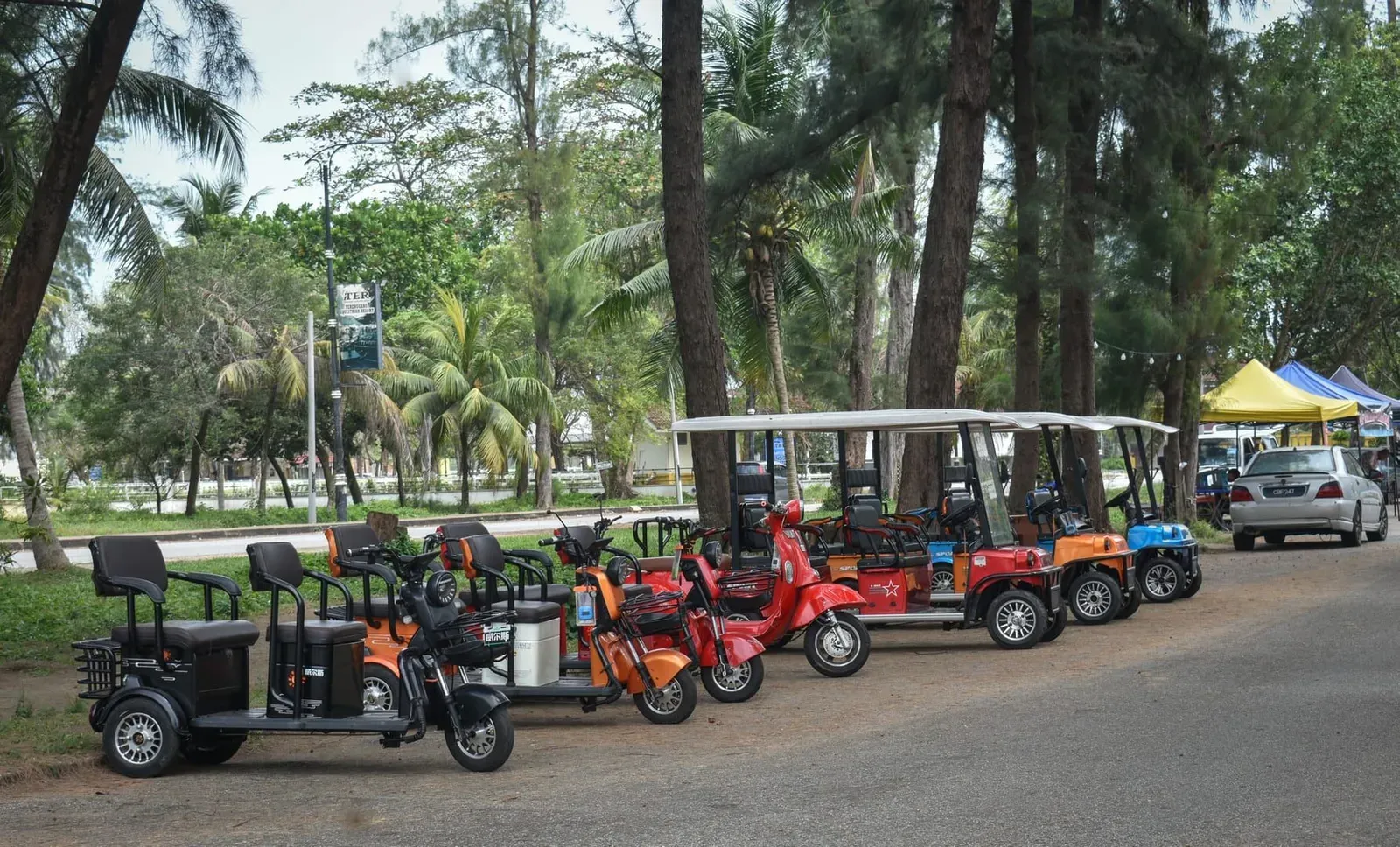
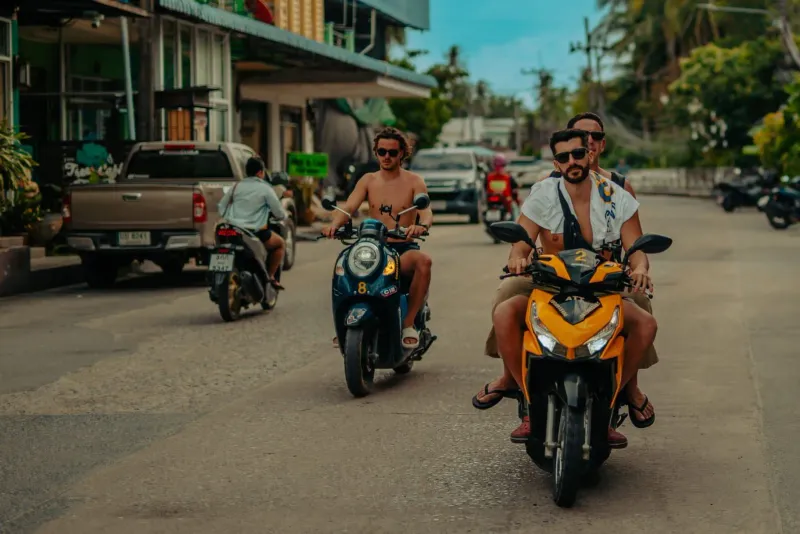
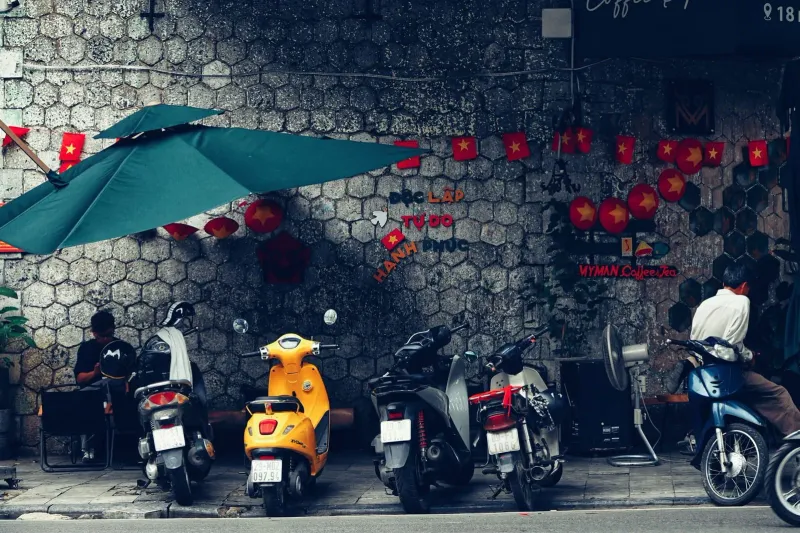
Koh Samui doesn’t have a public bus network, and its songthaews only run the main ring road — everything off that spine moves on two wheels. A scooter is how a mother gets three kids to three different schools before 8am, how a somtam vendor hauls a mortar-and-pestle cart on a welded sidecar to her usual corner, and how the gas-bottle man restocks a soi full of guesthouses before the first guest wakes up. Dogs ride pillion standing on the footboard, feet braced, looking utterly unbothered. None of this is background colour for a holiday photo — it is the island’s actual logistics network, running on bikes that would be considered impossibly overloaded almost anywhere else.
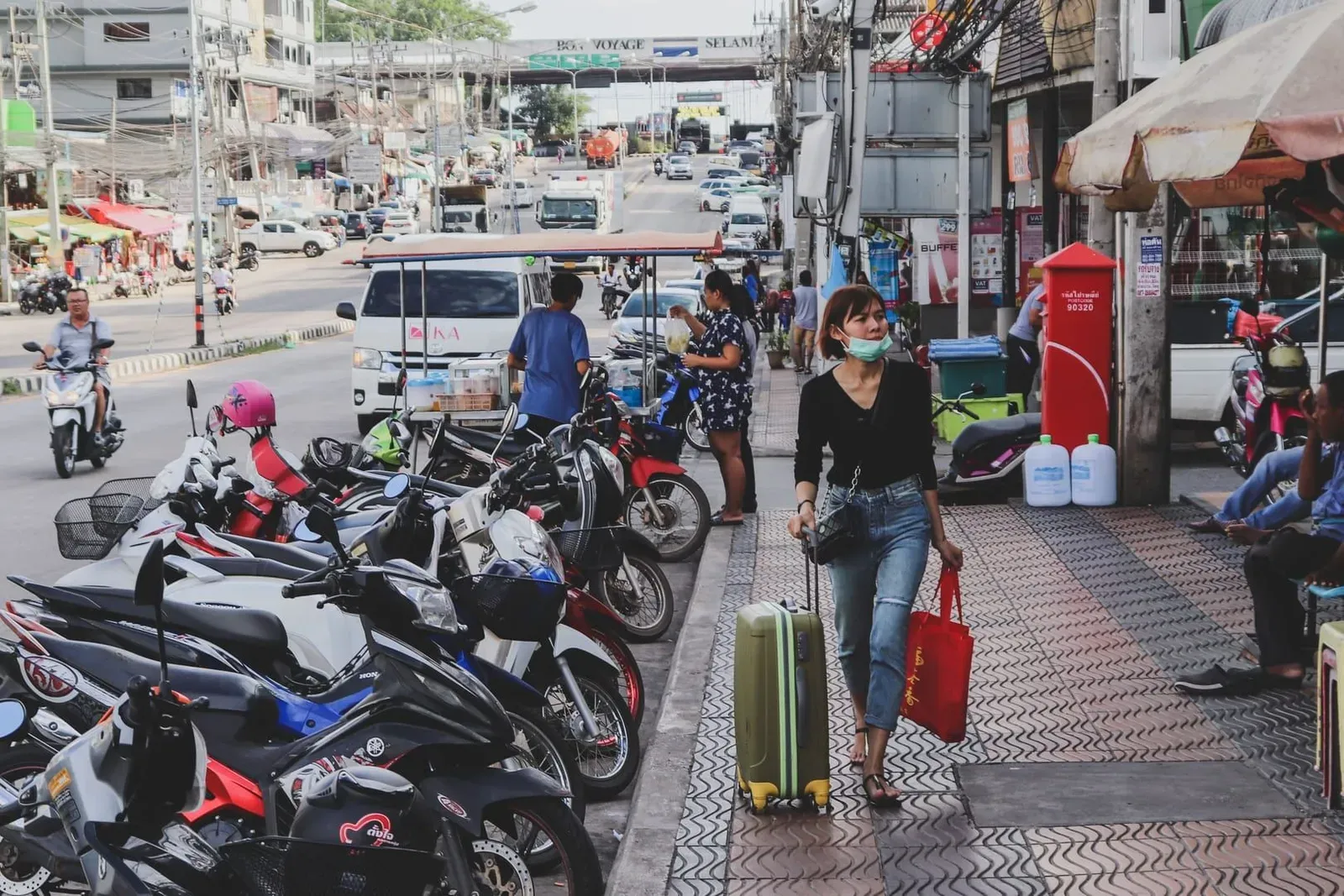
The volume is the tell. Walk into any 7-Eleven car park at 7:45am and count: a hundred identical Honda Waves and Clicks parked nose-out, engines still ticking, school uniforms and hard hats disappearing inside for an iced coffee. By evening the same bikes carry the same riders home, loaded with a bag of market vegetables hooked over one handlebar. A rental scooter threading through that traffic isn’t an outsider joining a novelty — it’s one more bike in a system that was never built around cars.
Who Is In It — the Tribes
Several distinct rider groups share the same roads without much overlap, and you can usually place a rider from fifty metres away. The everyday majority is the Wave and Click crowd — Thai commuters, workers and families on 110-125cc automatics, riding for transport rather than recreation, usually helmeted at the front and rarely at the back. Big-bike weekend riders — Thais and long-term expats on 400cc-plus machines — run organised loops of the ring road on Sunday mornings, leaving early to beat the heat and the tourist traffic. A smaller Harley and cruiser club rides slower, louder machines on the same circuit, recognisable by the leather vests and the total lack of hurry.
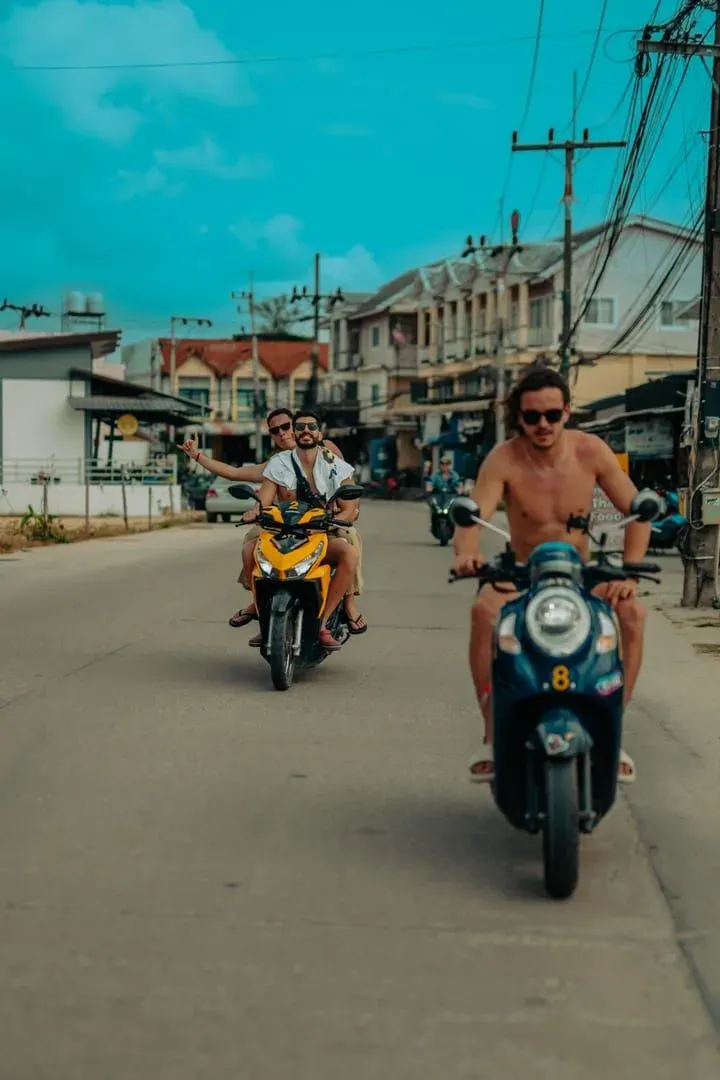
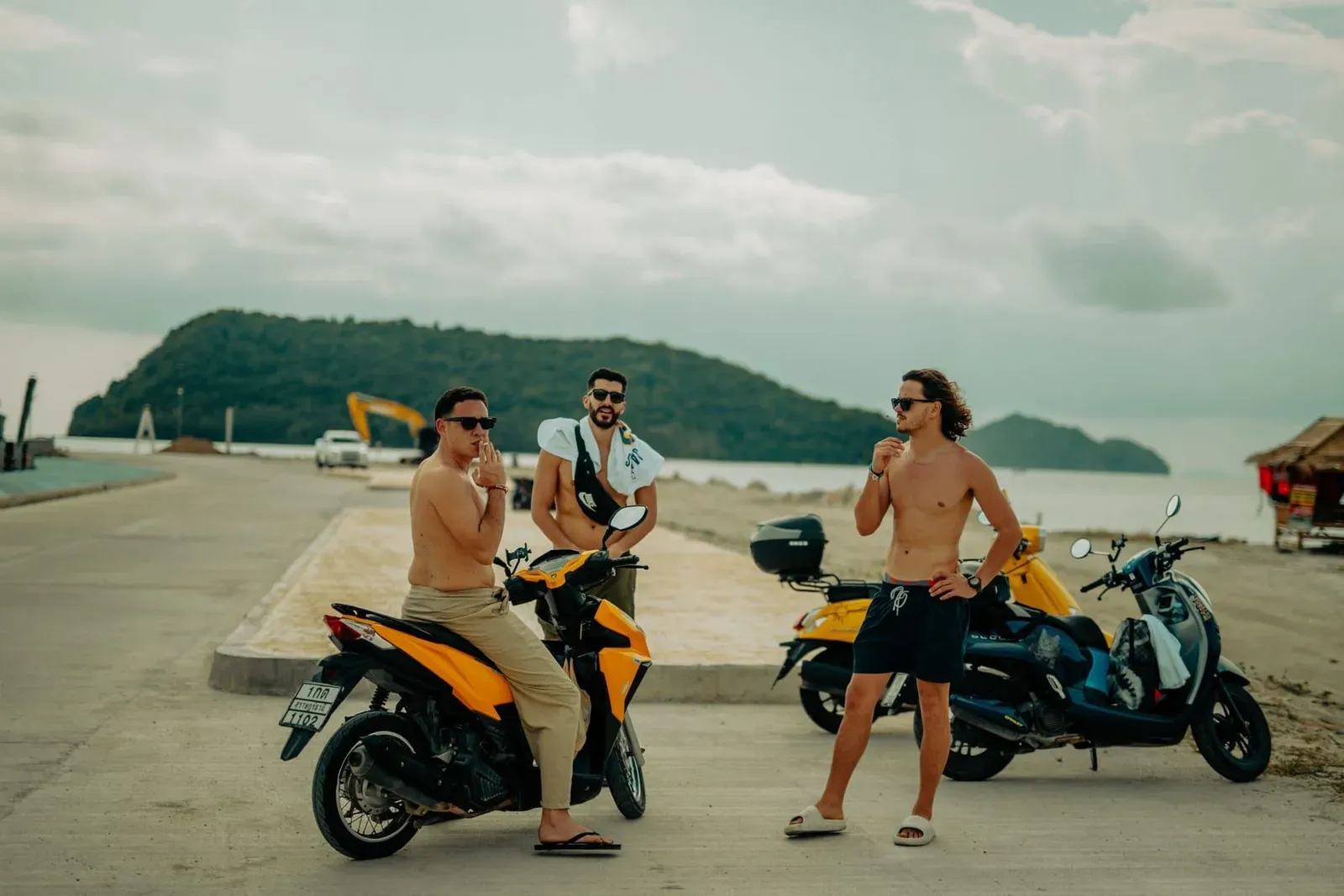
Away from the tarmac, dirt bikes work the red-earth tracks in the interior above Na Muang, where the hills climbing toward the island’s mountainous centre offer real off-road riding out of sight of the beach roads. Retired expats on Forzas and PCXs form the most sedate tribe — mid-size automatics, unhurried pace, a beach bag bungeed to the back rack. And there’s the backpacker on their first-ever ride, rented an hour ago, wobbling through a roundabout with a friend filming from the back — the rider everyone else on the road watches for with a mix of sympathy and caution.
How It Works — Ride-Outs and Workshops
A ride-out is a loosely organised group riding the ring road or a known loop together, usually starting early to beat the heat and the tourist traffic. Sunday mornings see the highest concentration — big-bike groups and the Harley club both favour the full loop past Lamai and around the southern coast, stopping at a coffee shop or viewpoint before splitting off home. None of these rides are bookable; they assemble at a familiar fuel stop and leave together, so a visitor is more likely to see one pass than to join one.
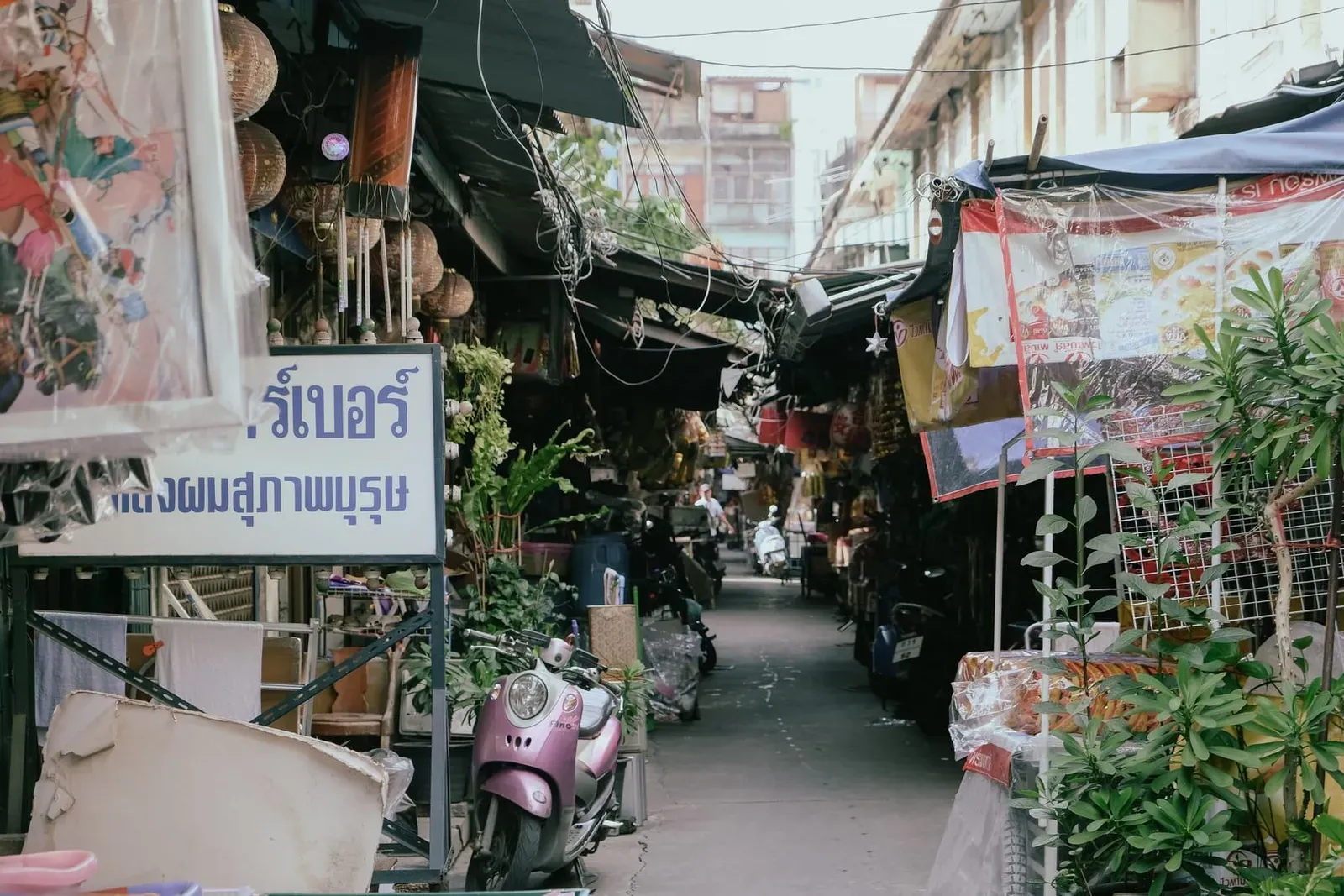
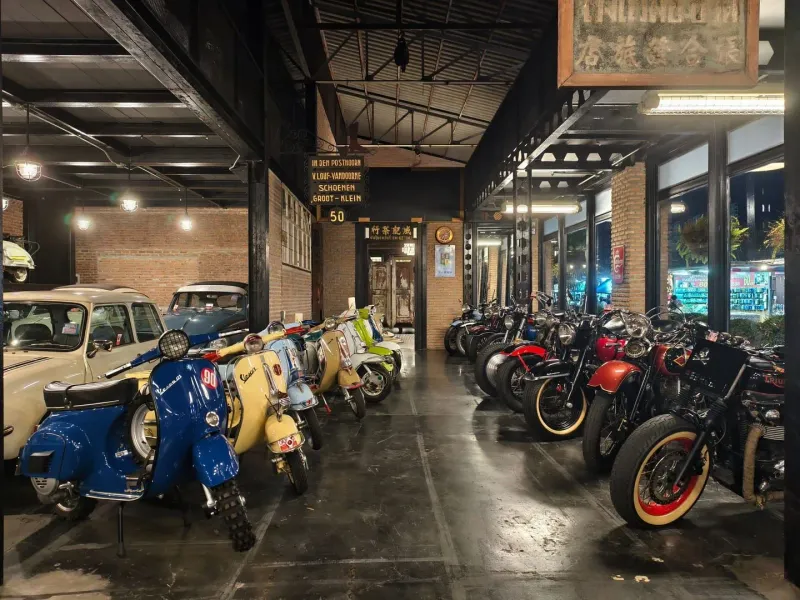
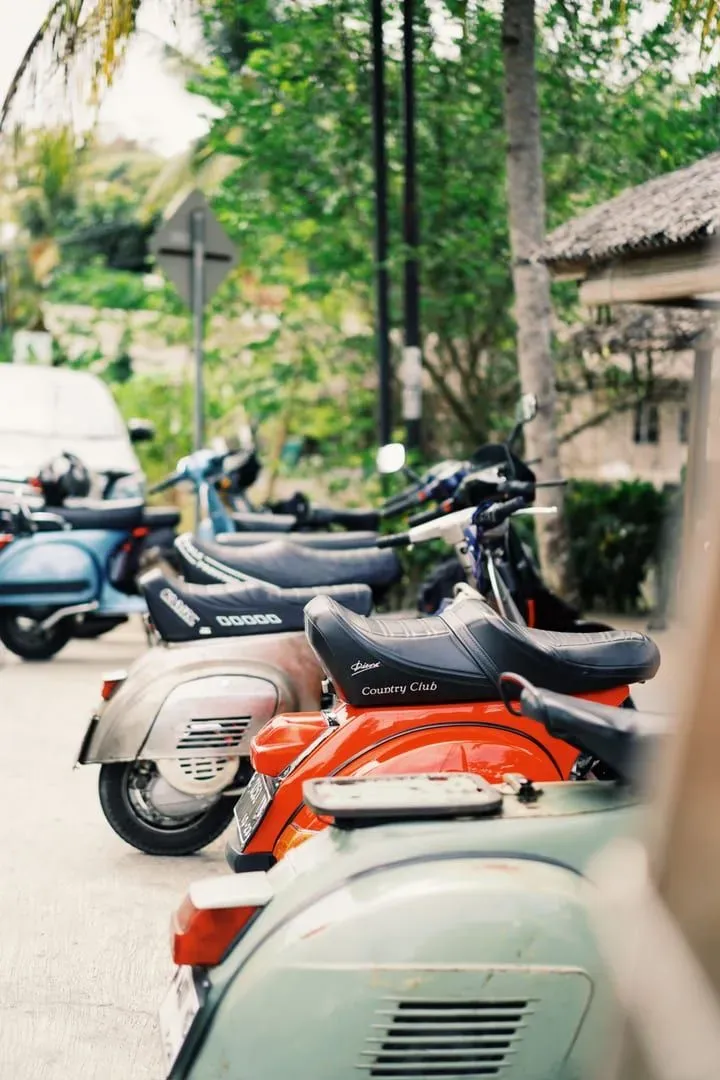
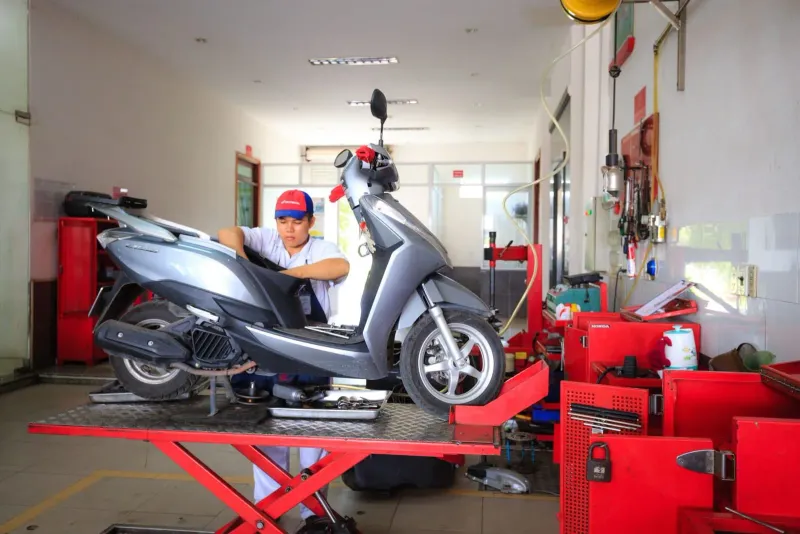
The workshop culture underneath keeps thousands of ageing bikes running. Small open-fronted repair shops line every road, and the going rate for a chain adjustment, brake cable or punctured tyre is around 200 THB (~5.50 USD) — cash, no appointment, done while you wait. The same shops feed a modest modification scene: aftermarket exhausts, LED light kits, custom seats, the occasional full respray. It’s unglamorous and functional, entirely unlike a car-culture “meet” — the point isn’t showing the bike off, it’s keeping it moving another year.
What It Costs
Belonging to this culture costs almost nothing beyond the bike itself — no club fees, no membership cards, no entry price to a Sunday ride-out. A roadside repair runs about 200 THB (~5.50 USD); a day’s fuel for a ring-road loop is 100-150 THB (~3-4.50 USD); a basic mod like an LED kit rarely exceeds a few hundred baht. What the bike itself costs to rent — rates, deposits, insurance-to-buy — is covered in the scooter rental guide; this page is about what riding costs in risk, and that’s below.
How to Join
There is no sign-up — you join by riding, and the easiest way in is to be on the road at the right time. Renting a bike is step one, with the licence and IDP requirements in the scooter rental guide treated as non-optional; after that, the culture is something you ride into, not something you’re invited to. A rental shop that also does repairs will fix a chain or top up oil for a few hundred baht with no appointment, and that transaction is itself a small door into the workshop world above.
The tribes that do organise — the big-bike and Harley groups — have no public schedule or contact point, and none is published here: these are word-of-mouth gatherings, not clubs (see getting around Koh Samui for the wider transport picture). Watch for this world; don’t expect to book it.
The Road Reality — What the Numbers Say
Thailand’s roads are among the deadliest in the world, and motorcyclists carry almost all of that risk. Royal Thai Police recorded 17,447 road deaths nationwide in 2024, with 14,144 of them — about 81% — involving a motorcycle, figures reported through Thailand’s Road Safety Data Center and consistent with Ministry of Public Health trauma statistics. The WHO Global Status Report on Road Safety (published December 2023) has placed Thailand among the small handful of countries with the world’s highest road-death rates for over a decade, and the WHO’s Thailand office continues to flag motorcyclists as the dominant casualty group. These are not soft statistics — this is a public-health-scale problem, not an occasional bad-luck accident.
On Koh Samui specifically, island officials estimate roughly 3,000 road accidents and about 50 deaths a year, tourists making up around 30% of fatalities and motorcycles involved in the large majority of crashes — figures cited consistently across the island’s own scooter rental guide and safety guide. Risk spikes further during Thailand’s “Seven Dangerous Days” campaigns around Songkran and New Year, when the national daily death toll runs several times above average — a pattern the Thai Road Safety Centre and Ministry of Public Health publish every year without much changing on the ground.
The Hazards That Actually Kill People
Helmets are legally required for rider and passenger on every Thai road, and the fine for skipping one was quadrupled in June 2025 from 500 THB to up to 2,000 THB (~57 USD) — but the fine is not the point, and treating it as one is exactly the mistake that gets people killed. That fine is a rounding error against a hospital bill that can exceed 100,000 THB (~2,857 USD) for a scooter injury needing surgery, and it means nothing if the crash happens before an officer ever sees you. Compliance is visibly patchy outside the tourist strips — plenty of Thai commuters ride bare-headed on short trips, and plenty of visitors copy the habit without understanding that the fine is the smallest cost on the table.
The specific hazards are well known to anyone who has ridden the island more than a week:
- Sand on corners — beach-road junctions and bends near construction or beach-access tracks collect loose sand a scooter’s tyres have almost no grip on, especially mid-turn.
- Steep hill sections of the ring road — stretches of Route 4169, including the Nathon-Maenam climb and the cut-through connecting Chaweng to the interior, combine steep gradient with tight bends; trucks have flipped on these grades, and a scooter has little room to react.
- Night riding without working lights — many rental bikes have a dim headlight, unlit roads outside the resort strips are genuinely dark, and dogs, potholes and stationary vehicles appear with almost no warning.
- Dogs — Samui’s soi dogs treat the road as their own, and one darting out is a common cause of a low-speed spill becoming a high-speed one when a rider swerves.
- Sudden rain on oil-slicked tarmac — a downpour lifts days of engine oil and diesel residue off the road surface in its first few minutes, making that window more dangerous than an established downpour.
- Drunk riding after a night out — the ride back from Chaweng’s or Lamai’s bar strips is short and familiar, and after a few drinks treated as low-risk by people who’d never drive a car in the same state; it’s the same law and the same danger.
None of this means don’t ride. It means riding at a pace that leaves time to react to sand, a dog, a truck or rain you didn’t see coming — on an island where most fatal crashes involve exactly one of those things.
The Insurance Trap
The most expensive mistake on this page is assuming travel insurance has your back, because for most riders it doesn’t. An estimated 90% of standard policies exclude motorcycle accidents outright, and the minority that do cover them almost universally require a valid home-country motorcycle licence plus an International Driving Permit (IDP) carrying the motorcycle category — a standard car-only IDP does not qualify, no matter how casually a rental shop hands over the keys without checking. Ride without both documents and a helmet, and even a policy that technically covers motorbikes can refuse the claim; full licence and IDP detail is in the scooter rental guide.
Thailand’s private hospitals also expect payment before treatment beyond genuine emergency stabilisation — Bangkok Hospital Samui and similar facilities can direct-bill some insurers, but only once the policy is confirmed valid, which takes time an uninsured patient doesn’t have (see the hospitals guide). A moderate scooter injury commonly runs into the tens of thousands of baht privately, and a case needing surgery routinely passes 100,000 THB (~2,857 USD) — paid personally, on the spot, without valid cover.
If the injury is serious enough to need flying home rather than just to Bangkok, the cost jumps again. International medical repatriation — a commercial flight with a medical escort at the low end, a dedicated air ambulance at the high end — commonly runs $15,000 to well over $100,000 (roughly 500,000-3,500,000+ THB), depending on distance, condition and whether intensive-care equipment travels along. That’s the number an invalidated policy leaves a family to find on their own — the real cost behind “riding without a helmet to save time.”
FAQ
Do you need a licence to ride a scooter on Koh Samui?
Yes. Thai law requires a valid home motorcycle licence plus an International Driving Permit carrying the motorcycle category — a car licence or car-only IDP does not cover a scooter. Full rules and what happens at a checkpoint are in the scooter rental guide.
How many people die on Koh Samui’s roads each year?
Island officials estimate roughly 3,000 accidents and about 50 deaths a year, with motorcycles involved in most crashes and tourists around 30% of fatalities. Nationally, Royal Thai Police recorded 17,447 road deaths in 2024, 81% motorcycle-related.
Is Thailand’s motorcycle death rate really among the world’s highest?
Yes. The WHO Global Status Report on Road Safety has ranked Thailand among the countries with the highest road-death rates for over a decade, with motorcyclists making up the large majority of those deaths — a pattern the WHO’s Thailand office continues to report.
Does travel insurance cover a scooter accident on Koh Samui?
Usually not. An estimated 90% of standard policies exclude motorcycle accidents entirely, and most that don’t still require a valid home licence, a motorcycle-class IDP and a helmet at the time of the crash. Check exclusions before you rent, not after a crash — see the scooter rental guide.
What happens if I need to be flown home after a bad crash?
If a policy is invalidated by missing documents or a helmet, the family pays directly — international repatriation typically costs $15,000 to well over $100,000. Thai private hospitals also expect payment before non-emergency treatment; see the hospitals guide.
Can I get a scooter fixed roadside on Koh Samui?
Yes — open-fronted repair shops line every road and handle a chain, brake cable, tyre or basic electrical fault for around 200 THB (~5.50 USD), usually while you wait, no appointment needed.
Turning Up
There is no club to join or event to book — the honest way to see this culture is to be in the right place at the right time. Stand outside any 7-Eleven or fuel stop on the ring road around 7:30-8am and you’ll see the school-run and commute traffic at its densest; go back around 6-7pm and the same bikes come home loaded with market shopping. Sunday mornings before 8am, watch the fuel stops along the Lamai stretch for the big-bike and Harley groups heading out on their weekly loop — the meeting point moves and isn’t publicly listed, so this is a “watch for it” scene, not a bookable one. For the workshop side, any open-fronted repair shop on the island takes walk-in customers during daylight hours, no appointment needed — that’s as close as this culture gets to an open door.
Published on
About the author

Mike Brochlowski
Travel photographer & writer
Travel photographer and island explorer. Mike has spent years documenting Southeast Asia's hidden gems, from secluded beaches to jungle waterfalls.
Articles by Mike →More in Island Life
Na Muang Waterfalls — Samui's Purple Cascades and Jungle Pools
Explore Na Muang Waterfalls on Koh Samui — the accessible 18m Purple Waterfall with its swimming pool and the 80m jungle trek to the isla…
Wat Phra Yai — Big Buddha Temple on Koh Samui
Visit Wat Phra Yai (Big Buddha) on Koh Samui: a 12-meter golden Buddha, naga staircase, panoramic views, and market stalls.
Apirom Viewpoint — Koh Samui's Closed Hillside Lookout Above Ban Tai
Apirom Viewpoint: a ~304m hilltop lookout inland of Ban Tai, Koh Samui, its restaurant closed since the pandemic but the hillside track s…