Contents
A Koh Samui muay thai gym is a household before it is a business: a Thai family runs it, fighters and trainers eat and sleep on the same compound, and a foreign beginner training alongside them is a guest in someone’s home, not a customer on a treadmill. Two sessions a day, six days a week, is the rhythm underneath every gym on the island — the part no price list captures.
Key takeaways
- The gym is typically a family compound: owner, trainers, resident fighters and students share the same ring, kitchen and yard.
- A undercard fighter’s purse at a small stadium show is commonly a few thousand baht, split between gym, trainer and fighter — not the six-figure sums reported for televised stars.
- Two sessions a day (roughly 7-8am and 4-5pm) is standard; each runs 2-2.5 hours: run, pad rounds, clinch, bag work.
- Training is open to complete beginners and to women at almost every gym; the 6am class is rarely as intimidating as it looks from the road.
- Children training and fighting is real, documented, and economically motivated — not this page’s place to moralise, but not something it will gloss over either.
- For gym comparisons, drop-in prices and package rates, see Muay Thai Training in Koh Samui — Gyms Compared; for watching a fight card, see Muay Thai Fight Nights in Chaweng.
What This Actually Is
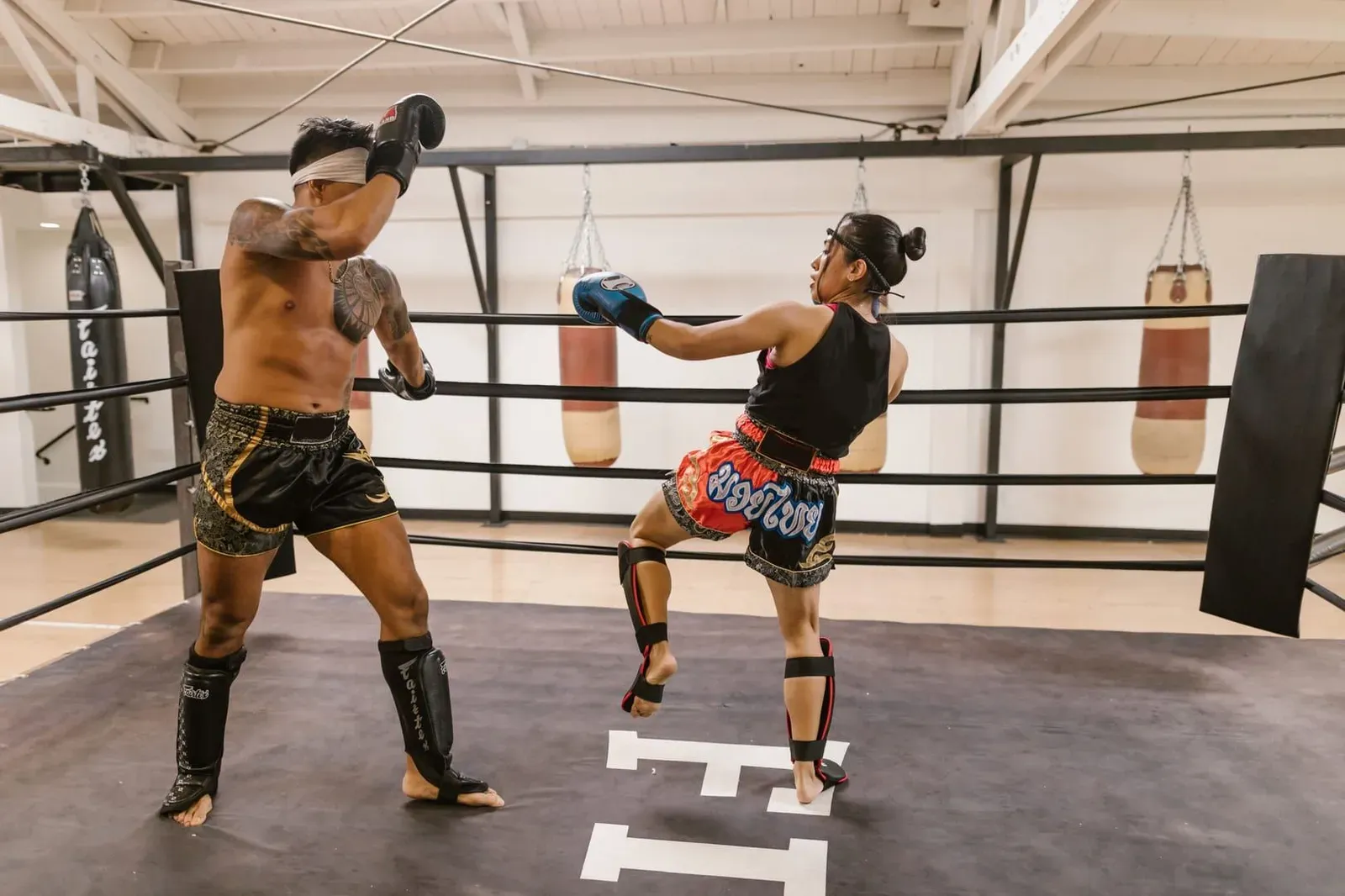
A Koh Samui muay thai gym is a working household that happens to have a ring in the middle of it, not a fitness franchise with a Thai theme. The 009 gym-comparison guide already does the job of ranking camps on drop-in price, accommodation and class size — this page does the other job: what it feels like to actually be inside one, day after day, and what keeps the lights on.
Most camps cluster around Lamai, with a couple more toward Bophut and Choeng Mon, and nearly all of them share the same bones: an open-air ring under a tin roof, heavy bags on chains, a shaded corner for wrapping hands, and a house behind or above the gym where the owner’s family actually lives. The business and the home are the same building. That is not a marketing detail — it is why the culture around it works the way it does.
Who Is In It
The people inside a Samui gym fall into four overlapping groups: the family that owns it, the trainers (often former fighters themselves, now holding pads for a living), the resident Thai fighters who train to earn a purse, and the paying students — a mix of week-long tourists, multi-month “fight camp” visitors, and a handful of long-term foreign residents who have quietly become part of the furniture.
There is no hard line between these groups. A trainer holding pads for a beginner at 7am might be cornering that same beginner’s sparring partner in a professional bout that weekend. A 16-year-old resident fighter doing extra bag rounds after the group class ends might be the gym owner’s own son. The household framing is not a metaphor — kids do homework in the corner of the gym office, and the family dog sleeps under the ring.
How It Works
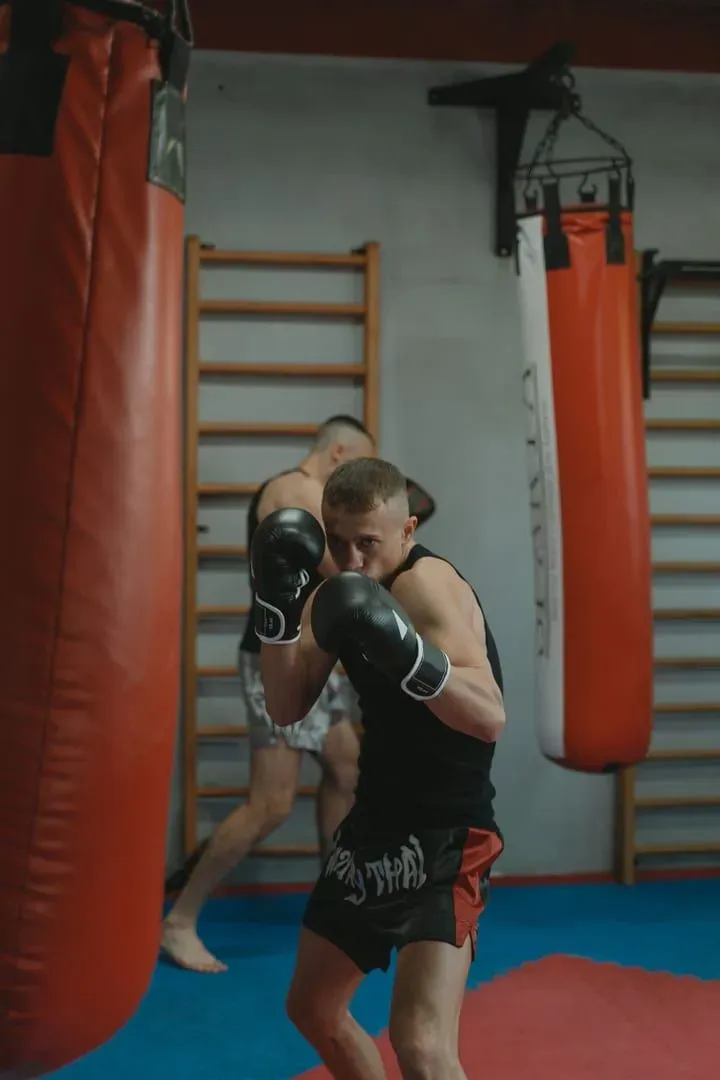
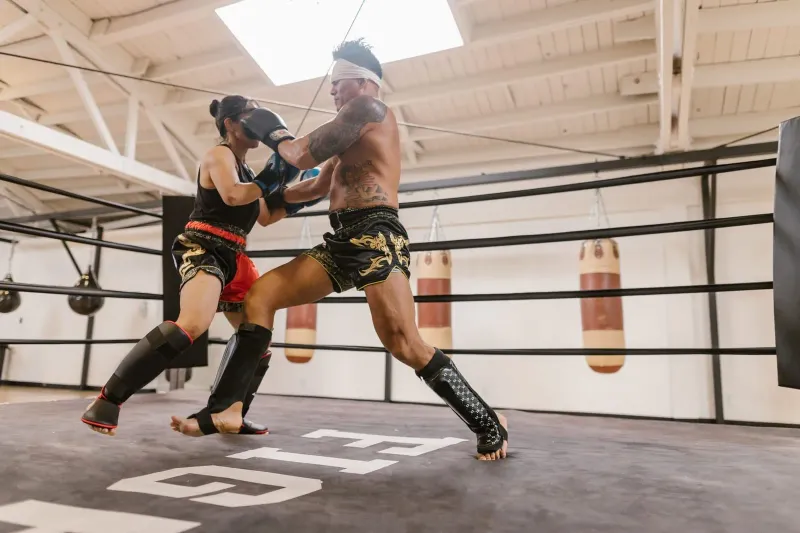
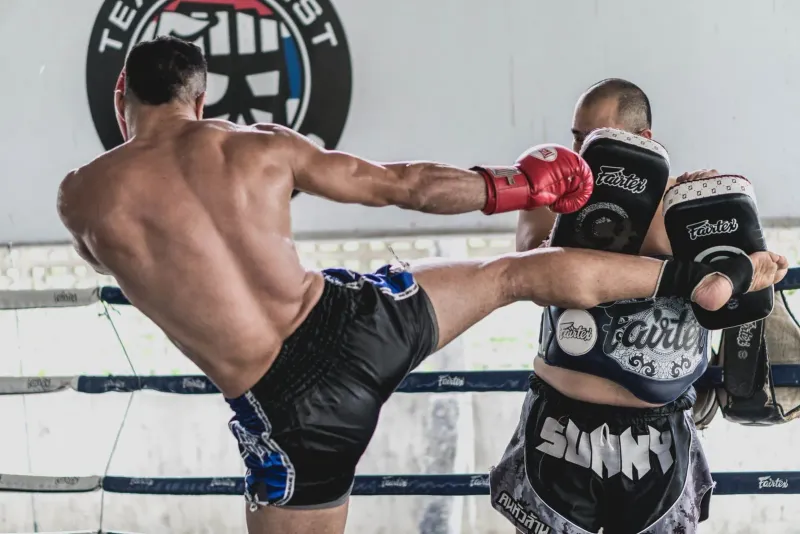
The daily shape of a serious Samui gym is close to identical from camp to camp: two sessions, roughly 7-8am and 4-5pm, six days a week, Sunday usually light or off. Each session runs about two to two-and-a-half hours and follows the same skeleton — a run or skip-rope warm-up, shadow boxing, pad rounds with a trainer, bag work, and a clinch round to close. The clinch round is the part visitors underestimate: it is grappling at close range, standing, looking for a knee or a sweep, and it is exhausting in a completely different way from throwing kicks at a bag.
The 6am class — some gyms run it earlier than the standard morning session, aimed at resident fighters rather than tourists — is the one beginners hear about and dread. In practice it is usually smaller and quieter than the afternoon class, not more advanced: fewer people, more individual pad time, and a trainer who has seen a thousand nervous first mornings and stopped noticing them. Being the only beginner in the room is far more intimidating in anticipation than in the ring — nobody is grading you against the resident fighters next to you, because everyone in that room, including them, once stood exactly where you’re standing.
What It Costs
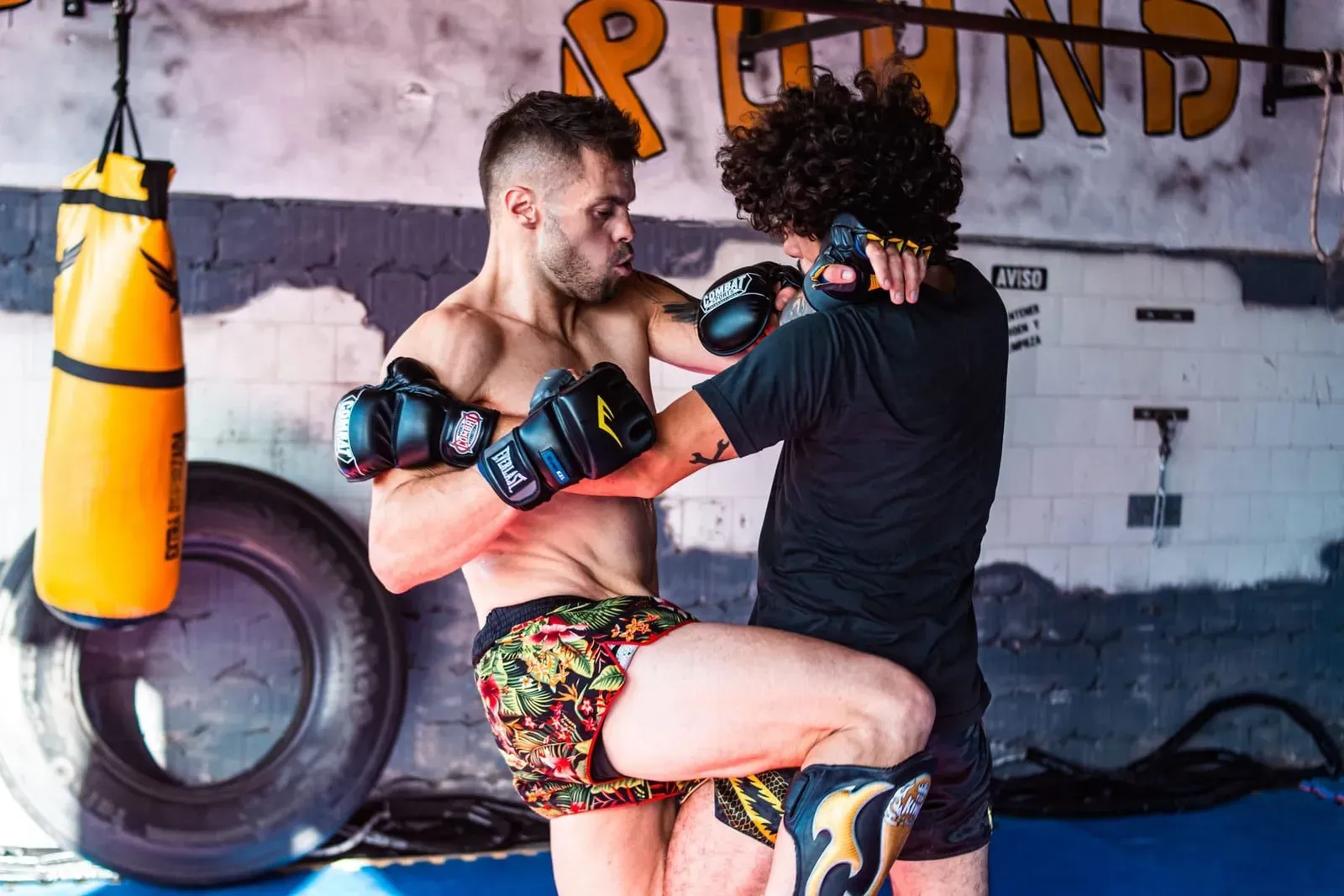
What it costs a visiting student is a small, known number: drop-in sessions and weekly packages are already priced and compared in the gym guide, typically a few hundred baht a class or a few thousand for a week, and that comparison is not repeated here. What this page is interested in is a different cost entirely — what training actually asks of a body and a schedule. Two sessions a day for a week leaves most beginners with shin bruises, a stiff neck from clinch work, and sunburn from training in an open-air ring at 4pm. It is a low financial cost and a real physical one; gyms expect neither complaint.
How To Join
Turning up is genuinely the whole process — no membership, no trial-class booking system, no sign-up sheet. Walk in during a session, tell whoever is nearest that you’d like to join a class, and a trainer will size you up and put you through a warm-up before deciding how much pad time you get that day. Bring loose shorts and a T-shirt for the first session; gloves and wraps are usually available to borrow or rent on-site so there’s no need to buy anything before finding out whether you like it. For a side-by-side of which camp suits a total beginner versus a serious fight-camp visitor, the gym-comparison guide is the place to decide where to walk in.
What a Fighter Actually Earns
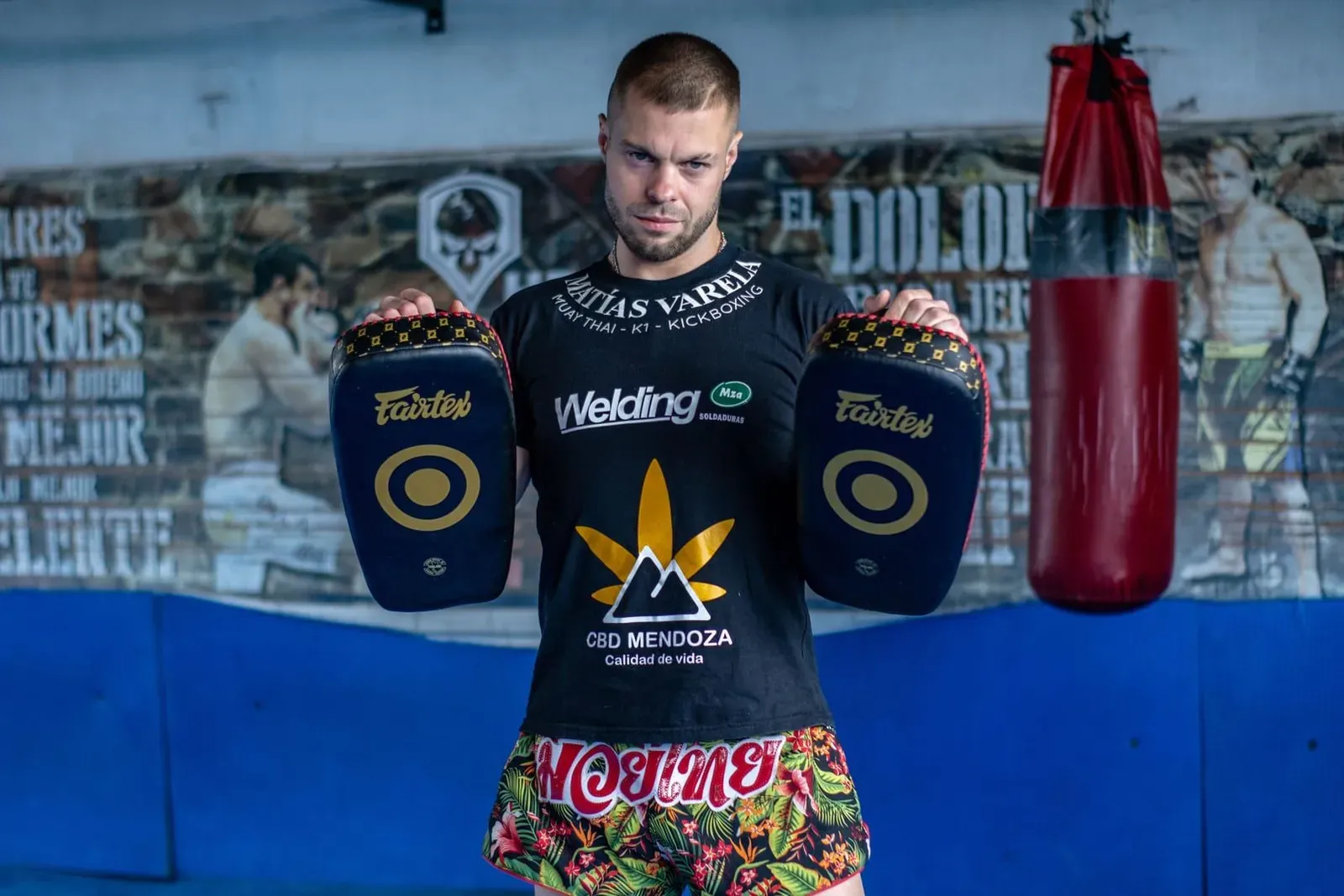
A resident Thai fighter’s purse for a small stadium card is a fraction of what outsiders assume from watching a televised Lumpinee or Rajadamnern main event. Reporting on Thailand’s wider fight economy has documented top-tier fighters earning up to roughly 200,000 THB (~5,714 USD) a bout in the sport’s peak years, and typical payouts for established professionals landing closer to 100,000 THB (~2,857 USD) in more recent reporting — but those figures describe televised, big-stadium fighters, not the undercard shows that make up most of a provincial gym’s fight calendar. Gyms do not publish undercard numbers, and this page could not independently verify current Samui-specific figures, so treat any exact baht amount you hear locally as one gym’s answer, not an island-wide rate.
What is consistent across accounts of the provincial fight scene is the split: a purse is typically divided between the fighter, the gym, and the trainer who cornered the fight, with the gym’s cut covering training, food and lodging the fighter has already received. For a family-run camp, a fighter’s purse is often folded straight back into the household’s running costs rather than treated as separate personal income — which is part of why “the gym is a family” is an economic description as much as a cultural one.
Training as a Woman
Women train and fight at essentially every gym on Koh Samui, and it is no longer treated as unusual by camps that see a steady stream of female students and residents. Muay thai historically excluded women from professional rings in parts of Thailand, and some older stadium traditions (women not stepping over the ring rope, for instance) still linger in a handful of places — but day-to-day training, sparring and clinch work is mixed at nearly every Samui gym, and several run classes with a majority-female student base during peak tourist months. The honest caveat: ring superstitions vary gym to gym and are worth asking about rather than assuming away, but they affect ritual, not access to training.
The One Who Stayed
Every gym on this island can point to a version of the same story: someone arrived for a one-week holiday package, meant to fly home, and is still there three years later — teaching a beginner class, managing the gym’s social media, or quietly training for their fifth amateur fight. It is common enough on Samui to be a recognised type rather than a remarkable exception, and gym owners talk about it as an ordinary feature of running a camp on a tourist island, not a rare curiosity. The pattern holds because the thing that hooks people is the same thing this page keeps returning to: the training is only half of it, and the household around it is the other half.
The Child-Fighter Question
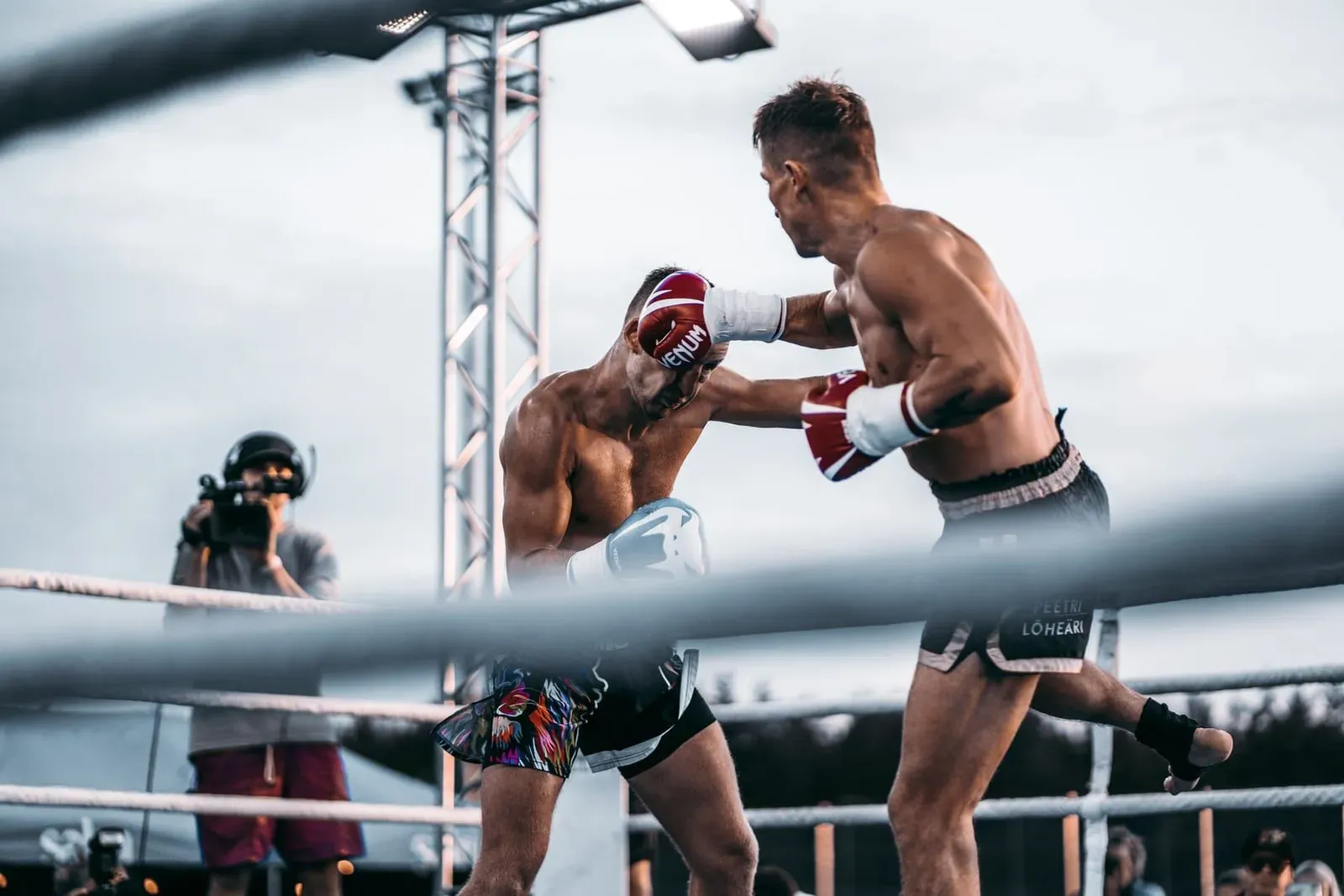
Children fighting professionally is a real and documented part of Thai muay thai, and Koh Samui’s camps sit inside a national picture, not apart from it. As of the most recent figures available, roughly 10,000 boxers under 15 were officially registered in Thailand, with wider estimates of total child participation nationwide running into the hundreds of thousands, some starting as young as four (Wikipedia: Muay Thai). A Ramathibodi Hospital study of 300 young boxers, cited in the same source, found measurable brain-injury markers and an IQ gap correlated with years of training, and Adisak Plitapolkarnpim, director of Thailand’s Child Safety Promotion and Injury Prevention Research Centre, has recommended banning competitive fighting under age nine and restricting head contact from nine to fifteen.
The high-profile death of a 13-year-old boxer in a 2018 stadium bout pushed the debate into Thailand’s National Legislative Assembly, which considered amending the Boxing Act (B.E. 2542) to set a minimum fighting age and mandate protective headgear for younger fighters. What actually became enforceable law, and how consistently any age threshold is applied at the provincial and stadium level today, is not something this page can confirm with confidence — reporting on enforcement has been inconsistent, and readers should treat any specific age rule they hear quoted locally as a claim to verify, not settled fact.
The other half of this picture is the one that rarely gets a hearing: for a family with a talented child and few other paths to income, a fight purse is not an abstraction. It can be the difference that covers school fees, clears a debt, or keeps a household afloat for a month, and it is offered to their child under a system of Thai fighters, trainers and gym owners who came up the same way themselves and see it as a livelihood, not a spectacle. This page reports that economic reality because it is documented and real, not to argue it settles the safety evidence above — both things are true at once, and neither cancels the other out.
FAQ
Is Koh Samui muay thai training suitable for a complete beginner?
Yes — nearly every gym on the island runs beginner-friendly classes with no experience required, and trainers are used to first-timers who have never thrown a kick. Expect a warm-up, basic technique on pads, and lighter bag work; nobody is put in a sparring match on day one.
How much does a Thai fighter actually earn per fight?
Undercard purses at small stadium shows are typically a few thousand baht, split between fighter, gym and trainer — far below the roughly 100,000-200,000 THB (~2,857-5,714 USD) reported for televised, top-tier bouts. Exact Samui-specific figures are not published, so treat any number you hear locally as one gym’s answer.
Can women train muay thai on Koh Samui?
Yes, at essentially every gym — mixed classes, sparring and clinch training are standard, and several camps see mostly female students during peak season. A few stadiums still keep older ring superstitions around women, which affects ritual, not training access; ask locally if it matters to you.
Are children still fighting professionally on Koh Samui?
Child fighting is documented nationally in Thailand and Samui’s camps are part of that picture, not separate from it. A Ramathibodi Hospital study found brain-injury markers linked to training duration, while a family’s fight-purse income can be genuinely significant — the current legal age threshold is inconsistently reported and should be treated as unsettled rather than confirmed.
What does a typical training day actually involve?
Two sessions, roughly 7-8am and 4-5pm, each two to two-and-a-half hours: a run or skip-rope warm-up, pad rounds with a trainer, bag work, and a clinch round. The clinch round — standing grappling for knees and sweeps — is usually the part beginners find hardest.
Turning Up
There is no schedule to reserve, because nothing needs reserving. Walk into any gym clustered around Lamai, or the smaller camps near Bophut and Choeng Mon, during a session — mornings from around 7-8am, afternoons from around 4-5pm, six days a week — and ask to join. A trainer will put you through a warm-up and take it from there. If you want to choose a specific gym first, the gym-comparison guide covers prices and class sizes camp by camp, and if you’d rather watch before you train, a fight card at one of the Chaweng stadiums — a short taxi from Chaweng or Lamai — is the honest preview of what the training is building toward. Bring water, a towel, and the willingness to be the newest person in the room; every long-termer on this island started there too.


Published on
About the author

Mike Brochlowski
Travel photographer & writer
Travel photographer and island explorer. Mike has spent years documenting Southeast Asia's hidden gems, from secluded beaches to jungle waterfalls.
Articles by Mike →More in Island Life
Na Muang Waterfalls — Samui's Purple Cascades and Jungle Pools
Explore Na Muang Waterfalls on Koh Samui — the accessible 18m Purple Waterfall with its swimming pool and the 80m jungle trek to the isla…
Wat Phra Yai — Big Buddha Temple on Koh Samui
Visit Wat Phra Yai (Big Buddha) on Koh Samui: a 12-meter golden Buddha, naga staircase, panoramic views, and market stalls.
Apirom Viewpoint — Koh Samui's Closed Hillside Lookout Above Ban Tai
Apirom Viewpoint: a ~304m hilltop lookout inland of Ban Tai, Koh Samui, its restaurant closed since the pandemic but the hillside track s…