Contents
Before Koh Samui had an airport, it had a coconut trade: boats carried nuts from this island to Bangkok for the better part of a century, and the plantations that grew them are still physically what the hills are made of. This page reports what that economy paid, who owns the land because of it, and what’s left of the trees today.
Key takeaways
- Coconut, not tourism, was Koh Samui’s first export economy — Hainanese Chinese settlers began plantations in the 19th century and shipped nuts to the mainland by boat.
- The oft-quoted “two million coconuts a month” figure has no traceable primary source; treat it as a well-worn estimate, not a fact.
- Land that earned a modest, steady income in copra now sells, in the same locations, as building plots — a shift that funded much of the island’s tourism development.
- Working plantations still stand inland and along the south coast around Bang Kao, Laem Set and Taling Ngam, visible from the Khao Pom trail and the south-coast backroads.
- Trained macaques are documented harvesting coconuts on Samui under threat of violence — summarized here, with the fuller welfare picture belonging on its own page.
What This Actually Is
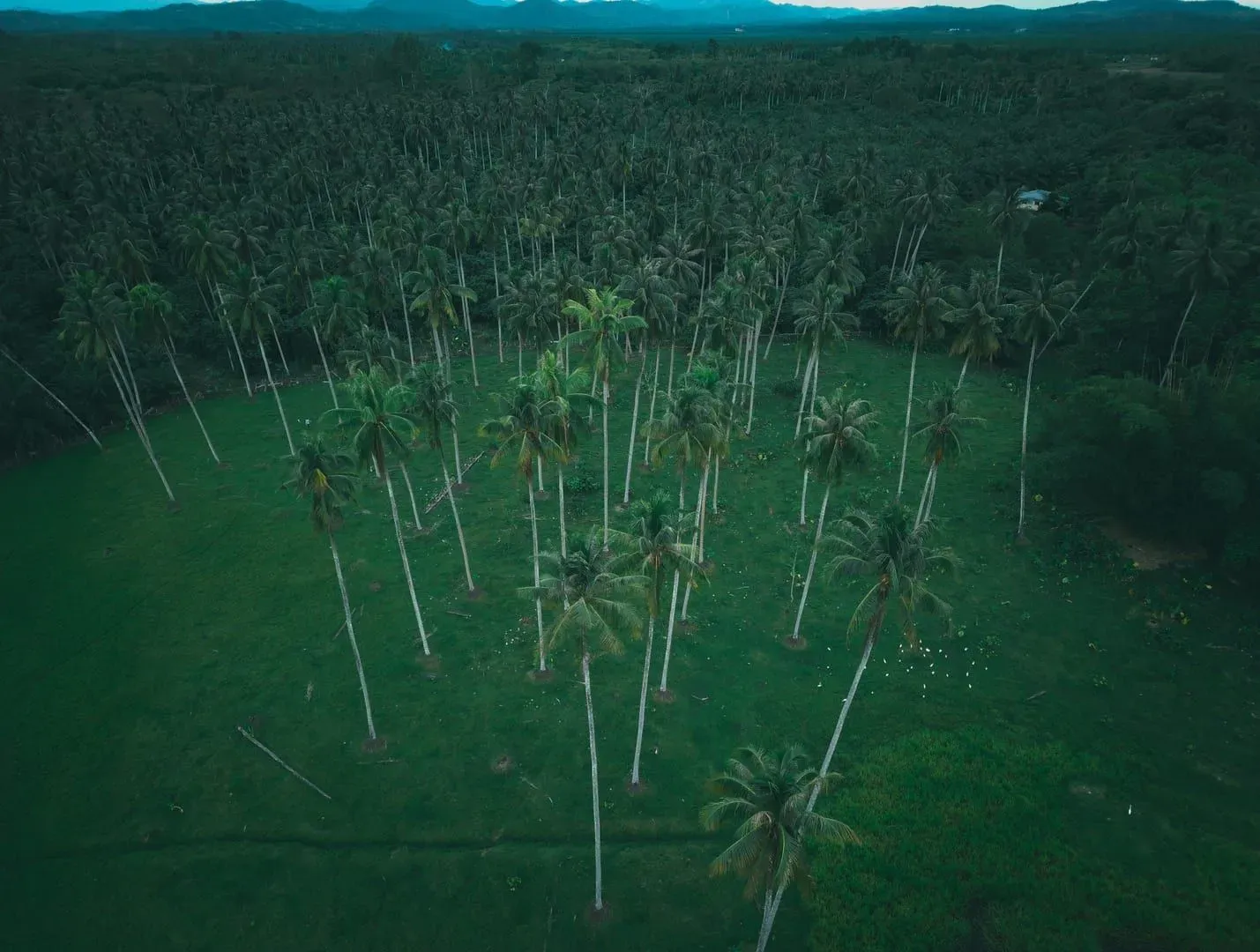
Coconut was Koh Samui’s original industry, and the island still looks the way that industry left it. Long before beach clubs and boutique resorts, Samui ran on a working export economy — dried coconut and coconut oil shipped to the mainland — for the better part of a century, and its physical legacy is everywhere: the palm cover on the hills behind the beaches, the older wooden shophouses set back from the shore, the “Coconut Island” tag still printed on souvenir T-shirts. What follows is the arc from working plantation to tourist backdrop.
Who Is In It
Two groups carry this history, on either end of it. The founding side is the Hainanese Chinese trading families who settled Samui’s harbor towns in the 19th century and planted the island’s first commercial coconut groves — the same families whose descendants, per the site’s own reporting on Bophut and Nathon’s fishing history, also traded dried fish, coconut oil and spices out of those ports. The present-day side is smaller: a handful of families and smallholders who still tend working groves inland and on the south coast, plus the pickers, drivers and processors — Thai and migrant — who get a nut off a tree and into oil, milk or a market stall.
How It Works
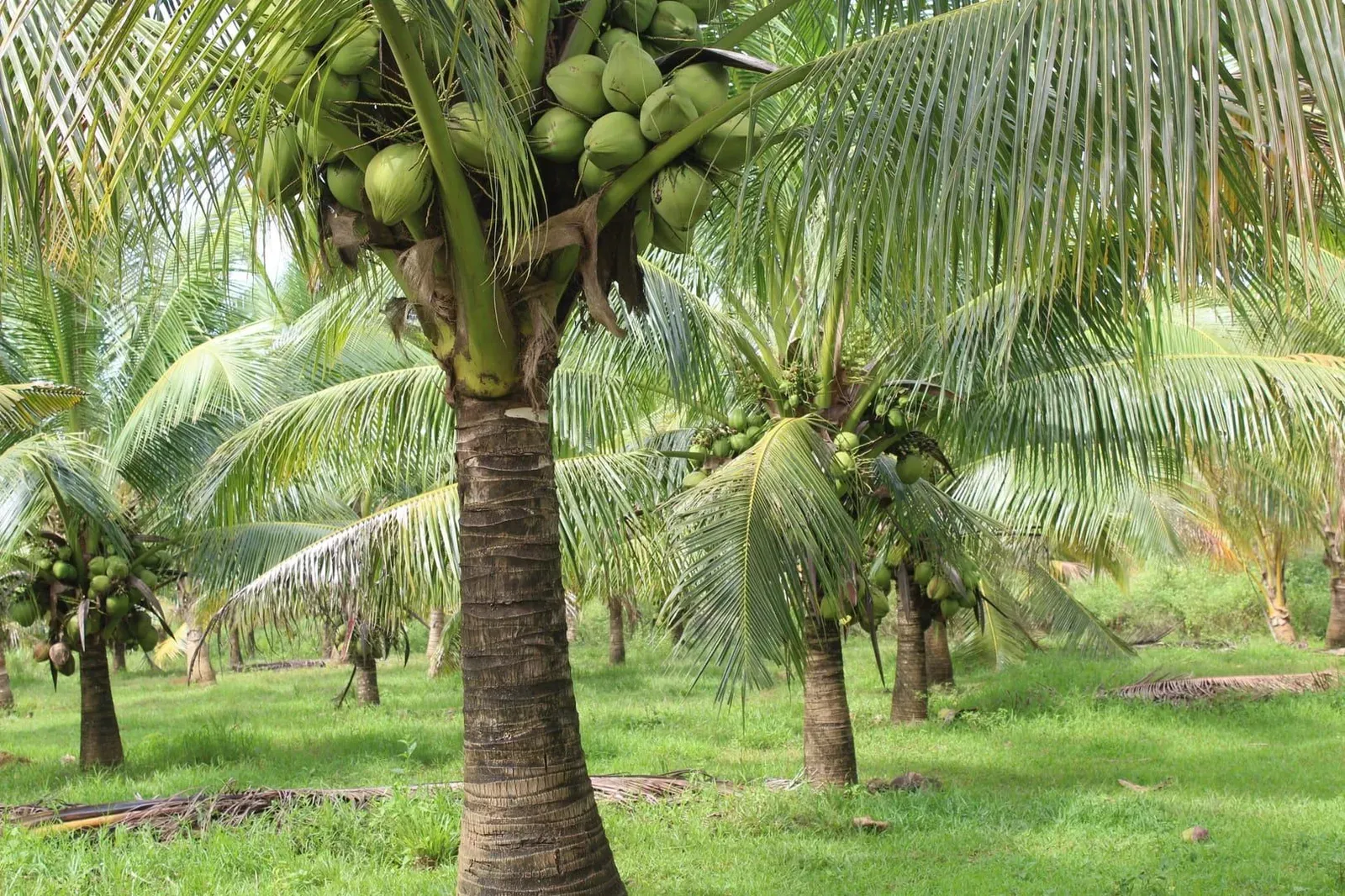
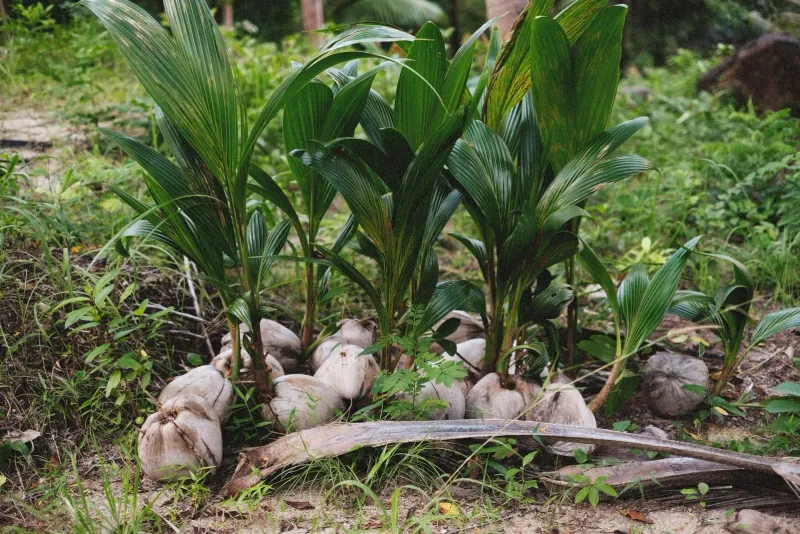
A coconut palm bears fruit nearly year-round in Samui’s climate. Harvesting happens three ways: a trained climber goes up the trunk by hand or with a climbing belt, a long pole with a blade or hook cuts bunches loose from the ground, or — on a documented minority of farms — a trained macaque is sent up instead (more on this under The Monkey Question). Once down, the nut is split, and the flesh is sold fresh, pressed for milk, or dried into copra — coconut meat dried until it hardens — which is then pressed for oil. Nothing is wasted: the husk and shell burn as fuel or become charcoal, and the fibrous husk, called coir, goes into rope, mats and brushes.
What It Costs
Reliable, dated figures for exactly what a Samui coconut earns a grower today are hard to pin down from public sources — this page could not independently verify a current farm-gate price per nut, and won’t publish a specific baht figure it can’t source. What is documented, on the island’s own food pages, is the retail end: fresh coconut water, coconut ice cream and coconut shakes sold from carts near beaches and markets run roughly 40–80 THB (~1–2.50 USD), and packaged coconut sweets go for 10–30 THB (~0.50–1 USD) a piece, per the site’s local dishes guide. A raw nut sold by a farmer to a processor or trader is a fraction of that retail price, as it is everywhere in the copra trade.
How to Visit
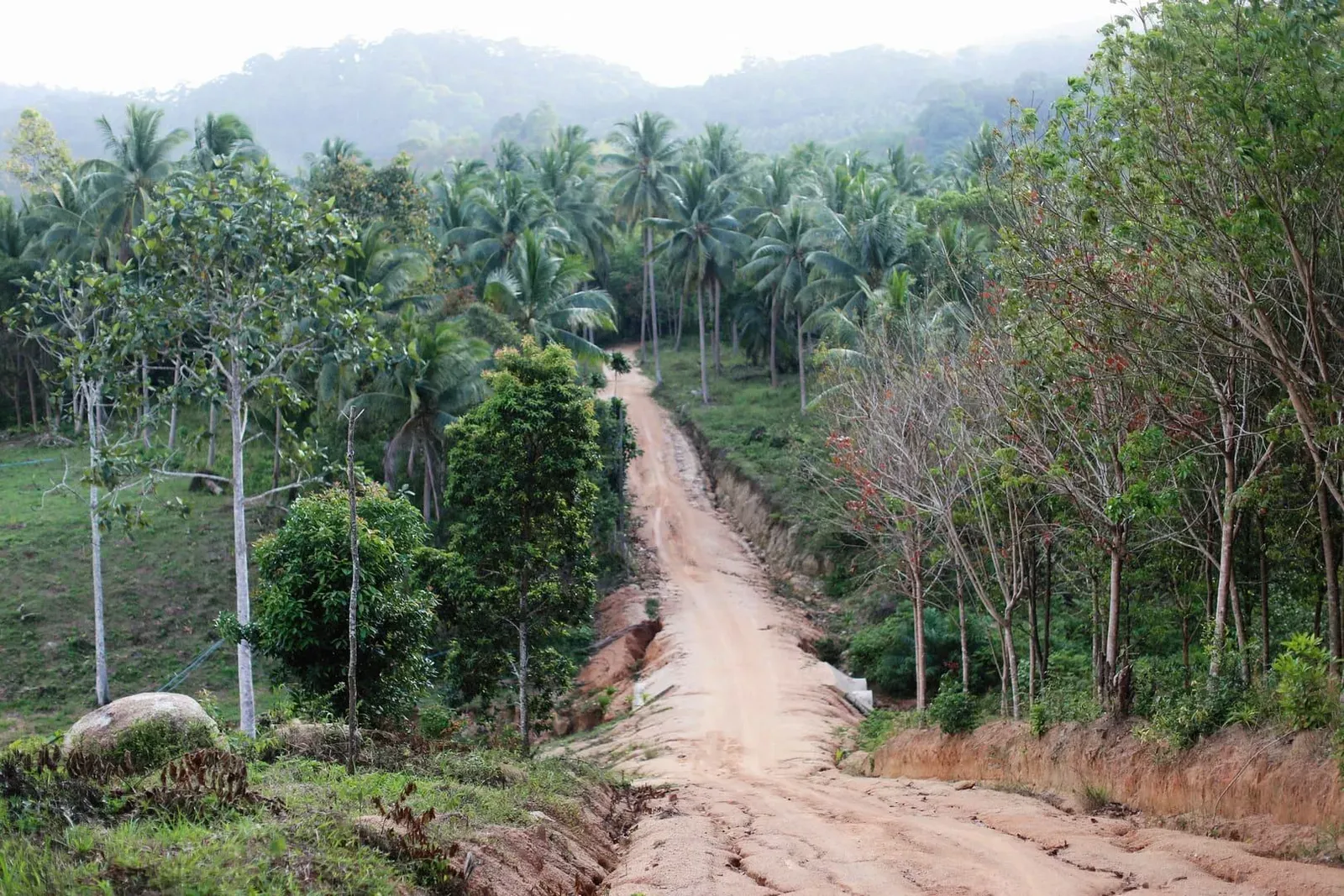
Seeing a working plantation on Samui takes almost no planning, and mostly means slowing down rather than booking anything. The backroads through Bang Kao, Laem Set and Thong Krut on the south coast, and the road toward Wat Nara Charoen Suk near Lipa Noi, run directly past working groves — no ticket, no schedule, no guide required, just a scooter and the patience to go slowly. The lower two kilometers of the Khao Pom trail walk straight through a mixed coconut-and-durian plantation before the terrain turns to unlogged jungle. None of this is staged for visitors — a genuine grove has no entrance fee, no seating area, and usually no one waiting for you.
Boats to Bangkok — The Economy Before Tourism
Coconut farming on Koh Samui predates the tourist industry by roughly a century. According to Wikipedia’s account of the island’s settlement, Hainanese Chinese immigrants who arrived in the 19th century were the ones who “first began cotton and coconut plantations on the island,” transporting the crop to the mainland on boats known as panuk lang si. There was no airport until 1989 and no car-ferry link for most of that history, so a boat to Surat Thani and on to Bangkok was the only way a Samui coconut ever left the island. A frequently repeated claim on travel sites puts the trade at two million coconuts shipped off the island every month at its peak; this page could not trace that figure to a primary source, government record or study, so treat it as a well-worn estimate rather than a verified statistic. What Wikipedia does confirm, without a number attached, is that coconut and rubber exports remained part of the island’s economy well into the tourism era.
Why Samui’s Families Own the Land They Do
The families who hold Samui’s land titles today mostly hold them because an ancestor planted coconuts on it, not because of any tourism-era purchase. Land tenure on a small, historically poor island tended to follow whoever cleared and worked it first, and the 19th- and early-20th-century Hainanese and Thai families who planted the original groves passed that land down through generations largely intact, because for most of the 20th century there was no reason to sell it: a coconut grove was the asset, not a placeholder for something more valuable. That inheritance is why so much land close to Samui’s best beaches was in Thai and Thai-Chinese family hands, rather than corporate or colonial holdings, when tourism development arrived in the 1980s and 1990s — and why those same families were positioned to lease, sell or develop it.
When a Rai Stopped Being Worth Growing Coconuts
The trigger for converting a working grove into a resort, a villa compound or rental bungalows is simple arithmetic: a rai of coconut trees produces a modest, steady income measured in thousands of baht a year, while the same rai as titled, buildable land near a beach became worth vastly more once Samui’s airport opened in 1989 and international arrivals started climbing. Thai property listings today routinely quote beachfront and sea-view land on Samui in the millions to tens of millions of baht per rai depending on location — figures this page treats as indicative rather than audited, since no single dated government source was available to confirm them. What isn’t in dispute is the direction: once tourism made land more valuable standing empty than standing in trees, the case for keeping a grove working evaporated for any family with near-beach land, and much of what got cleared in the 1990s and 2000s never grew back as plantation.
What’s Still Working — The Plantations Today
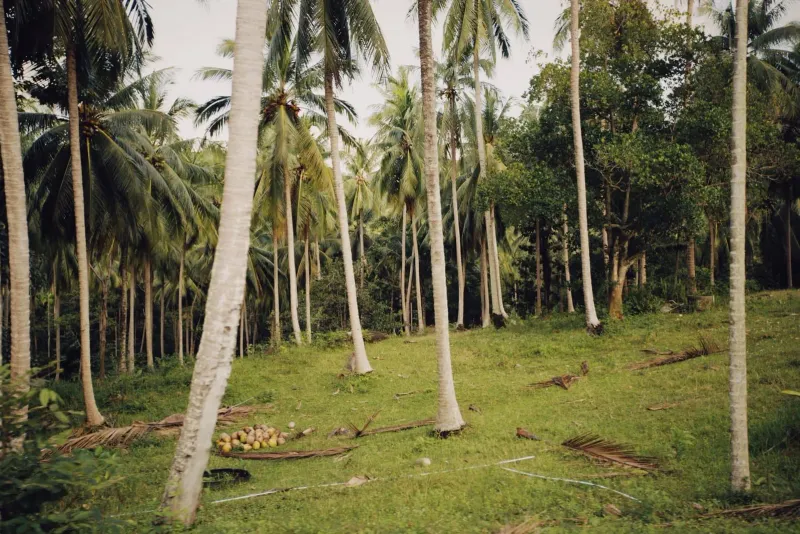
What survives sits away from the coast most tourists see. The interior slopes around Khao Pom, Samui’s tallest mountain, still carry working coconut and durian plantation on their lower reaches — land too steep or too far from a beach to have been worth converting; the trail’s own notes describe the mountain’s upper forest as never commercially logged, unlike most of the island’s lower-elevation land cleared for coconut decades ago. The south coast, from Bang Kao and Laem Set through to Taling Ngam, keeps the island’s most visible working groves, with the south coast guide noting coconut plantations and fishing piers standing in for the beach clubs found further north. None of it is large-scale — Surat Thani province and southern Thailand generally are far bigger producers — but it’s enough that a resident can still buy island-grown coconut at a market rather than one trucked in from the mainland.
From Nut to Product — Copra, Oil, Milk and Charcoal
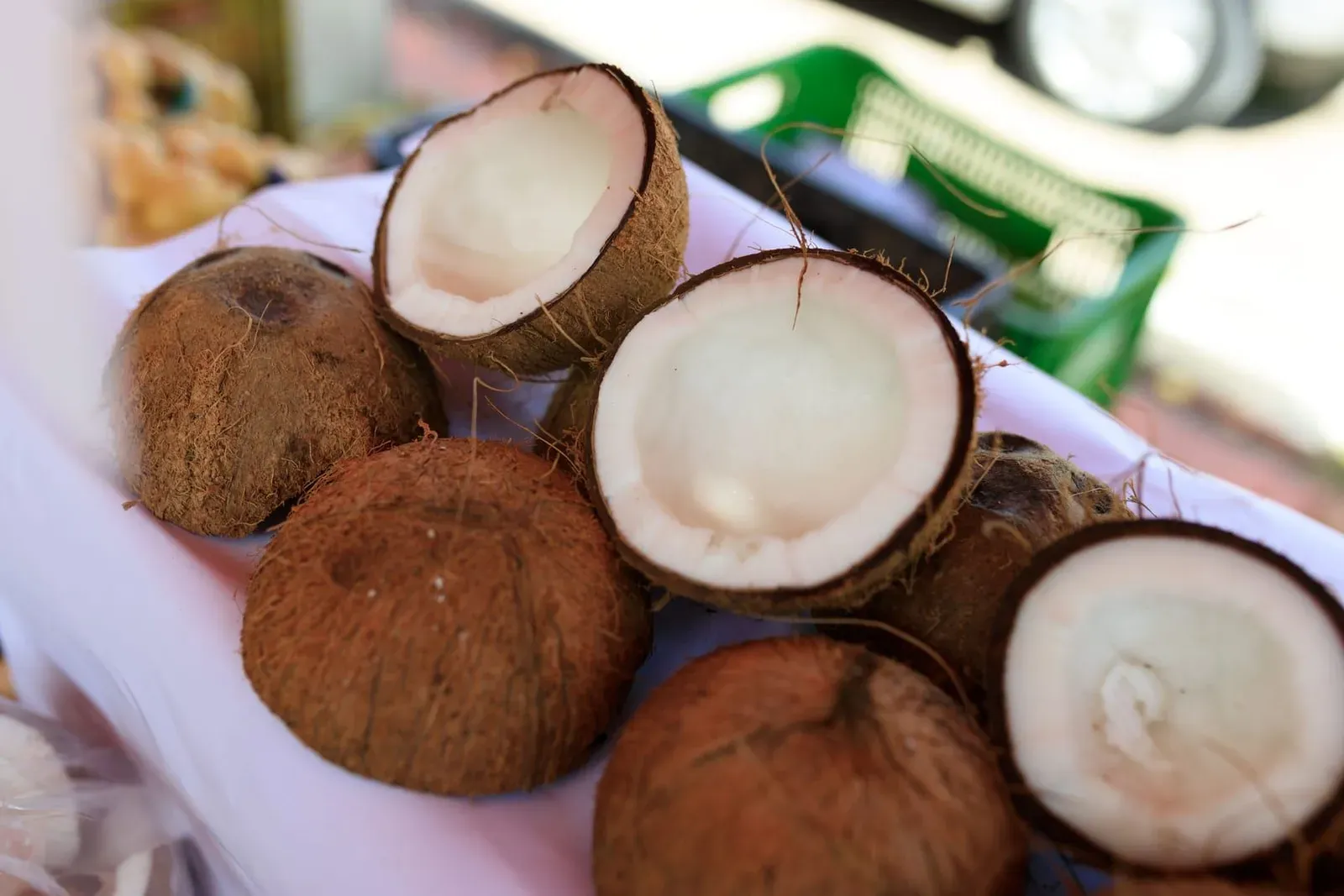
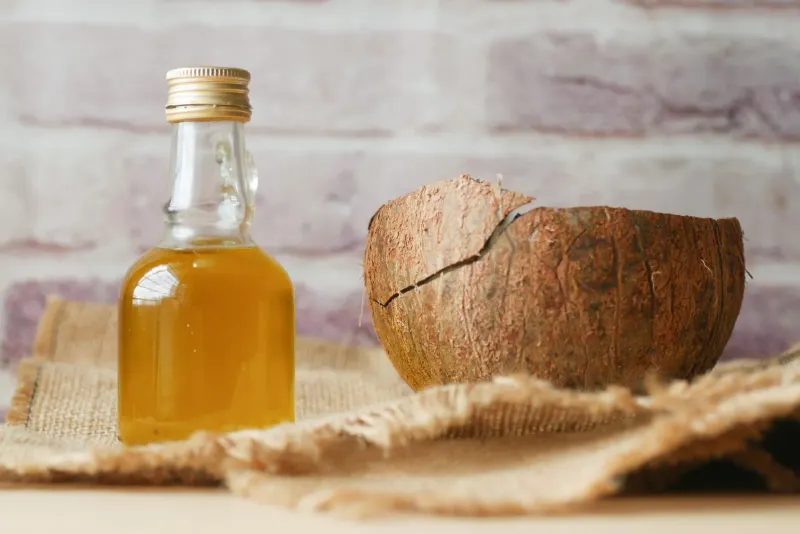
Everything a Samui coconut becomes starts with the same split nut. The meat is sold fresh for milk and cooking, or dried into copra — the traditional export form, because dried flesh keeps and ships far better than the whole nut — and copra is then pressed for oil, historically the crop’s main cash product before palm and soybean oil undercut it on world markets. Virgin coconut oil, sold in Samui’s markets and spas today, skips the drying step: fresh meat is pressed or fermented cold, without heat, which is why it’s priced well above copra-derived oil. Per Wikipedia’s entry on the coconut, the husk and shell can be burned for fuel or made into charcoal, and coir fiber from the husk is used in rope, mats, brushes and sacks.
What You Actually See — Oil, Sweets and Roadside Stalls
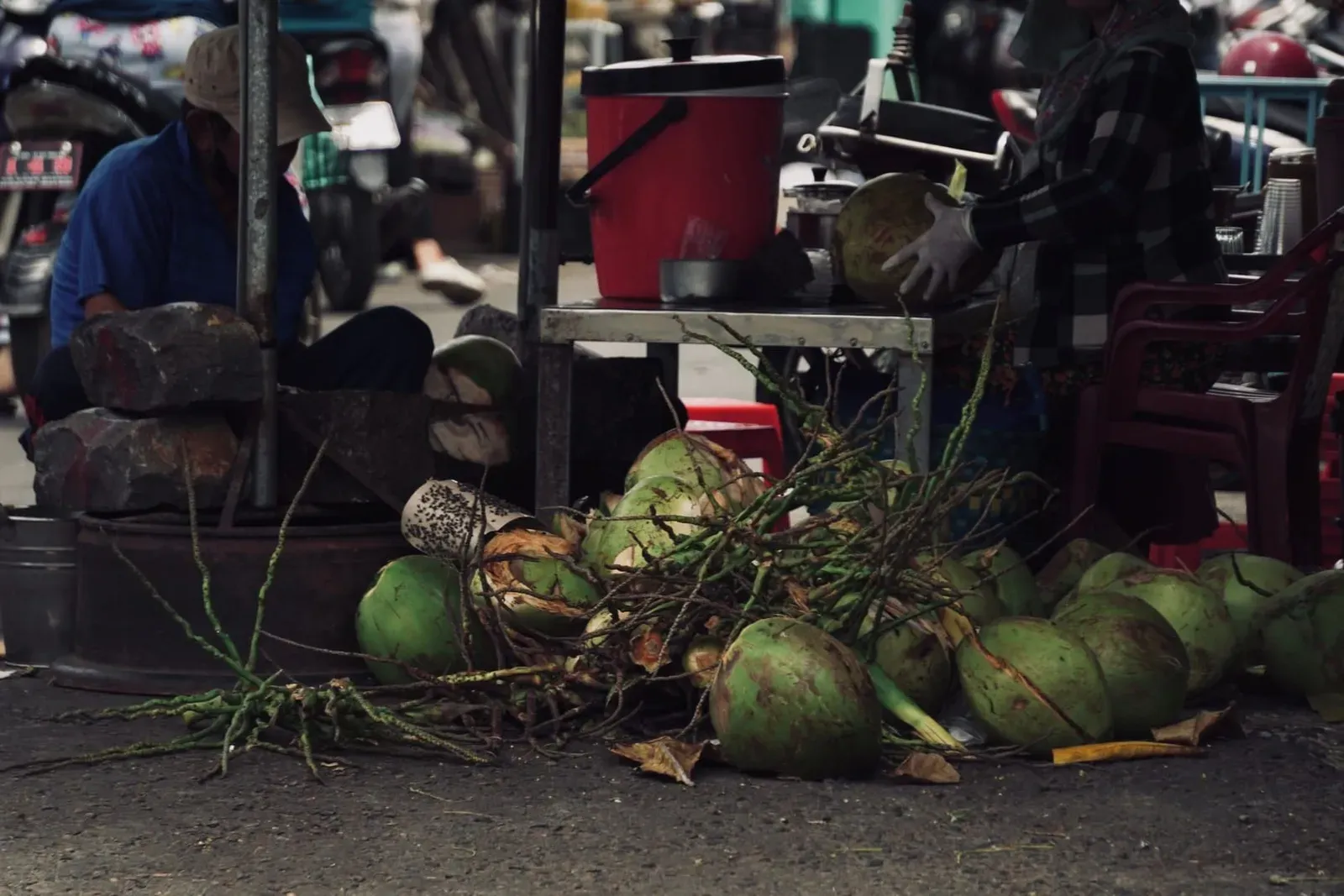
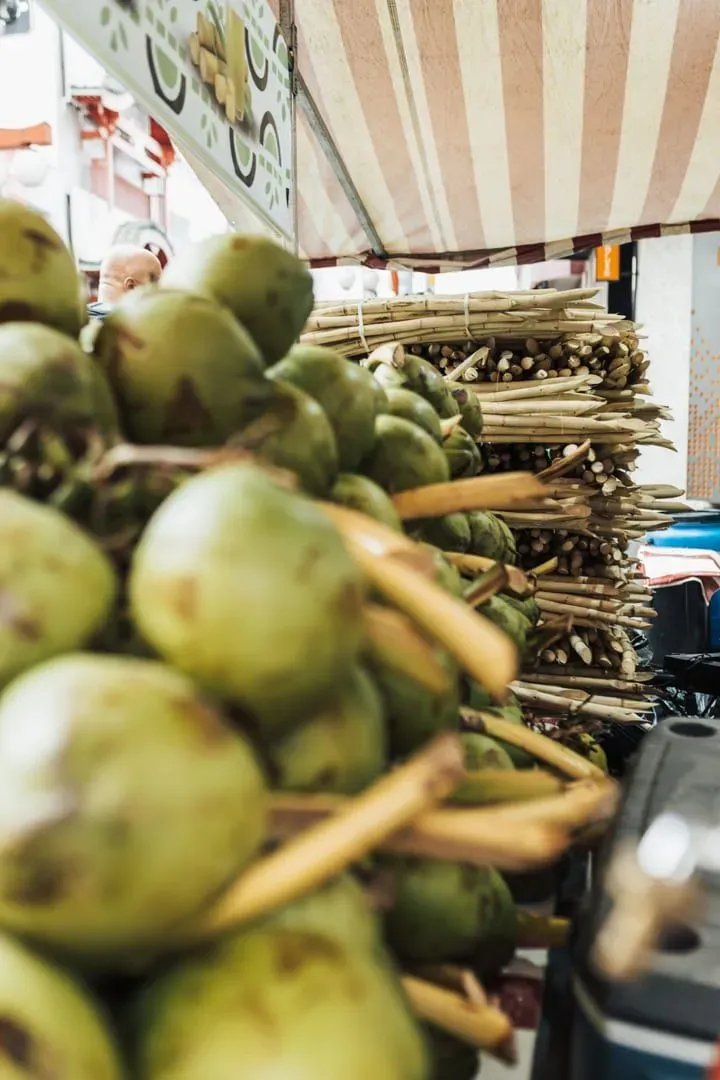
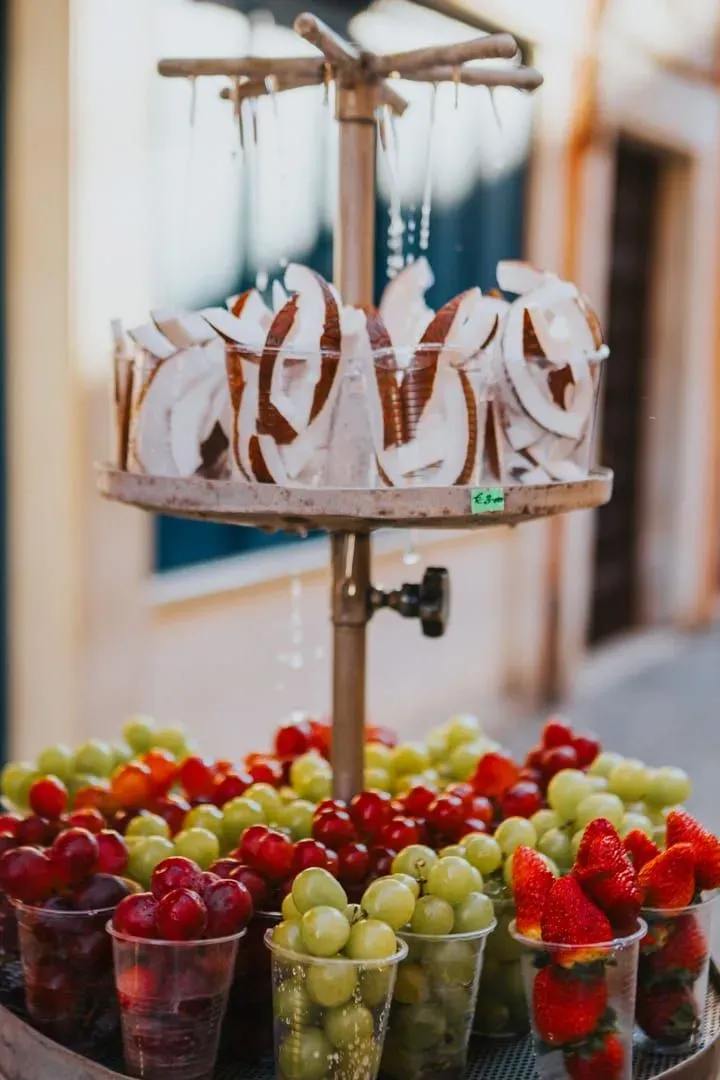
A visitor’s actual contact with this economy is almost entirely at the consumption end. Roadside stalls and market carts sell fresh young coconut water straight from the shell, coconut ice cream scooped into a halved shell with sticky rice, and coconut shakes — the site’s own local dishes guide prices these at roughly 40–80 THB (~1–2.50 USD) — alongside packaged khanom Thai coconut sweets at 10–30 THB (~0.50–1 USD) a piece, concentrated around Nathon, Maenam and Bophut markets. Bottled virgin coconut oil, sold as a cooking, skin or hair product, shows up in the same markets and in spas island-wide; buying it from a stall attached to a visible small producer is the closest most visitors get to actually supporting a working grove.
Who Does the Work — Climbers, Cutters and the Wage Reality
Three kinds of labor keep a working Samui grove producing, and none pay particularly well by the island’s tourism-economy standards. A climber goes up the trunk on a harvesting cycle that repeats roughly every 45–60 days per tree — the hardest and most dangerous of the jobs, since a fall from a mature palm is a genuine injury risk without a harness in most traditional operations. A cutter working from the ground with a pole is slower per tree but far safer, and is the more common method on lower or younger palms. A driver or hauler moves harvested nuts from grove to processor or market, paid by the load rather than the hour. This page could not source a current, dated wage figure for any of the three roles specific to Samui — coconut harvesting is typically piece-rate or informal family labor rather than salaried work, which makes an island-specific number hard to verify rather than nonexistent.
The Monkey Question
A well-documented, controversial practice on Koh Samui is training pig-tailed macaques to climb and twist coconuts free instead of using a human climber or a pole. Per Wikipedia’s entry on the island, “macaques are forced by some farmers on the island to harvest coconuts, often under threat of violence” — a practice that has led some retailers abroad to pull Thai coconut products carrying a monkey-harvested label, as the site’s own responsible travel guide covers in more detail. Not every grove uses trained monkeys, and the practice is distinct from the monkey shows staged for tourists at some venues, which raise a separate set of concerns. The fuller picture — which farms use monkeys, what the rescues are doing, and how to shop for monkey-free coconut products — is bigger than this page can carry; look for it under Island Life’s dedicated monkey-welfare page.
FAQ
Did Koh Samui really export coconuts before tourism?
Yes. Hainanese Chinese settlers began coconut plantations on Koh Samui in the 19th century, and the island shipped dried coconut and coconut oil to the mainland by boat for decades before tourism became the dominant industry — a history documented on the island’s own Wikipedia entry. The trade predates the island’s 1989 airport by roughly a century.
Is the “two million coconuts a month” figure for Koh Samui true?
It’s impossible to confirm. The figure appears repeatedly across travel blogs and guidebooks describing Koh Samui’s peak coconut-export era, but no primary source, study or government record for it turned up during this page’s research, so treat it as a widely repeated estimate rather than a verified statistic.
Can you still visit a working coconut plantation on Koh Samui?
Yes, without booking anything. The south coast around Bang Kao, Laem Set and Taling Ngam, and the lower two kilometers of the Khao Pom hiking trail, run through or past genuinely working groves — no entrance fee, no staged demonstration, just land still doing what it has done for a century.
Do monkeys really pick coconuts on Koh Samui?
On some farms, yes. Trained macaques are a documented method of coconut harvesting on the island, used as an alternative to a human climber, and welfare organizations and some international retailers treat monkey-harvested coconut products as an ethical concern. It isn’t universal — many groves use human climbers or pole-cutters instead — and buying coconut oil or water labeled hand-picked or monkey-free avoids the practice specifically.
Why did so much of Samui’s coconut land become resorts and villas?
Because a rai of land near a beach became worth far more as buildable tourism real estate than as a coconut grove once the island’s airport opened in 1989 and international arrivals grew. A working grove earns a modest, steady income measured in thousands of baht a year; the same land sold or developed for tourism could realize a far larger, one-time return — an economic shift that played out across the 1990s and 2000s rather than a single decision.
Where can I buy real Samui-grown coconut products?
Markets in Nathon, Maenam and Bophut sell fresh coconut water, coconut sweets and bottled virgin coconut oil, some of it from the island’s own remaining groves rather than trucked in from the mainland. The site’s local dishes guide has current prices and where to find them.
Turning Up
There’s no opening hour or booking link for this one — the plantations aren’t a business, they’re farmland, and the way in is simply to go looking. Rent a scooter and take the quieter stretch of coast road through Bang Kao, Laem Set and Taling Ngam on the south coast at any daylight hour, or walk the first two kilometers of the Khao Pom trail from its trailhead in the early morning before the heat sets in — both put a real, working coconut grove within arm’s reach, with nothing to buy and no one to ask permission from, because it’s still just farmland doing its job.
Published on
About the author

Mike Brochlowski
Travel photographer & writer
Travel photographer and island explorer. Mike has spent years documenting Southeast Asia's hidden gems, from secluded beaches to jungle waterfalls.
Articles by Mike →More in Island Life
Na Muang Waterfalls — Samui's Purple Cascades and Jungle Pools
Explore Na Muang Waterfalls on Koh Samui — the accessible 18m Purple Waterfall with its swimming pool and the 80m jungle trek to the isla…
Wat Phra Yai — Big Buddha Temple on Koh Samui
Visit Wat Phra Yai (Big Buddha) on Koh Samui: a 12-meter golden Buddha, naga staircase, panoramic views, and market stalls.
Apirom Viewpoint — Koh Samui's Closed Hillside Lookout Above Ban Tai
Apirom Viewpoint: a ~304m hilltop lookout inland of Ban Tai, Koh Samui, its restaurant closed since the pandemic but the hillside track s…