Contents
Gay Koh Samui in 2026 means an island with no gay district, a legal backdrop that changed for the better in January 2025, and a small, real scene concentrated in one corner of Chaweng plus a handful of beach clubs where nobody asks questions. It is easier here than in most of Southeast Asia, and it is not Bangkok’s Silom Soi 2 or Phuket’s Bangla Road — smaller, seasonal, and worth understanding before you land.
Key takeaways
- Thailand’s Marriage Equality Act took effect 23 January 2025, making it the first Southeast Asia country and the 38th worldwide with full marriage equality — but it does not create legal gender recognition for trans people.
- Koh Samui has no dedicated gay district. The closest thing is a short, LGBTQ+-friendly bar cluster on Soi Solo off Chaweng Beach Road, plus a broader welcome at the island’s beach clubs and in Bophut’s Fisherman’s Village.
- Cabaret shows on Samui are tourist entertainment; the kathoey community behind them works far more jobs — salons, hospitality, retail — than the stage suggests.
- Realistic risks are the same as for any traveller (drink spiking, motorbike accidents, bar-bill scams) plus two specific to this page: dating-app meetups and discretion in Muslim-majority Hua Thanon.
- Couples sharing a bed and checking into any hotel on the island is a non-issue almost everywhere here — Thai hotels don’t ask, and don’t care.
How Gay-Friendly Is Koh Samui Really?
Koh Samui is gay-friendly in the way most of coastal Thailand is: broadly tolerant in public, legally equal since 2025, and socially uneven once you look past the tourist strip. Same-sex couples hold hands on the beach without a second look, hotel staff never blink at one bed for two men or two women, and open hostility toward visibly LGBTQ+ travellers is rare enough that it makes local news when it happens. That tolerance is real, but it sits alongside a Thailand where family acceptance and workplace protection lag well behind the legal headline — the two pictures are both true at once, and a page that reports only one of them is not being honest about the other.
Thailand’s Marriage Equality Law — What Changed in 2025
Thailand’s Marriage Equality Act passed the Thai parliament in 2024 and took effect on 23 January 2025, making Thailand the first Southeast Asian country and the 38th country worldwide to legalise same-sex marriage (Wikipedia: LGBT rights in Thailand, accessed September 2026). The law rewrites marriage as a union between “two individuals” rather than “a man and a woman,” giving same-sex couples the same legal rights as opposite-sex married couples: joint property, inheritance, medical decision-making, and — the change with the widest real-world impact — the right to jointly adopt children.
What it does not change is legal gender recognition. Thailand still has no law letting a transgender person change the sex marker on their national ID or passport, even after gender-affirming surgery; a bill to allow it has been proposed and remains pending. A separate law, the Persons’ Name Act (2007), lets someone change their given name, and approval is discretionary rather than automatic. Thailand’s Gender Equality Act (2015) bans discrimination on sexual orientation and gender identity in employment and the provision of goods and services, but it carries broad exceptions for “education, religion and the public interest,” and enforcement is widely described as inconsistent. Marriage equality is settled law; gender recognition for trans people on Samui and everywhere else in Thailand is not.
The Social Reality Behind the Law
The legal picture is more settled than the social one, and the gap between them is where most LGBTQ+ visitors and residents actually feel friction. Public tolerance in Thailand runs genuinely high — tourists rarely encounter open hostility, and the marriage law passed with broad public support. Inside families and workplaces the picture is harder: a 2019 national survey found 53% of LGBTQ+ respondents had experienced verbal harassment and 49% had contemplated suicide over stigma, figures that predate the marriage law but describe pressures the law does not touch (source: Wikipedia: LGBT rights in Thailand). None of that is unique to Koh Samui, and none of it should be read as a warning against visiting — it is the honest context for a legal change that gets reported internationally as a bigger shift than it feels like inside a Thai household.
Koh Samui Is Not Bangkok, Phuket or Pattaya
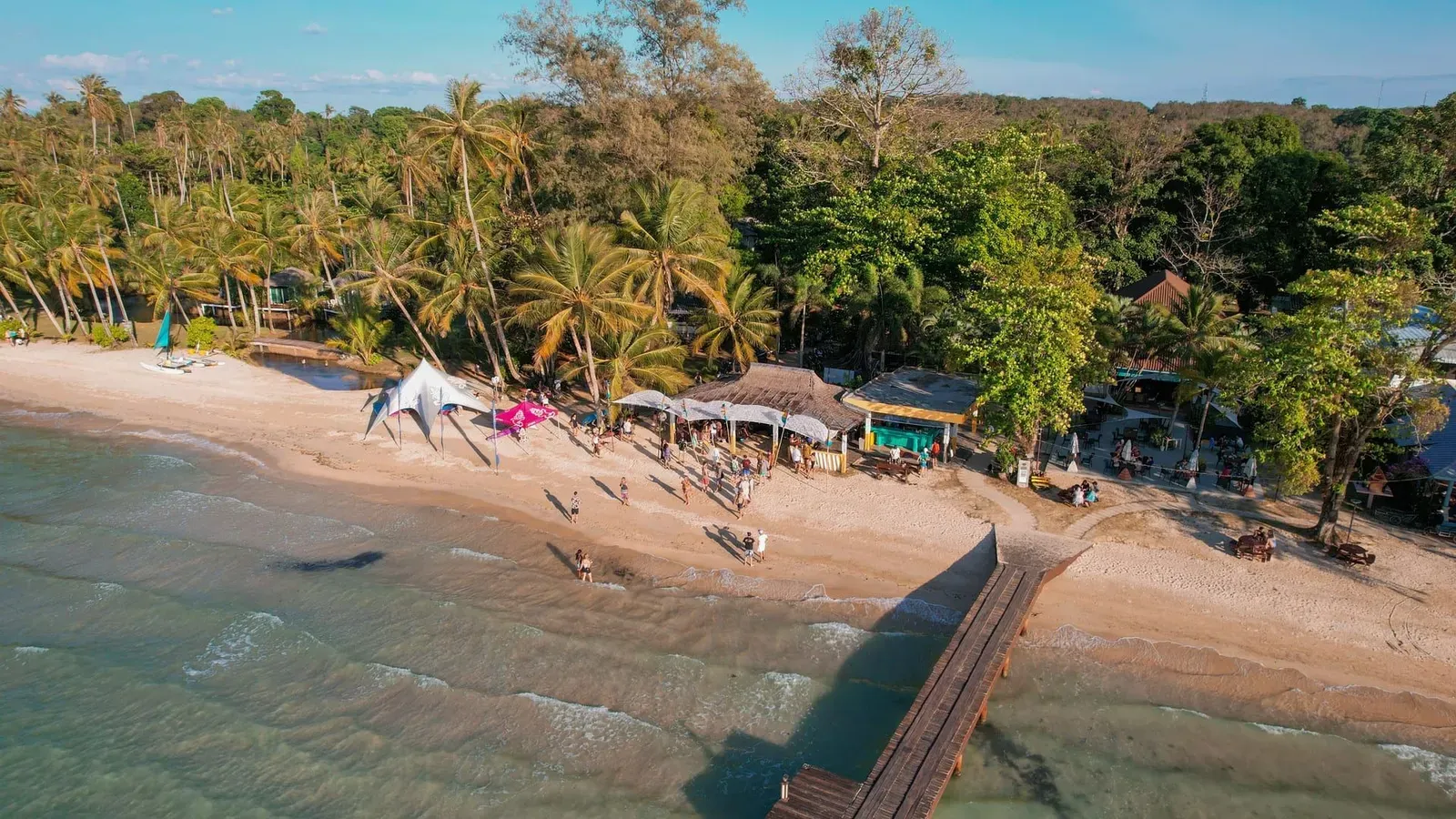
Koh Samui has no equivalent of Bangkok’s Silom Soi 2/4, Phuket’s Paradise Complex, or Pattaya’s Boyztown — no cluster of venues large enough to call a gay district, and no flagship cabaret institution the way those cities have. What exists here is smaller and more folded into the island’s general nightlife: a short run of LGBTQ+-friendly bars, a scattering of beach clubs where the crowd is mixed and unbothered, and cabaret shows staged inside hotels and beach-road venues rather than at one dedicated theatre. That is the honest scale of it — Samui reads as a relaxed, welcoming island for LGBTQ+ travellers, not as a gay-scene destination in its own right, and anyone arriving expecting a Pattaya-sized nightlife district will be disappointed.
The Chaweng Scene and the Beach Club Crowd
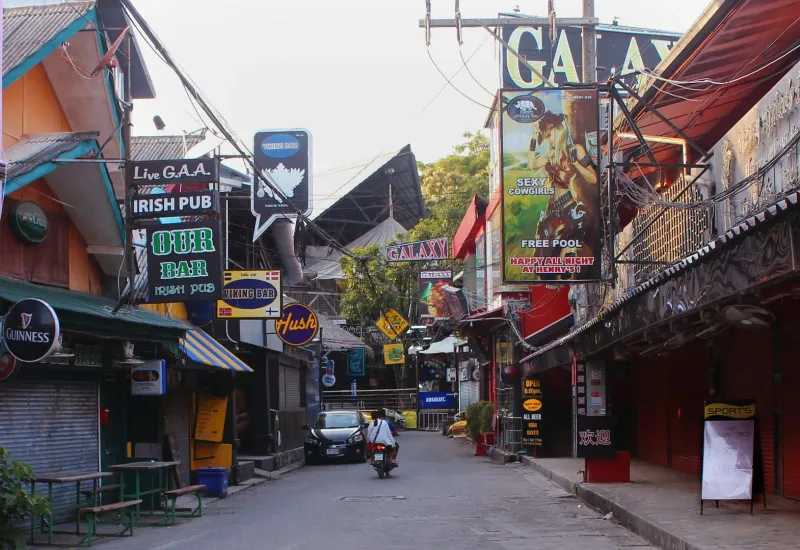
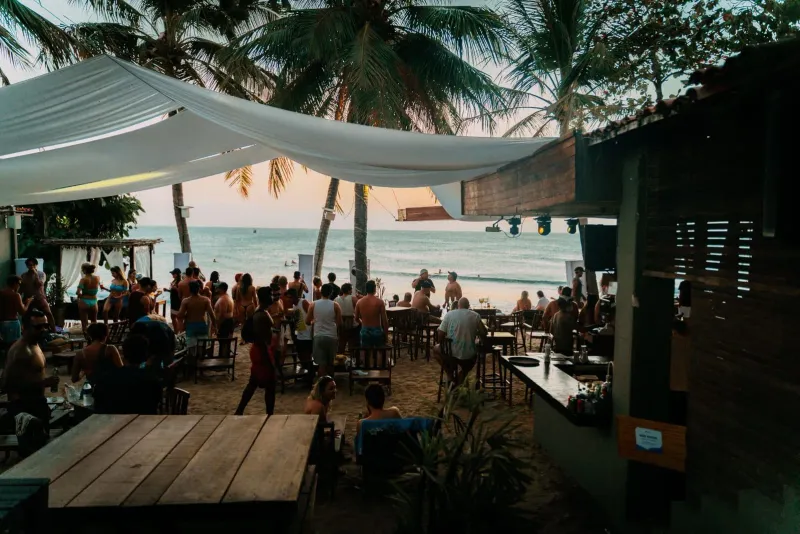
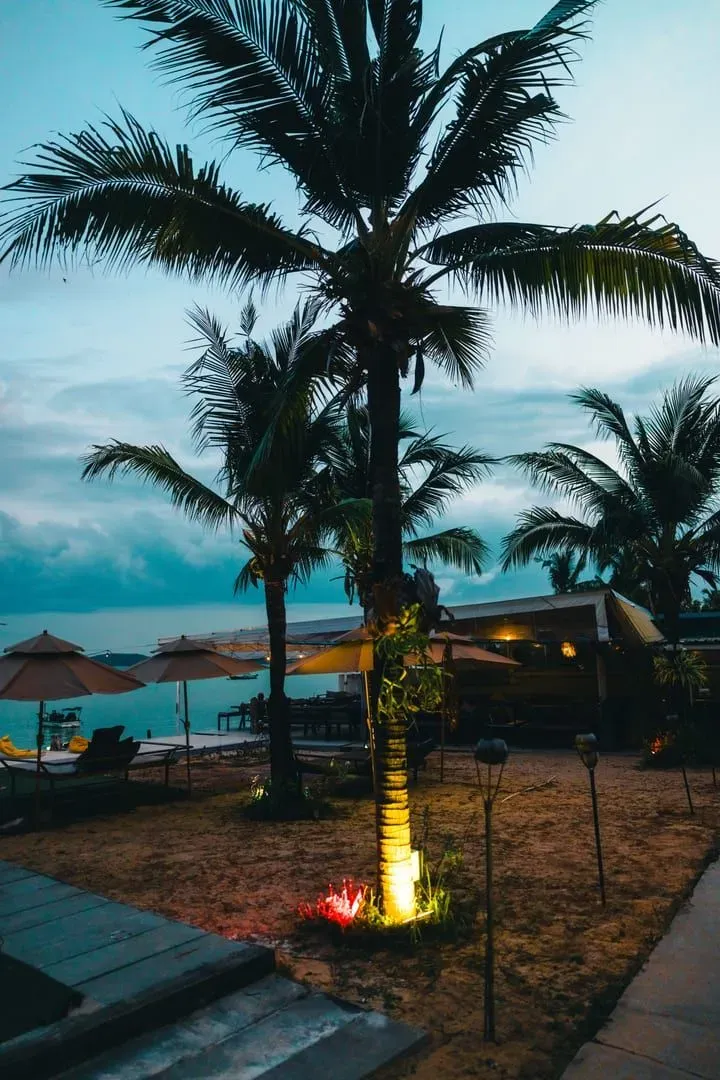
Samui’s closest thing to a gay strip is Soi Solo, a roughly 100-metre alley off Chaweng Beach Road lined with laid-back, mostly LGBTQ+-friendly DJ lounges and rock bars rather than go-go venues — a calmer, cheaper alternative to the bigger Soi Green Mango strip a few minutes’ walk away. Beyond that one street, welcome is less about a specific venue and more about attitude: the island’s beach clubs skew mixed and easygoing, and Bophut’s Fisherman’s Village crowd — a slower, café-and-boutique scene rather than a bar strip — genuinely does not care who you are there with. Entry to any of these costs nothing beyond a drink; a cocktail at a beach club typically runs 250–450 THB (~7–13 USD), in line with the rest of Samui’s beachfront nightlife.
The one honest caveat is seasonality: Samui’s whole tourist economy thins out from roughly May through October, and a venue’s regular crowd — LGBTQ+-friendly or otherwise — can disappear along with the high-season visitors who make up much of it. A bar that feels lively in January can feel empty in June, not because attitudes changed but because the season did.
Cabaret Shows and the Kathoey Community Behind Them
A cabaret show on Samui is tourist entertainment — a ticketed, choreographed performance by kathoey (Thai transgender) performers, usually staged inside a hotel or beach-road venue rather than at a fixed island institution. Treat any listed show night as approximate and confirm locally: this page cannot verify a specific venue’s current schedule, and show nights on Samui shift with the season the way everything else here does — checked September 2026, expect it to change.
The show is not the community. Far more kathoey women on Samui work in salons, hospitality, retail and spa services than ever perform on a stage, and treating the cabaret as the whole picture flattens people into a costume. A tourist audience watching a paid performance is a different relationship than the one a resident kathoey woman has with the island the rest of the week — worth remembering before photographing a performer as if she were a photo opportunity rather than a working professional.
Kathoey Life on Koh Samui Beyond the Stage
Kathoey women are a visible, working part of Samui’s economy outside the cabaret entirely — behind salon chairs, on hotel front desks, running spa treatments, and staffing shops and restaurants across the island, the same service-sector jobs that employ most of Samui’s workforce. The unresolved legal gap that follows them everywhere is gender recognition: Thailand’s ID system still records sex as assigned at birth, so a trans woman’s national ID and passport can read male regardless of transition status, a mismatch that surfaces at hotel check-in, airport security and any point requiring ID. Etiquette for a visitor is simple and costs nothing: use the name and pronouns someone introduces themselves with, do not ask about surgery or genitals, and never photograph someone presenting them as a curiosity rather than a person going about their day.
Staying Safe on Koh Samui
Most of the real risk for an LGBTQ+ traveller on Samui is the same risk every traveller carries: drink spiking and bar-tab pressure around Chaweng’s busier strips, motorbike accidents on unfamiliar roads, and the jet-ski or scooter damage scams covered in this site’s Koh Samui safety guide — none of it targeted, all of it worth the standard precautions (watch your drink, photograph a rental before you ride it, agree prices upfront).
Two risks are more specific to this page. Dating-app meetups with strangers carry the everywhere-in-the-world precautions: meet in public first, tell a friend where you are going, and avoid heading straight to a private room. Discretion matters more in some places than others — Chaweng and the beach clubs are relaxed, but Hua Thanon, a Muslim fishing village on the southeast coast, is a conservative community where the same modesty expected near its Central Mosque extends to public affection generally, not LGBTQ+ visitors specifically. For anything requiring police contact, Tourist Police on 1155 (English-speaking) is the reliable channel rather than a local station.
On PrEP and HIV testing: Thailand runs a national PrEP and PEP program, and testing and prescriptions are handled through hospitals rather than pharmacies, since PrEP requires an initial screening and periodic blood work. On Samui, Bangkok Hospital Samui and Samui International Hospital are the island’s private facilities equipped for HIV testing and referral; this page could not confirm PrEP-specific service details for either hospital directly from their websites, so call ahead or ask at reception rather than assuming a pharmacy can help.

Couples Travelling Together
Two men or two women booking one room with one bed is a non-issue at essentially every hotel on Koh Samui, from budget guesthouses to five-star resorts — Thai hotel staff record ID for every guest but do not question a couple’s gender pairing, and there is no legal or customary barrier to sharing a bed. Public affection carries the same soft local reserve for every couple regardless of orientation: Thai culture is generally undemonstrative in public, so a hand held on the beach draws no attention while heavier displays draw the same quiet disapproval a straight couple would get. For date-night ideas that work for any couple on the island, this site’s date ideas guide covers sunset bars, night markets and boat trips that need no explanation to a front desk anywhere on Samui.
FAQ
Is Koh Samui gay-friendly?
Yes. Koh Samui is broadly welcoming — same-sex couples travel and holiday here without issue, hotels don’t question room bookings, and Thailand’s 2025 marriage equality law backs that tolerance with legal recognition. It is not a gay-scene destination like Bangkok or Pattaya; it is a relaxed island where being gay simply isn’t an event.
Is there a gay area or gay bars in Koh Samui?
Not a district — the closest is Soi Solo, a short LGBTQ+-friendly bar alley off Chaweng Beach Road. Beyond that, Samui’s beach clubs and Fisherman’s Village café scene are welcoming without being specifically LGBTQ+ venues.
Is same-sex marriage legal in Thailand?
Yes, since 23 January 2025, when Thailand’s Marriage Equality Act took effect, making it the first Southeast Asian country with full marriage equality, including joint adoption rights. Legal gender recognition for transgender people is a separate, still-unresolved question.
Are cabaret shows on Koh Samui the same as the trans community?
No. Cabaret is a paid tourist performance by kathoey performers; most kathoey women on Samui work in salons, hospitality and retail rather than on a stage. Treat a show as entertainment, not as a full picture of trans life on the island.
Is it safe to use dating apps on Koh Samui?
Generally yes, with the same precautions that apply anywhere: meet a match in public first, tell someone where you’re going, and avoid going straight to a private address. Samui carries no specific elevated risk for LGBTQ+ travellers beyond ordinary meetup caution.
Turning Up
There is no single LGBTQ+ meeting point on Koh Samui the way there might be in Bangkok — the honest advice is to start on Soi Solo off Chaweng Beach Road any evening after sunset, where the bar crowd is small, mixed and unbothered, then judge the rest of the island by the same relaxed standard. Cabaret show nights and specific bar line-ups shift with the season — checked September 2026, confirm locally before making plans around one. Beyond that one street, gay Koh Samui is less a place you go than an attitude you’ll find almost everywhere else on the island too.

Published on
About the author

Mike Brochlowski
Travel photographer & writer
Travel photographer and island explorer. Mike has spent years documenting Southeast Asia's hidden gems, from secluded beaches to jungle waterfalls.
Articles by Mike →More in Island Life
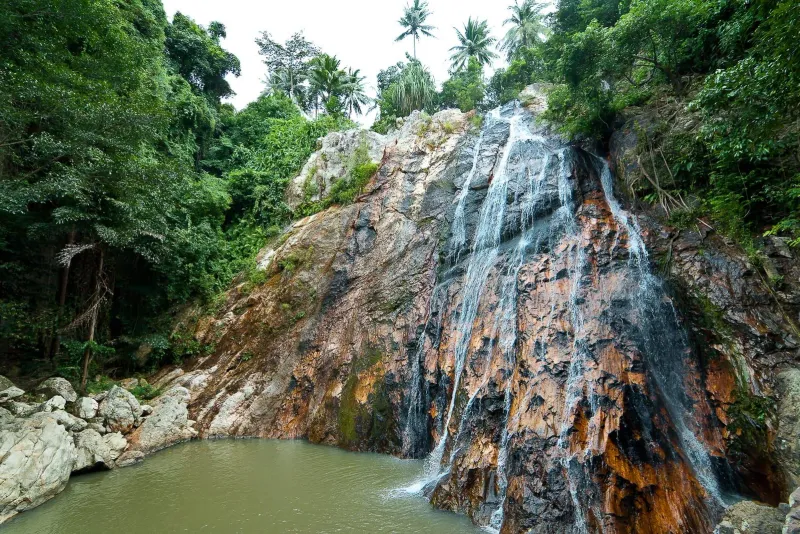
Na Muang Waterfalls — Samui's Purple Cascades and Jungle Pools
Explore Na Muang Waterfalls on Koh Samui — the accessible 18m Purple Waterfall with its swimming pool and the 80m jungle trek to the isla…
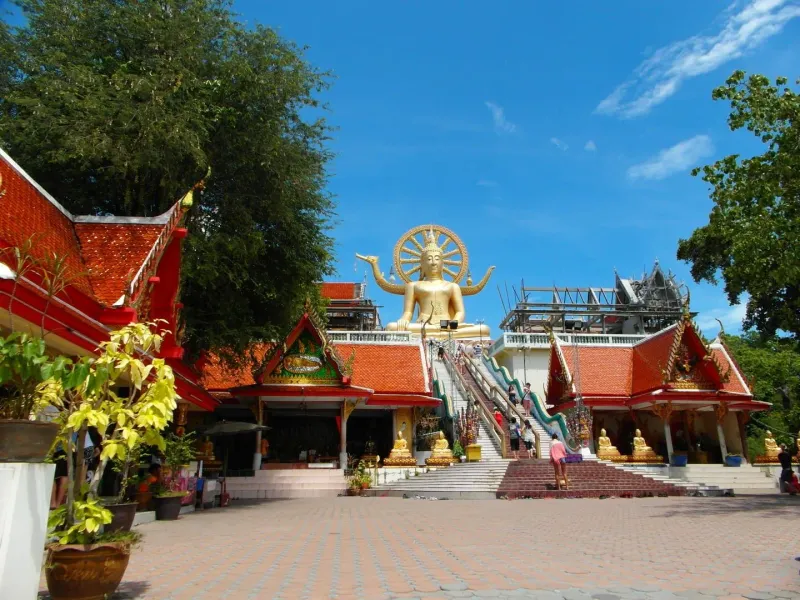
Wat Phra Yai — Big Buddha Temple on Koh Samui
Visit Wat Phra Yai (Big Buddha) on Koh Samui: a 12-meter golden Buddha, naga staircase, panoramic views, and market stalls.
Apirom Viewpoint — Koh Samui's Closed Hillside Lookout Above Ban Tai
Apirom Viewpoint: a ~304m hilltop lookout inland of Ban Tai, Koh Samui, its restaurant closed since the pandemic but the hillside track s…