Driving in Koh Samui needs your home licence plus an IDP. Drive on the left, mind the steep 4170 hills, 0.05% drink-drive limit. Fuel, parking, accident steps.
Driving in Koh Samui is legal for tourists with a valid home licence plus an International Driving Permit (IDP) for the vehicle class, for up to 90 days per entry. Traffic keeps left, the Route 4169 ring road is about 51 km and takes 1.5-2 hours non-stop, and the steep hill stretches and rain are what catch visitors out. A car is far safer than a scooter, and a driver costs roughly 3,000-5,000 THB (~86-143 USD) a day.
Key takeaways
- Licence: home licence + IDP with the car category, carried together. Insurers can refuse a claim without them.
- Drive on the left. Speed limits are about 60 km/h in built-up areas and 90 km/h on rural roads.
- Alcohol limit is 0.05% (0.02% for licences under 5 years). First offence: 5,000-20,000 THB (~143-571 USD) and possible jail.
- Worst surfaces: the steep south-west stretch labelled Route 4170 and inland viewpoint roads, slippery within minutes of rain.
- Accident: call 191 or Tourist Police 1155, then your rental company. Do not sign Thai documents you cannot read.
Key facts: ring road ~51 km, 1.5-2 h non-stop · gasohol 95 about 40 THB/litre (approximate, Sep 2026) · compact car 900-1,800 THB/day, SUV 1,500-2,500 THB/day · police 191 · Tourist Police 1155
Can You Drive in Koh Samui as a Tourist?
Yes. Foreign visitors can drive on Koh Samui with a full home-country licence plus an IDP, for up to 90 days per entry (widely reported; the US Embassy in Thailand confirms an IDP is required alongside the home licence). The roads are paved, traffic is lighter than Bangkok, and a car handles rain and luggage better than a scooter. The risks are left-hand traffic, steep hills and mixed vehicles.
This page covers the rules of the road. For prices, airport counters and damage checks, see car rental in Koh Samui. For two wheels, see scooter rental and the motorbike culture piece.
What Licence Do You Need to Drive a Car in Koh Samui?
You need your valid home licence and an IDP that lists the car category, carried together. Thailand recognises IDPs under the 1949 Geneva Convention (since 1962) and the 1968 Vienna Convention (added 2020), per The Thaiger (March 2026). A Geneva IDP is usually valid one year from issue. Thailand does not issue IDPs to tourists, so get it before you fly.
Thailand caps IDP use at about 90 days per entry, however long the printed validity. Longer stays call for a Thai licence. A learner or provisional licence does not count. The licence class must match the vehicle: a car-only IDP does not cover a scooter, as our scooter rental guide explains. Some rental shops hand over keys without checking. That does not make it legal.
Is Your Insurance Valid Without the Right Licence?
Often no. Thai insurers commonly reject claims from drivers without a valid licence and IDP, and The Thaiger (March 2026) names an invalid licence as a top reason for claim refusal. Police fines for licence offences run about 500-2,000 THB (~14-57 USD), but the larger risk is paying a hospital or the other party yourself.
Check three things before you drive: the rental agreement names the insurance and your excess, your travel policy covers driving a hire car abroad, and your IDP class matches the car. Excess on local rentals is roughly 5,000-15,000 THB (~143-429 USD) according to our car rental guide.
What Are Route 4169 and Route 4170 Like?
Route 4169 is the roughly 51 km paved ring road linking every beach town, and it takes about 1.5-2 hours non-stop by car (see getting around). It is two-lane tarmac for nearly its whole length. Route 4170, the south-west connector through Taling Ngam and Lipa Noi, is narrower and steeper, per rental operators’ route notes.
Allow 4-6 hours for a loop with beach stops. The sections between Chaweng and Lamai are the busiest, with songthaews, scooters and delivery trucks at different speeds, especially around sunset.
Where Are the Steep Roads?
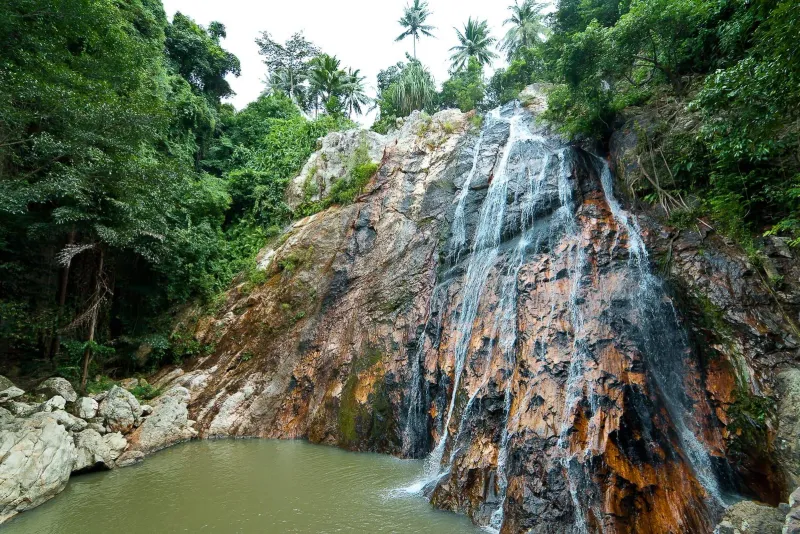
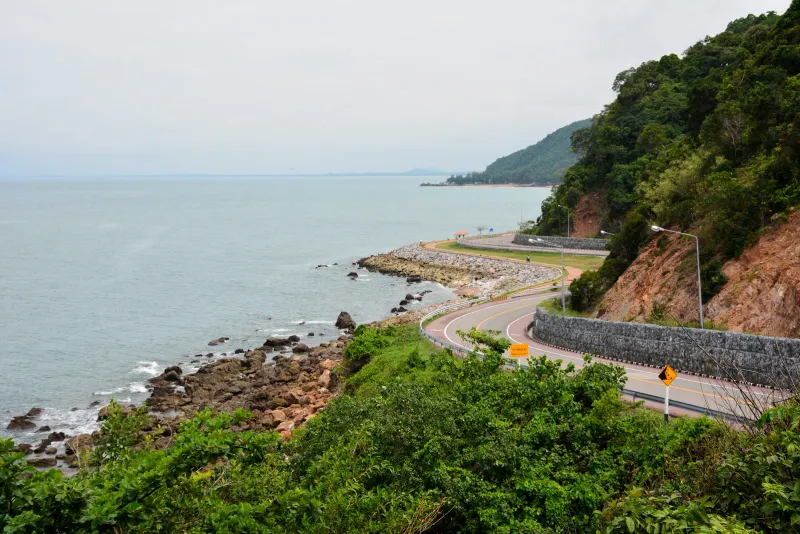
The steep stretches are the south-west Route 4170 (blind bends, single-lane passages, sand on the tarmac), the sharp bends between Chaweng and Lamai, and side roads to viewpoints and waterfalls such as Na Muang. Local rental operators recommend higher clearance or an SUV on 4170, and say some inland viewpoint roads need four-wheel drive.
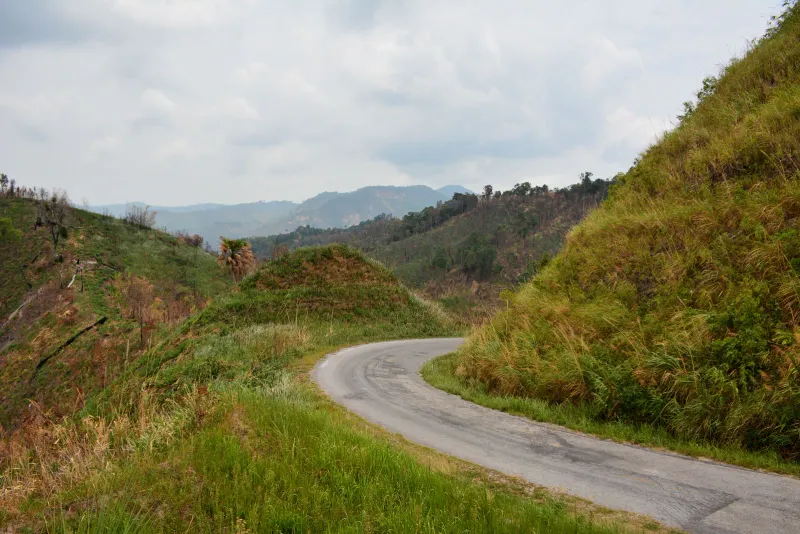
Silver Beach is reached by a steep, narrow track with very little parking. Samui Map Info advises arriving before 09:00 or parking on the roadside above and walking down. The 4x4 claim comes from one local rental firm, so ask your host or the venue about the access road before you commit a compact car. On any hill, use a low gear going down and keep your distance from trucks.
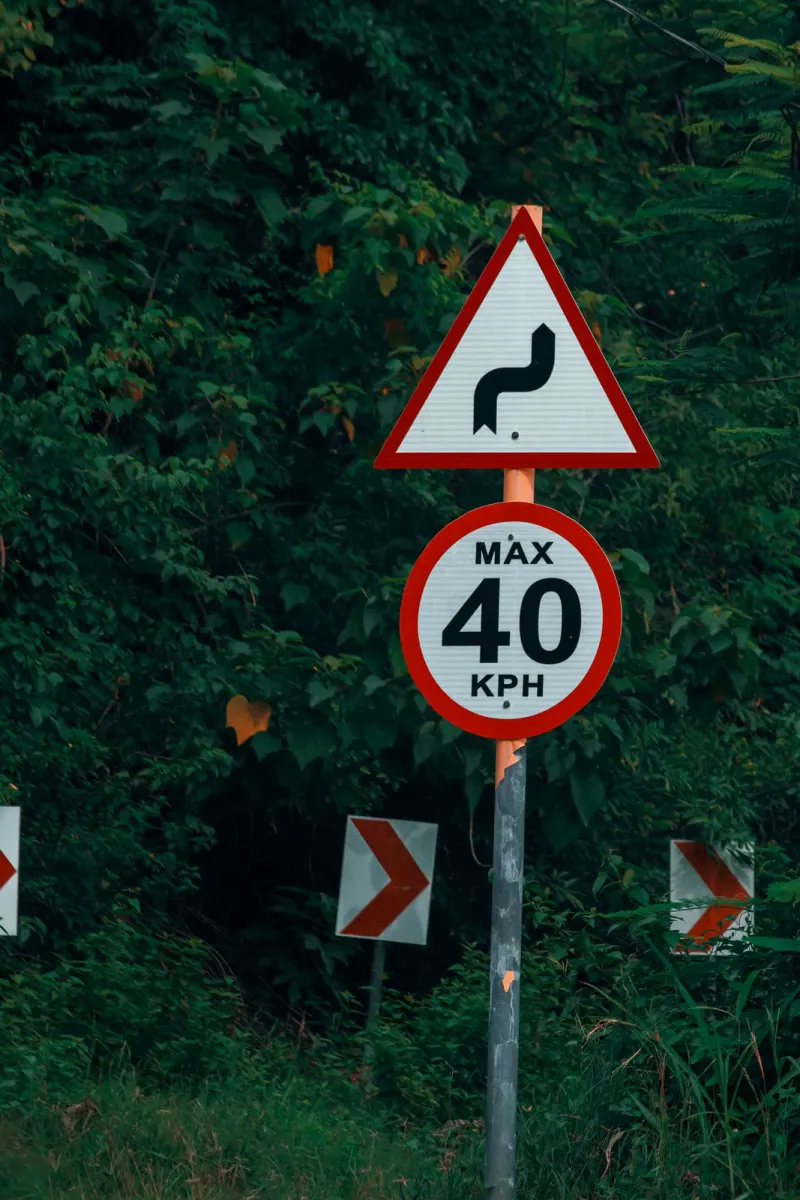
What Are the Speed Limits, Drink-Driving Rules and Fines?
Default limits are 60 km/h in built-up areas and 90 km/h on rural roads, with posted signs overriding them (Wikipedia and Pattaya Car Hire summaries). On Samui, expect 50-70 km/h in practice and 30-40 km/h on interior roads. Since the 2022 amendment, speeding fines reach up to 4,000 THB (~114 USD), reported by Nation Thailand and Thairath.

The legal alcohol limit is 0.05% blood alcohol, and 0.02% for drivers under 20, on licences under 5 years, or without a valid licence (TDL Service, 2026). A first offence carries up to one year in prison, a fine of 5,000-20,000 THB (~143-571 USD), or both, plus licence suspension of at least six months. Causing injury or death is far heavier.
Seatbelts are compulsory, with fines reported at up to 2,000 THB. Helmets for two-wheelers: up to 2,000 THB each since June 2025 (see our scooter guide). Penalties change, so check the Royal Thai Police before travel.
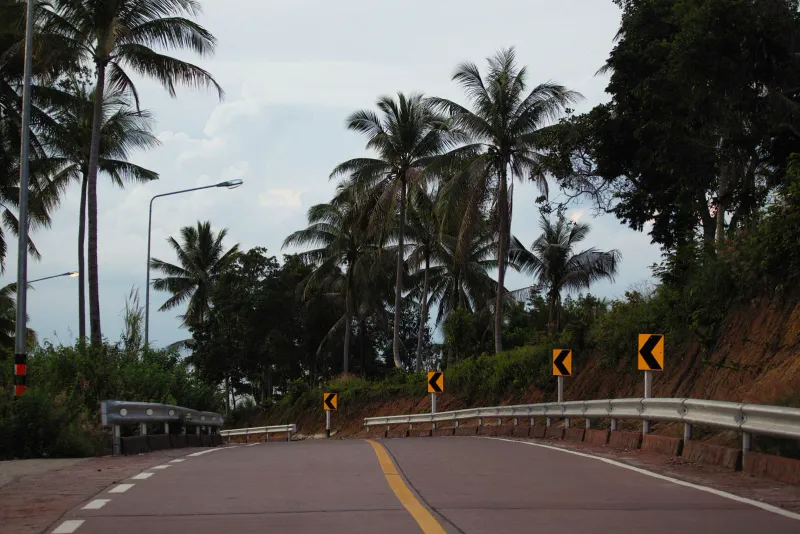
What Do Police Checkpoints Check?
Police on Samui check your licence, IDP, vehicle documents and, on rentals, your rental agreement and insurance papers. Local operators report checkpoints around Chaweng, Lamai, Bophut, Maenam and near the airport. Carry the originals, not photos. Officers also look for seatbelts, helmets on two-wheelers and alcohol.
Be calm, polite and hand over documents when asked. If you are told to pay a fine, ask for an official receipt and ask to be given the ticket. If something feels wrong, call the Tourist Police on 1155, whose officers speak English. For scooter specifics, see scooter rental rules and fines.
Where Do You Park in Chaweng and Fisherman’s Village?
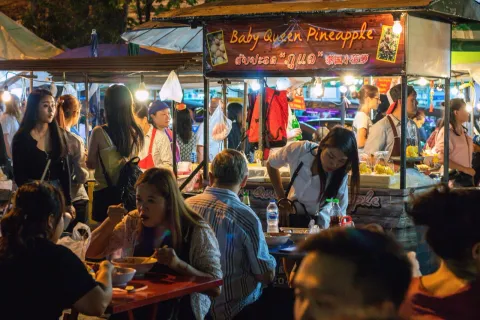
Parking is free almost everywhere except central Chaweng. A koh-samui-car-rental.com guide (July 2026) names the TOPS supermarket paid lot as the most reliable in Chaweng, and Lake Road as free. Red-and-white kerbs mean no stopping. For Bophut and Fisherman’s Village, no sourced parking details were found, only our advice to arrive before 6 PM on market evenings.
There are no parking wardens to speak of, so people stop wherever they like, sometimes half on the road. Check mirrors before opening a door, and do not park across a gate, a driveway or a bend. The same page notes yellow-and-white kerbs mean loading only.
Where Do You Buy Fuel and Charge an EV?
Petrol stations (PTT, Bangchak, Shell, Caltex) are dense around Nathon and the Lamai and Chaweng strips, with opening hours of roughly 06:00-22:00 and some open 24 hours. Gasohol 95 was 39.94 THB a litre at PTT on 24 September 2026 (Nation Thailand), so budget about 40 THB (~1.15 USD) on the island. Prices are approximate and move weekly.
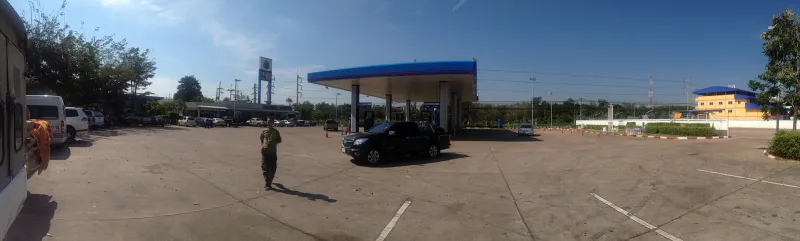
EV drivers have limited options. Chargemap lists AC Type 2 chargers (11 and 22 kW) in the Central Samui car park, and at least one PEA VOLTA site with a 25 kW CCS Combo head. Some hotels offer charging. No Tesla destination chargers turned up for the island. Rental EVs are rare, so confirm every station in the PEA VOLTA or EA Anywhere app on the day. This is not verified on site.
What Hazards Should You Expect?
Expect scooters weaving, songthaews stopping without warning, stray dogs and the occasional cow. Dogs sleep under parked cars, so look before you pull away, and do not emergency-brake for one when someone is close behind. Drivers and scooters often switch sides of the road to park, so watch both kerbs.
Rain is the other hazard. The wettest weeks are October to December, with November usually the wettest. Official warnings from Thailand’s water resources office (ONWR) named Samui for flash floods and landslides on 17-22 November 2025, and local reports from that spell put the flooding at low spots such as Bang Por, with roads draining once the rain stopped. Never drive through water of unknown depth. See the rainy season guide for months and conditions.
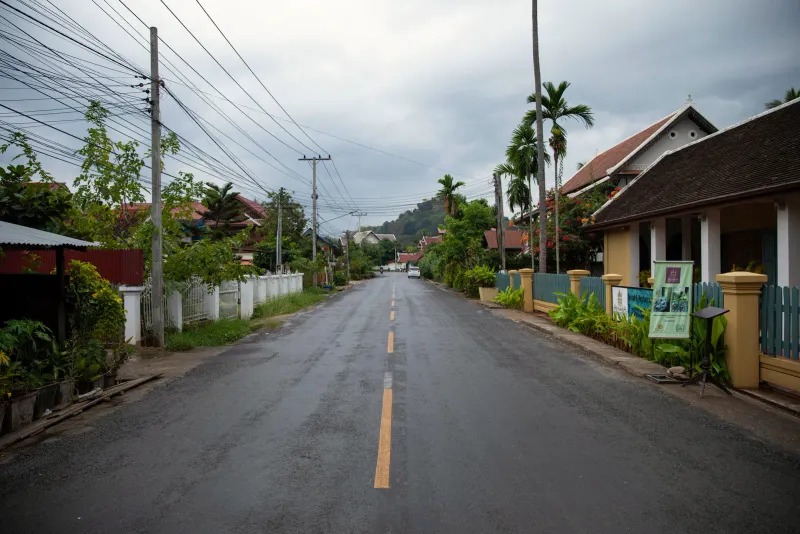
What Do You Do After an Accident?
Stop, turn on hazard lights and check for injuries. Call 191 (police) or the English-speaking Tourist Police on 1155, and 1669 for an ambulance. Photograph the scene and plates before moving anything unless police tell you to. Call your rental company straight away: the emergency number is on your agreement and they will bring in their insurer.
Do not admit fault, and do not sign Thai documents until the Tourist Police or your insurer’s surveyor has read them with you. Most claims need a police report, so get one the same day (guides quote 24 hours). Keep copies of the report, the claim form and photos. A passport should never be left with anyone as security.

How Dangerous Is Driving, and Is There an Alternative?
Thailand’s road toll is among the world’s highest. The WHO Global status report on road safety 2023 estimates 18,218 road deaths in Thailand in 2021, about 50 a day, with motorcyclists around 84% of them. Island figures are not published in a citable form. A car is much safer than a scooter, but not risk-free. Read is Koh Samui safe for wider context.
If left-hand traffic or hills put you off, a private driver costs roughly 3,000-5,000 THB (~86-143 USD) for a full day, and Grab, songthaews and taxis are covered in getting around Koh Samui. From the airport, see the Samui Airport guide.
FAQ
Can foreigners drive in Koh Samui?
Yes, with a valid home licence plus an IDP for the vehicle class, for up to about 90 days per entry. Carry both originals. Some rental shops do not check, but driving without them is illegal and can lead to a refused insurance claim after a crash.
Do I need an International Driving Permit to drive in Thailand?
Yes. Thailand recognises IDPs under the 1949 Geneva and 1968 Vienna conventions, but it does not issue them to tourists, so get one at home before you fly. The IDP is only valid with your original licence and must list the car category (and motorcycle for scooters).
Which side of the road do they drive on in Koh Samui?
On the left, as everywhere in Thailand, with right-hand-drive cars. Roundabouts run clockwise and you give way to traffic already on them. The first few kilometres catch most first-time visitors, so leave the airport slowly and avoid the late-afternoon peak on day one.
What is the drink-driving limit in Thailand?
0.05% blood alcohol, or 0.02% for drivers on licences under 5 years or under 20. A first offence can bring up to a year in prison, a 5,000-20,000 THB (~143-571 USD) fine, or both, plus a licence suspension of at least six months, per TDL Service (2026).
How long does it take to drive around Koh Samui?
The Route 4169 ring road is about 51 km and takes roughly 1.5-2 hours non-stop by car. With beach, lunch and viewpoint stops, allow 4-6 hours. Rain and the sunset rush around Chaweng and Lamai slow it down.
What should I do after a car accident in Koh Samui?
Check for injuries, call 191 or the Tourist Police on 1155, and call your rental company. Photograph the scene, avoid admitting fault and do not sign Thai-language papers you cannot read. Get a police report the same day, because insurers usually need it.
Next leg
Before you take the keys
-
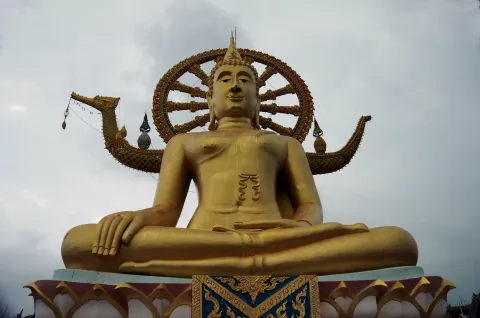 Private Driver Koh Samui Private driver on Koh Samui: 500-800 THB an hour or 3,000-4,000 THB for a full day, fuel included. Car vs van, what is extra, licensed plates, sample loop.
-
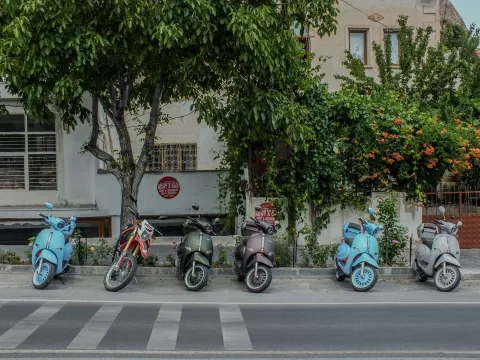 Motorbike Rental Koh Samui motorbike rental costs 150-450 THB a day. Bring a motorcycle licence plus IDP; leave a passport copy, never the passport. Helmet fine up to 2,000 THB.
-
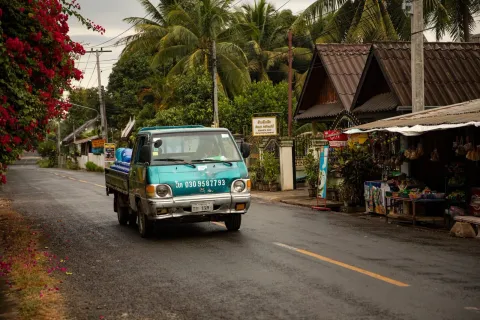 Getting Around Koh Samui getting around: songthaews 30-100 THB, Grab and taxi fares, scooters from 150 THB a day, cars from 900 THB, plus ring road and safety tips.
Published Facts checked