Contents
Koh Samui’s visual art is smaller and odder than the shopfronts suggest: a thin layer of real galleries and hotel art collections, a much larger trade in made-to-order oil-copy portraits and mass-produced Buddha canvases, a handful of resident painters and sculptors working quietly out of home studios, and — free, permanent and rarely visited for this reason — some of the most accomplished figurative art on the island sitting inside its temples.
Key takeaways
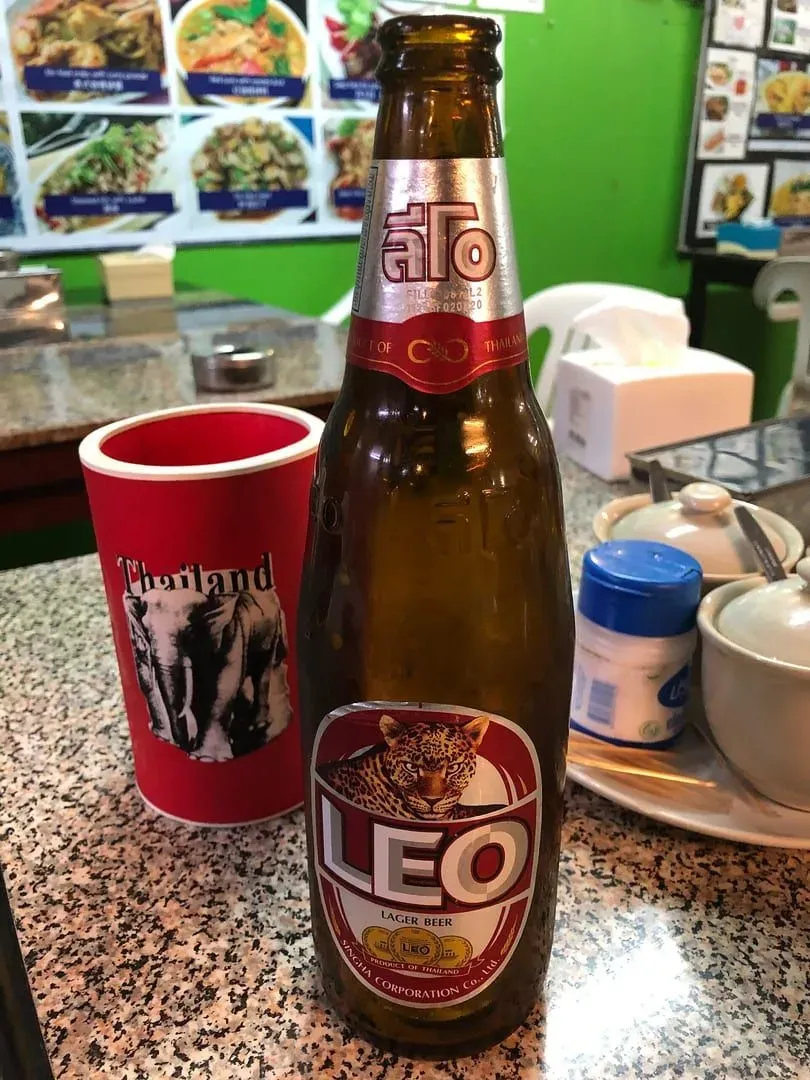
- A handful of independent galleries do trade year-round with live, checkable websites — House of Lucie / Samui Art Center in Maret, Modern Thai Art Gallery and Gallery La Fayette in the Chaweng–Bophut corridor, and Next Level Art Gallery in Central Festival Samui — alongside hotel and resort spaces that hang and sell resident work.
- “Art shops” selling oil-copy portraits and mass Buddha canvases are a real trade, not a scam: expect roughly 500–3,000 THB (~14–86 USD) for a copied portrait depending on size and detail.
- Wat Plai Laem and Wat Sila Ngu carry Samui’s most elaborate religious sculpture and relief work, free to see any day.
- Thailand restricts the export of genuine antiques and Buddha images under a 1961 law — it does not apply to a newly painted canvas or a shop-bought reproduction.
- House of Lucie’s Samui Art Center runs painting, sculpture, pottery and paint-making sessions, but no fixed recurring class schedule could be confirmed as of September 2026 — ask at the gallery desk rather than expecting a published timetable.
What This Actually Is
Drive past Chaweng or Lamai and the art on offer looks like one thing: rows of stretched canvases outside souvenir shops, the same dozen Buddha compositions and beach sunsets repeated down the block. That is real, but only one tier of a stack that also includes hotel lobbies hung with commissioned work and temple compounds carrying sculpture older than almost anything else here. None of it is organized the way Bangkok’s Bang Rak gallery district or Chiang Mai’s craft markets are — no gallery quarter, no art walk, no single directory. This page maps a scattered picture rather than offering a curated shortlist.
The Gallery Layer
Four tiers exist, worth naming precisely rather than calling all of them “galleries.” At the top, a small set of independent galleries trade year-round with their own live websites, checkable against a second source rather than just a listicle mention.
House of Lucie / Samui Art Center, at 2/23 Proonamueang Road, Maret, opened January 2025 as a three-floor photography and visual-art space — the Samui branch of a gallery network confirmed independently by photographer Steve McCurry’s own site covering its grand opening. It runs rotating exhibitions (as of September 2026, the International Photography Awards “Best of Show” show, through 29 September), is open Wednesday–Sunday, 1 p.m.–6 p.m., with free admission, and its attached Samui Art Center runs painting, sculpture, pottery and paint-making sessions for residents alongside the photography programme.
Modern Thai Art Gallery in Bophut, founded 1987 and widely credited as the island’s first gallery, sells original contemporary Thai and Buddha-inspired work plus made-to-order reproductions and portraits — confirmed both by its own actively-updated site and independent coverage in Elite Havens Magazine. Gallery La Fayette on Chaweng Beach Road, trading since 1995, specialises in museum-quality reproductions of Van Gogh, Monet and Klimt alongside commissioned portraits, confirmed by its own site and a Yellow Pages Thailand listing. Next Level Art Gallery, a first-floor unit inside Central Festival Samui in Bophut, shows contemporary and traditional work by emerging and established artists — a mall gallery rather than a hotel lobby hang, open during mall hours.
Below that sits the resort and hotel layer, where most serious original art on the island is actually seen: high-end resorts commonly commission or buy pieces, often from Thai artists in a contemporary Southeast Asian style, to furnish lobbies and spa reception areas, occasionally with pieces for sale to guests. Not retail browsing for a non-guest, but where a meaningful share of the island’s collected art actually lives.
A handful of other names turn up repeatedly in travel-blog roundups — a gallery in Mae Nam with an attached mandala-painting workshop, a psychedelic-themed gallery near Mae Nam, a couple of unbranded “art and design” shops — but their most recent independently dated reviews run back to 2018–2019 with nothing newer found, which this page treats as a closure risk rather than a live listing; they are not named here.
At the bottom, and by far the largest by volume, sit the roadside art shops. Their stock is overwhelmingly mass-produced — identical Buddha portraits, elephants and Samui sunsets, likely turned out assembly-line style rather than painted to order — sold at fixed prices to passing tourist traffic. This is not a fraud: nobody claims these are one-off originals, and the trade fills a real demand for cheap, decorative, unmistakably Thai wall art. It is simply the largest and least interesting tier, decor rather than the island’s “art scene.”
The Oil-Copy Shop, Explained
The other product these shops sell, alongside stock canvases, is the made-to-order oil-copy portrait: bring a photo, and a painter — usually working from a shared workshop behind the shopfront — renders it in oil or acrylic within a day or two. This is a real craft trade across Thailand’s tourist coast, not a scam: the painters are trained and skilled at likeness, and the product is exactly what is promised, a hand-painted copy rather than a print — commercial portraiture in the oldest sense, the trade that put a painter on every high street before photography.
Pricing scales with size and complexity: expect roughly 500–3,000 THB (~14–86 USD) for a standard portrait-sized canvas, more for multi-figure compositions or rush turnaround — a starting point for a conversation, not a fixed rate. Ask to see the painter’s other work first, agree size and finish up front, and expect a day or two to dry and collect.
Resident Artists
Koh Samui draws a small, quiet population of resident painters, sculptors and craftspeople for the same reasons it draws remote workers and retirees generally: tropical light that is genuinely different to paint in, a lower cost of living than Bangkok or a Western capital, cheap studio space, and a slower pace suited to long, uninterrupted working days. This research could not confirm a single named, currently-active resident artist with a public exhibiting profile — several were once discoverable through the seasonal event below, but their pages could not be verified as current in September 2026, so none are named here per this site’s policy against naming private individuals without a public, sourced profile.
What does appear real is a studio-visit culture: resident artists on a small island are findable through word of mouth, hotel concierge relationships or expat community groups rather than a storefront, and a visiting collector is more likely to end up in a home studio by introduction than to walk into a shop. Seasonal exhibitions follow the island’s own rhythm — high season, roughly November to March, is when any pop-up show is most likely; low season, especially September to November, the same spaces go quiet. A Wikivoyage entry for a recurring “Ten Stars Samui Art Party,” bringing Thai and international artists to resort venues each high season, was last updated in 2017 and could not be confirmed as still running — a pattern the island has done before, not a confirmed current event.
The Temple as Gallery
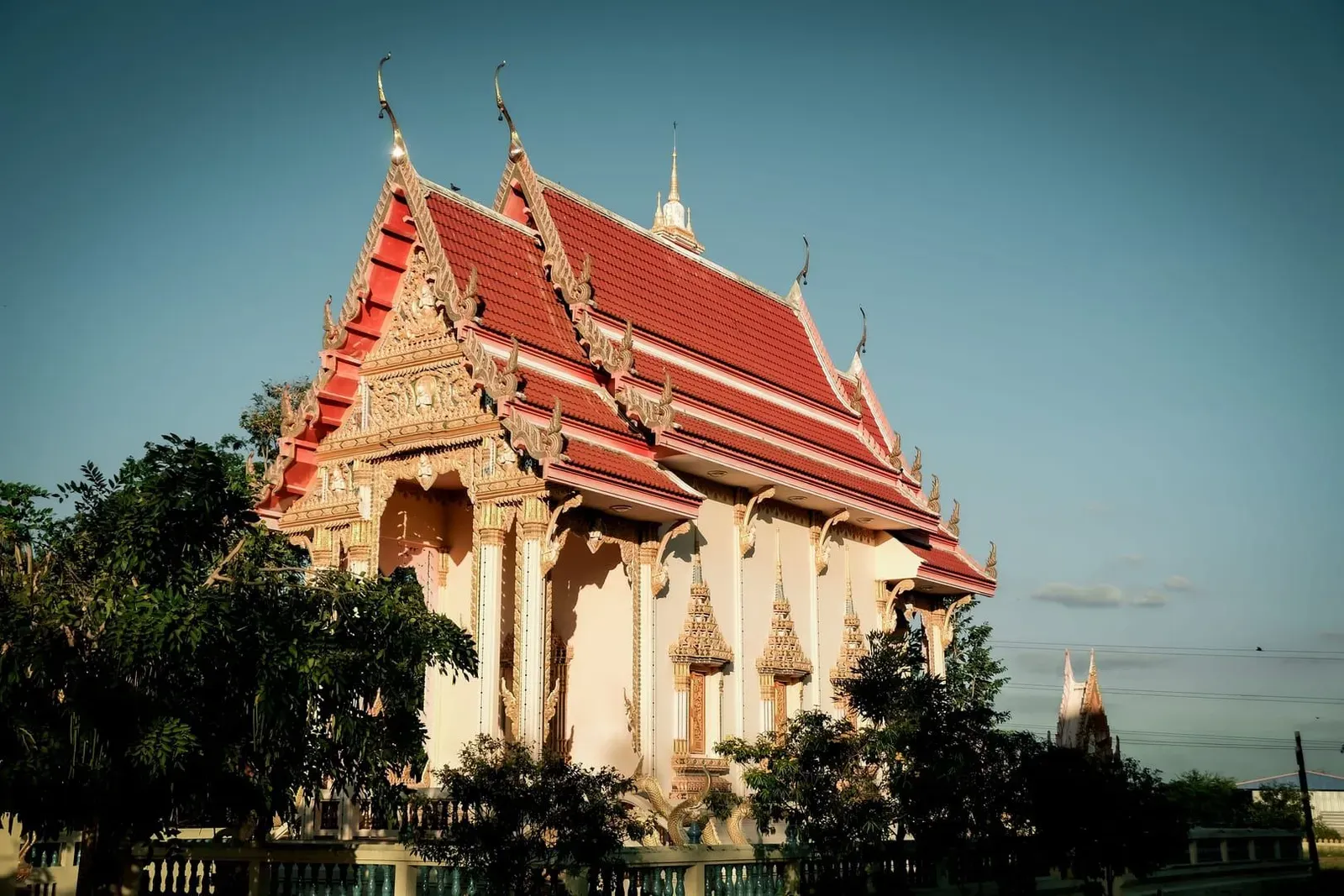
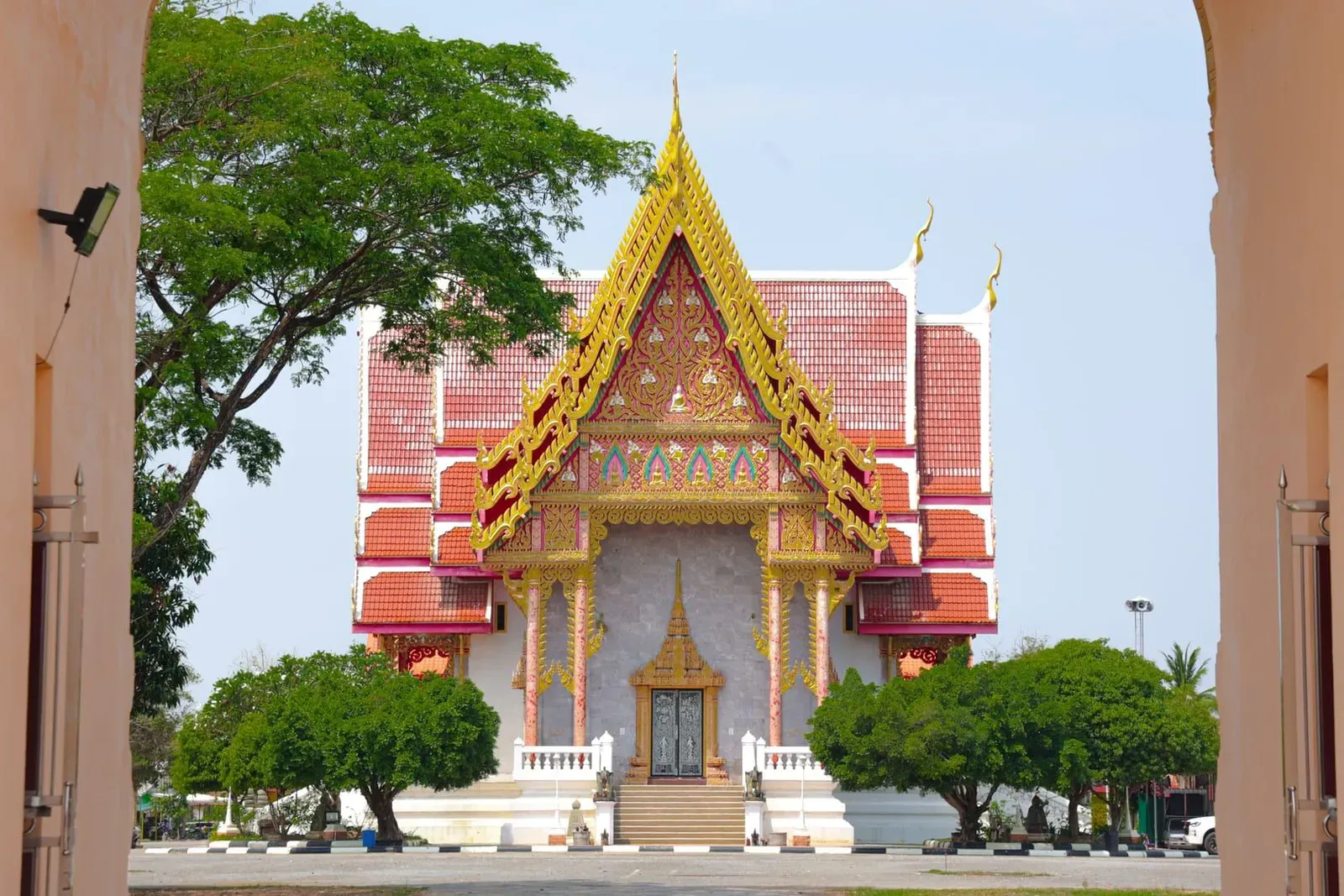
A Thai Buddhist temple is, among other things, a free public gallery. Temple murals across Thailand traditionally draw on a small set of recurring subjects: the Jataka tales, stories of the Buddha’s previous lives illustrating virtues like generosity and patience; scenes from the historical Buddha’s own life, birth to enlightenment to final teachings; and cosmological Traiphum scenes, showing the layered heavens and hells that map conduct onto an afterlife a viewer could picture. Where a temple has invested in figurative wall painting rather than plain whitewash, this is generally what is on the walls.
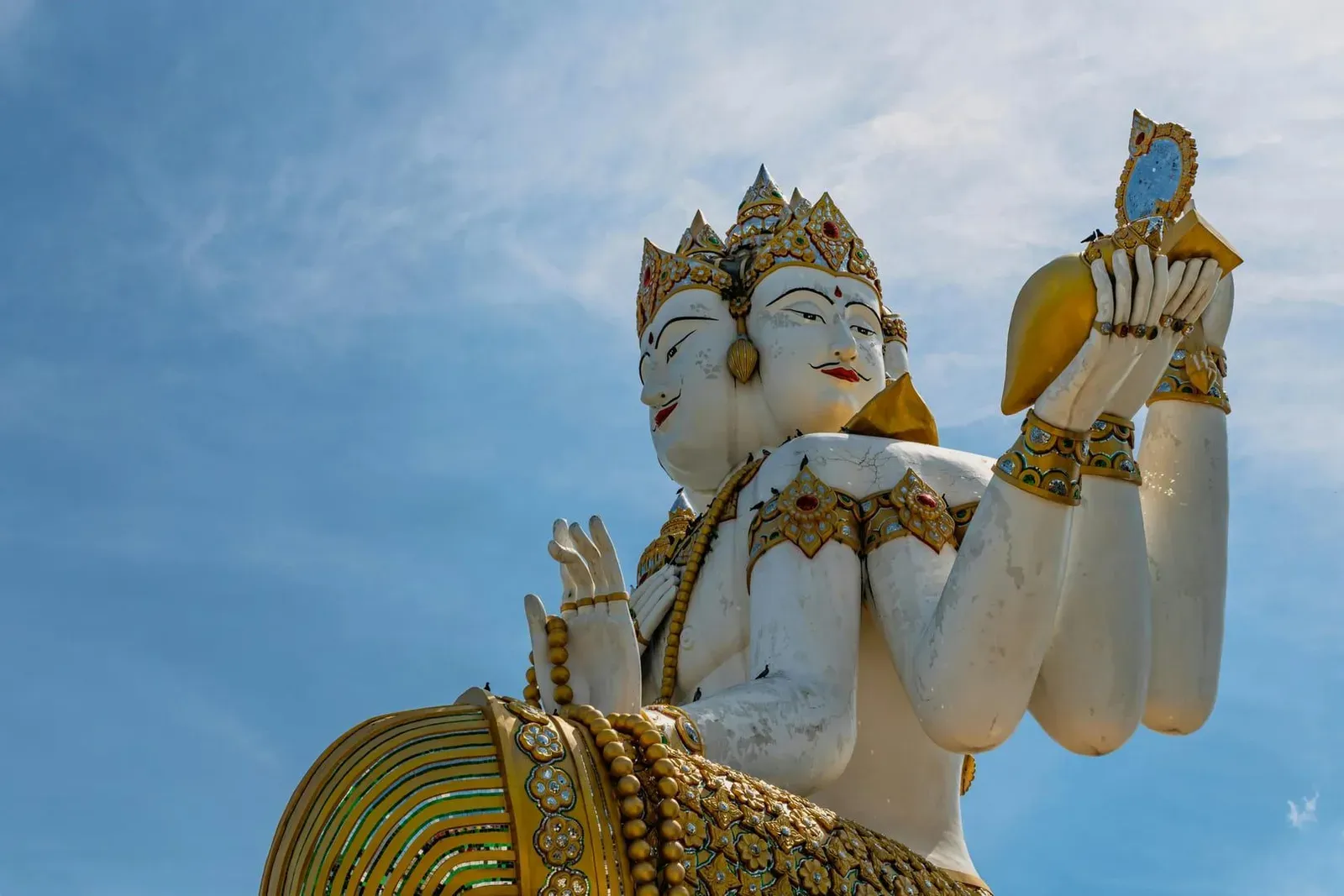
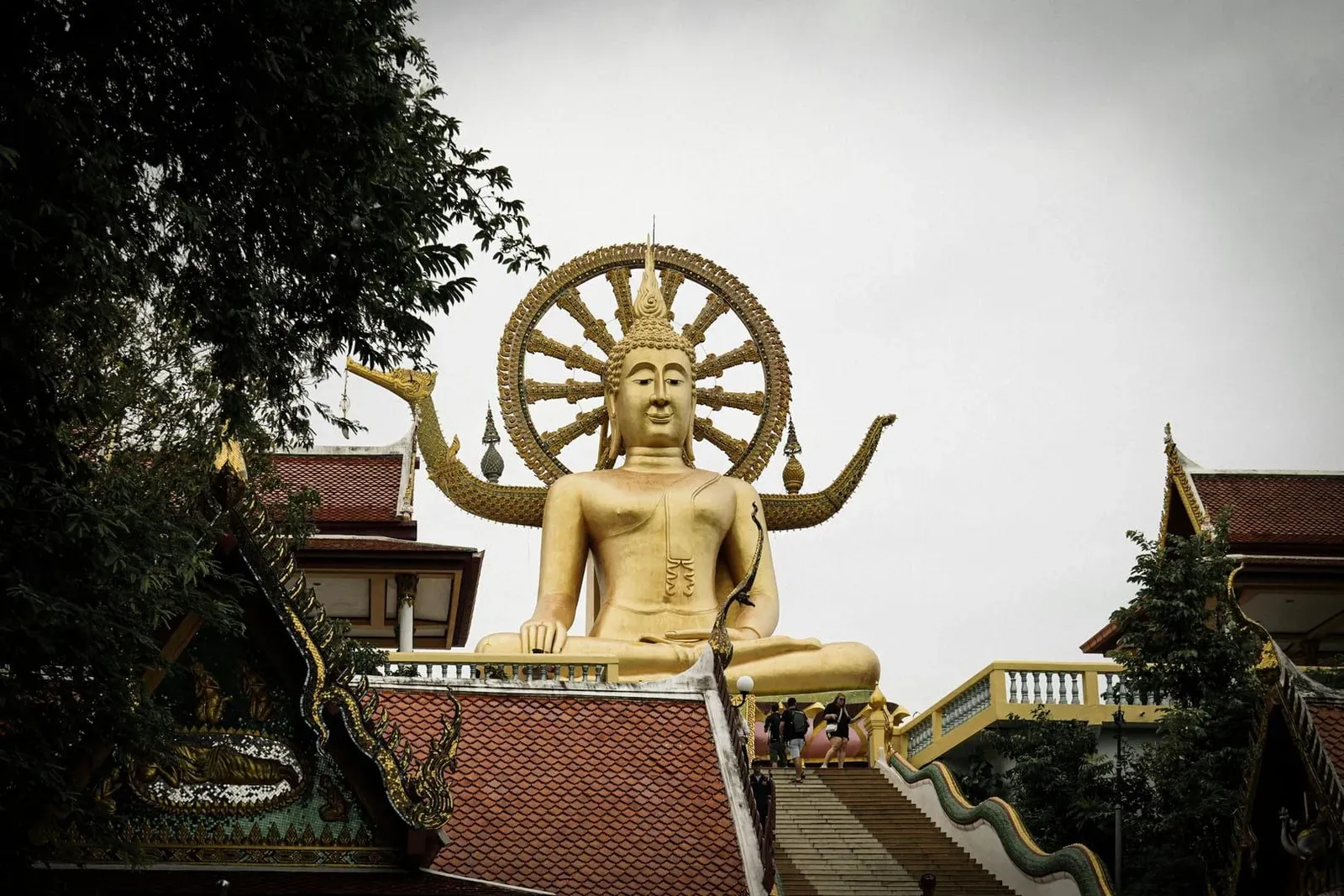
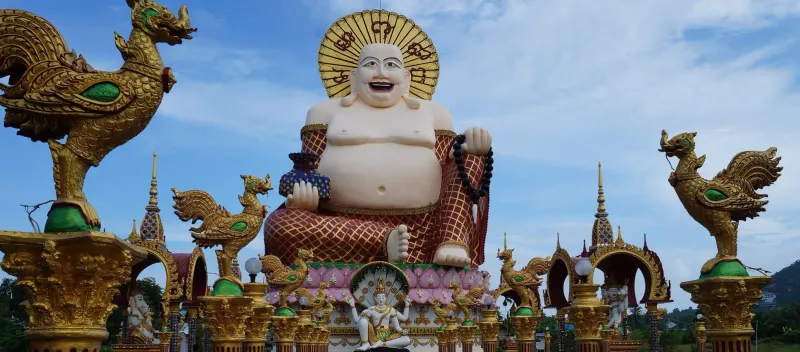
On Samui, the best stop for sculpture is Wat Plai Laem, whose lake-set 18-armed Guanyin statue and shrines to Ganesha, Vishnu, Shiva and a seated Budai were designed with input from Thai artist Jarit Phumdonming — an unusually well-documented case of a named, credited artist behind a public Samui monument. A short drive away, Wat Sila Ngu, the Red Temple, carries some of the island’s most detailed carved relief work across its exterior walls, putting moral and mythological scenes at eye level rather than behind glass. For scale rather than detail, Wat Phra Yai’s 12-metre seated Big Buddha is Samui’s most-photographed single artwork, modern and gilded rather than antique.
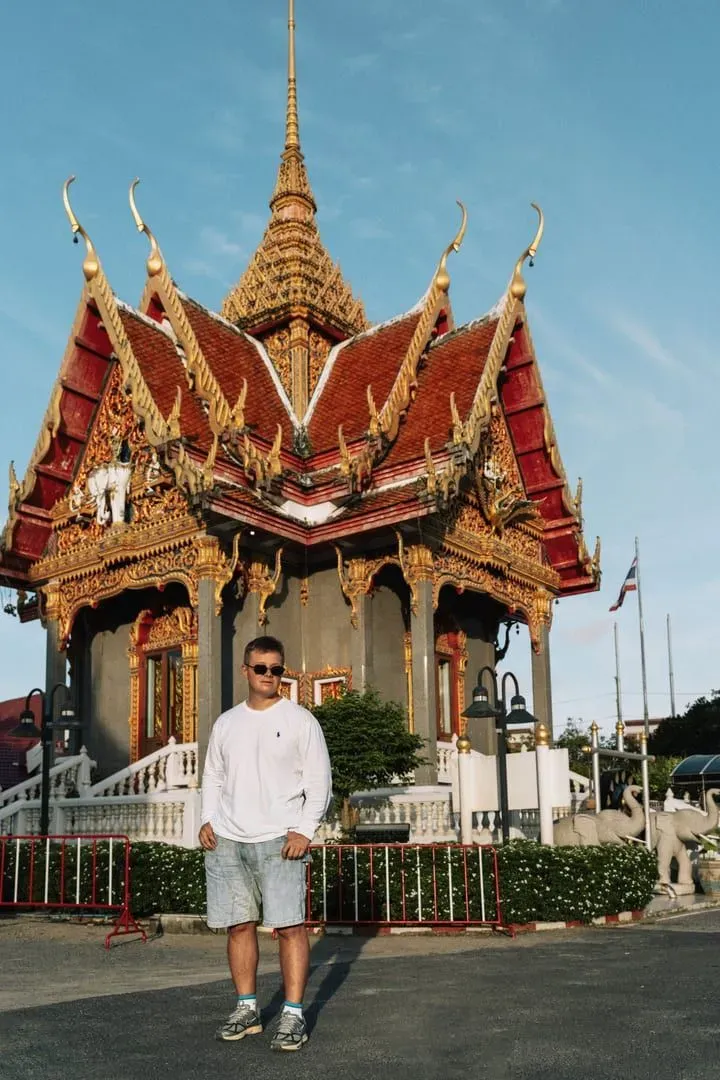
Naga serpent balustrades on temple stairways, guardian yaksha and singha figures at gateways, and gilded roof finials repeat across every working temple here, maintained rather than fixed museum pieces — murals and gilding are traditionally repainted as part of ongoing upkeep and merit-making, by trained temple craftspeople. This site’s temple etiquette guide covers dress and behaviour for any visit, and the Koh Samui temples guide lists the fuller set worth seeing.
Street and Mural Work
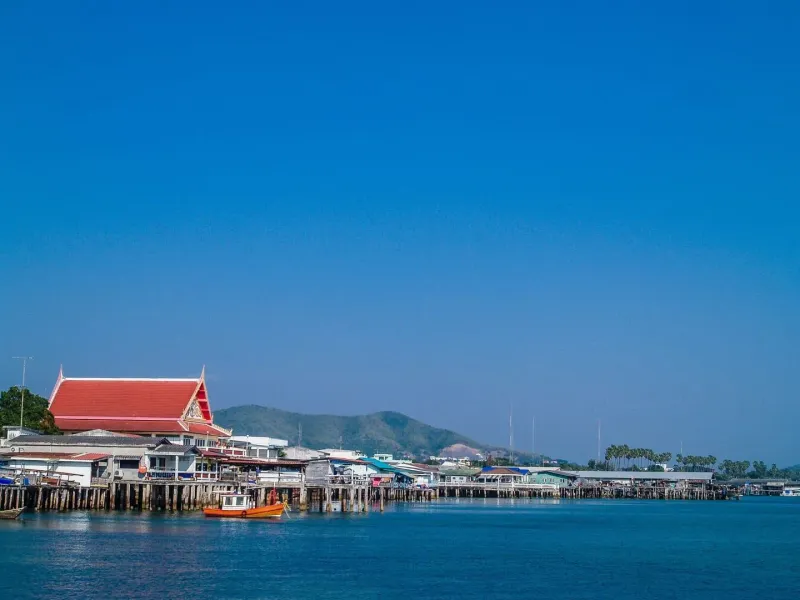
Painted walls exist in both of Samui’s most-photographed old towns, but neither runs a formal commissioned mural programme this research could confirm. Nathon, the island’s port town, keeps decades-old Chinese-Thai shophouse facades whose charm is patina rather than paint, though a few shopfronts carry hand-painted signage in the old sign-writer tradition. Bophut’s Fisherman’s Village leans harder into its restored-shophouse look for the Friday Walking Street crowd, with businesses occasionally commissioning wall painting on their own frontage — but no island-wide or municipal mural trail exists. Anyone expecting a Georgetown- or Chiang Mai-scale street-art circuit will be disappointed; what Samui has is incidental, shop-by-shop, not curated.
Buying and Shipping
A piece bought directly from a resident artist’s studio costs considerably more than a shop canvas, scaling with reputation and size rather than a published rate — treat any local figure as a starting point for negotiation. A rolled, unstretched canvas is the easiest way home: framing shops can tube a canvas for checked luggage or post, and Thai couriers (EMS, DHL, Kerry) handle it as ordinary parcel freight when the piece is newly created and non-antique.
The one place this genuinely catches buyers out is antiques and religious images. Thailand restricts export of antiques and Buddha images under the Act on Ancient Monuments, Antiques, Objects of Art and National Museums, B.E. 2504 (1961), administered by the Fine Arts Department: a genuine antique or protected sacred image needs an export licence before it can leave the country, regardless of how it was bought. This does not apply to a newly painted canvas, a piece from a resident artist’s studio, or a modern reproduction Buddha statue sold as decor — the law targets genuine antiquities and culturally significant religious objects, not new work. The rule: new art, no issue; anything sold to you as old or a genuine relic needs its paperwork checked first.
Making Rather Than Buying
For a reader who wants to make rather than buy, the Samui Art Center at House of Lucie in Maret is the one confirmed option: painting, sculpture, pottery and paint-making sessions run inside the same Wednesday–Sunday, 1 p.m.–6 p.m. building as the photography exhibitions, though no fixed weekly timetable is published — ask at the desk what is running that week rather than expecting a set slot. Beyond that, this research could not confirm a currently-running life-drawing group, standing painting class or open studio elsewhere on Samui as of September 2026; a Mae Nam gallery’s mandala-painting workshop turns up in older reviews but nothing dated past 2019, so it is not listed as active here. Some wellness retreats rotate creative workshops seasonally, but none was verifiable as fixed or recurring. Otherwise, the honest route is asking directly at a resident artist’s studio.
FAQ
Is there a real art gallery on Koh Samui?
Yes — House of Lucie / Samui Art Center in Maret, Modern Thai Art Gallery and Gallery La Fayette around Chaweng and Bophut, and Next Level Art Gallery inside Central Festival Samui all trade year-round with their own live websites. Beyond those, it is hotel and resort spaces that hang and sometimes sell resident and Thai artists’ work, plus the much larger roadside trade in oil-copy portraits and mass-produced Buddha canvases.
What is an “oil-copy shop” and is it a scam?
It is a real, longstanding craft trade: a painter renders a photograph as a hand-painted oil or acrylic portrait, typically for 500–3,000 THB (~14–86 USD) depending on size. It is not a scam — the product is exactly what is promised, a copy rather than an original, made by a trained painter.
Can I take a painting home from Koh Samui?
Yes, easily, if it is a newly painted canvas or a shop-bought piece — roll it, tube it and carry or post it home like any other souvenir. Only genuine antiques or protected Buddha images need an export licence from Thailand’s Fine Arts Department first.
Which Samui temple has the best art to see?
Wat Plai Laem, for its 18-armed Guanyin statue and multi-faith shrine sculptures, and Wat Sila Ngu, the “Red Temple,” for its detailed carved relief work across the exterior walls — both are free to visit any day and are the island’s closest thing to a permanent gallery.
Are there life-drawing classes or art workshops on Samui?
One confirmed option: Samui Art Center at House of Lucie in Maret, open Wednesday–Sunday 1–6 p.m., runs painting, sculpture, pottery and paint-making sessions, though without a published fixed weekly schedule — ask at the desk. Beyond that, no standing class or open studio could be confirmed as of September 2026; some resorts and wellness retreats rotate creative workshops seasonally instead.
Where can I buy Thai handicrafts alongside art?
Samui’s night markets and the island’s wider shopping guide cover crafts, textiles and souvenir stalls that sit alongside the art-shop trade, including where the weekly markets run and what else is worth buying there.
Turning Up
There is no single art-world door to walk through here, but there is now one with a fixed schedule: House of Lucie / Samui Art Center in Maret is open Wednesday to Sunday, 1 p.m. to 6 p.m., free admission, with a rotating exhibition and drop-in-style painting, pottery and sculpture sessions worth asking about at the desk. Wat Plai Laem and Wat Sila Ngu are open any day for the island’s best free viewing, dawn to early evening; check temple etiquette first. Chaweng and Lamai’s roadside shops keep normal hours and are used to browsers who don’t buy. For anything seasonal — resident-artist shows, resort exhibitions, any revival of a high-season art party — ask at hotel concierge desks and expat community boards between November and March, the only reliable way to catch something this page could not pin to a fixed date.
Published on
About the author

Mike Brochlowski
Travel photographer & writer
Travel photographer and island explorer. Mike has spent years documenting Southeast Asia's hidden gems, from secluded beaches to jungle waterfalls.
Articles by Mike →More in Island Life
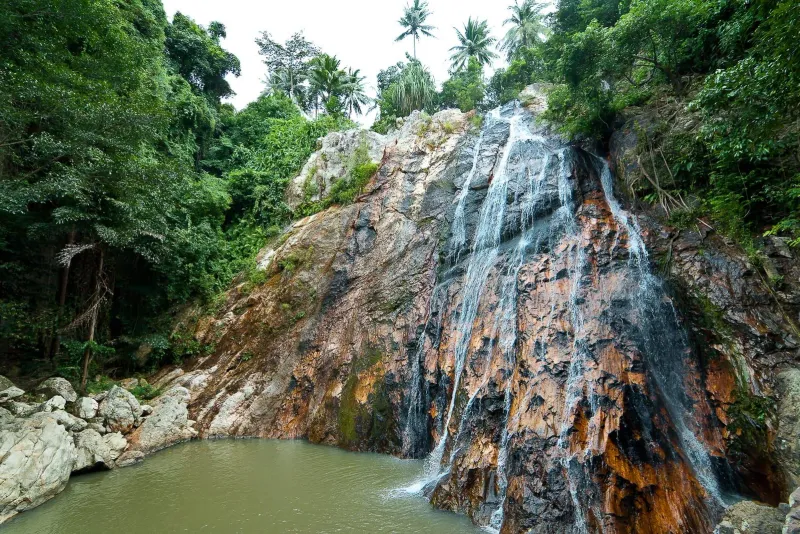
Na Muang Waterfalls — Samui's Purple Cascades and Jungle Pools
Explore Na Muang Waterfalls on Koh Samui — the accessible 18m Purple Waterfall with its swimming pool and the 80m jungle trek to the isla…
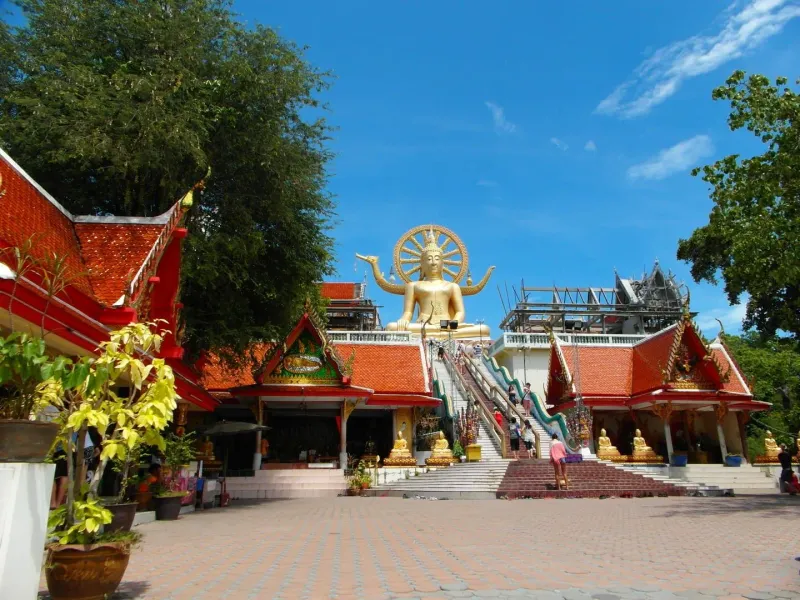
Wat Phra Yai — Big Buddha Temple on Koh Samui
Visit Wat Phra Yai (Big Buddha) on Koh Samui: a 12-meter golden Buddha, naga staircase, panoramic views, and market stalls.
Apirom Viewpoint — Koh Samui's Closed Hillside Lookout Above Ban Tai
Apirom Viewpoint: a ~304m hilltop lookout inland of Ban Tai, Koh Samui, its restaurant closed since the pandemic but the hillside track s…