Contents
Koh Samui has a handful of real recording studios — based in Lamai and Maenam — one advertised rehearsal room with backline hire, and a few bars whose PA system doubles as a live room on band nights. There is no dedicated mastering house on the island: almost everything gets tracked here and finished somewhere else.
Key takeaways
- Three studios currently show a working public website: Sunrise Studio (Lamai), The Lab Creator Studio (Maenam) and Samui Sight & Sound Studio (near Na Muang) — the last shows no dated activity, so confirm it is still open before planning around it.
- Rockestra Music & Rehearsal Studio in Maenam is the island’s one advertised rehearsal room, with instrument sales and a PA/pro-audio install service attached.
- None of these studios publish a day rate. Expect to email for a quote rather than find a price list.
- Mixing and mastering almost always happens off the island, usually in Bangkok, because that is where the specialist ears and the outboard gear are.
- Humidity, brief power outages and Thai import rules on gear are bigger everyday obstacles here than finding a room.
What This Actually Is
Koh Samui’s recording scene is small, scattered across three areas, and mostly invisible unless you already know where to look. On the ground it breaks into four things: a couple of small commercial studios that will take an outside client; one rehearsal room with backline for hire; a run of bars and a Friday street market with a PA good enough for a full band; and a handful of musicians who mix or master remotely for clients who are not on the island at all.
Sunrise Studio in Lamai is the most complete setup found with a live public site: recording, arrangement, mixing and mastering, plus a “One Day One Song” fast-turnaround method and a residential villa next to the studio for artists staying a few nights. The Lab Creator Studio in Maenam covers vocal and instrument recording alongside video, podcast and livestream work — a content studio that happens to record music rather than a music studio first. Samui Sight & Sound Studio, up near Na Muang Waterfall 2, lists isolation booths and 5.1 mixing for film and video post as well as stereo music production, but its site carries no copyright year, no dated posts and nothing to confirm it is still taking clients — treat it as unverified until you hear otherwise directly. A couple of other names surface in old search listings with dead links or social pages gone quiet for over a year; they are left out here rather than padding the list with places that may no longer exist.
Who Records Here
The people behind these rooms split fairly cleanly along Thai and farang lines, and the two scenes barely overlap. Thai-run setups tend to grow out of an instrument shop or a sound-system installer — Rockestra’s studio-plus-retail model is the clearest local example — and serve a mostly Thai clientele: school bands, wedding singers, temple-fair acts, karaoke tracks. Farang-run studios like Sunrise and The Lab pitch more toward songwriters, YouTubers, podcasters and the island’s expat and long-stay crowd, and lean on production packages rather than walk-up local trade. Neither side runs much of a public gig calendar, so most of what a visiting musician learns about “who’s good” still travels by word of mouth rather than a website.
Finding a Drummer
The hardest part of making a record on Koh Samui is rarely the room — it’s the band. Samui’s working musicians are mostly resort and hotel players: six nights a week on a beach-club or lobby stage, covers-heavy, paid steadily but booked solid. That makes a good drummer or bass player available for a two-week studio project a genuine scarcity, and it is common for a visiting act to end up sharing a rhythm section with three other projects that same month. Session players who do free up time are usually doing it around resort contracts, not instead of them, so studio dates get built around someone else’s evening set rather than the other way round.
Walk-Ins or Projects Only
None of Koh Samui’s studios operate as a walk-up, pay-by-the-hour room the way a city studio might. Sunrise Studio lists set weekday hours and says sessions run by appointment; The Lab Creator Studio and Samui Sight & Sound Studio are set up the same way, with a contact form or email rather than a same-day calendar. In practice this means a first-time visitor plans ahead by at least a few days, and most bookings are full-day or multi-day projects rather than a quick hour of tracking. Rockestra’s rehearsal room, being a retail-and-practice space rather than a production studio, is the closer thing to a drop-in option, since a band can rent the room by the session without committing to a longer project.
What It Costs
None of the island’s studios publish a day rate on their own site, which is itself worth knowing before you email one: expect to describe the project and get a quote back rather than see a price list. What that quote typically covers, going by what each site does advertise, is engineer time, use of the room and house instruments, and — at Sunrise Studio — the option to add villa accommodation on top for a residential block of days. Mixing and mastering, where a studio offers it, is usually priced as a separate line from tracking. As a rough anchor, mainland Thai project studios outside Bangkok commonly quote day rates in the low thousands of baht rather than tens of thousands, but Samui’s own studios do not confirm a number, so treat any figure you hear locally as a starting point for a conversation, not a fixed rate.
Rehearsal Rooms and Backline Hire
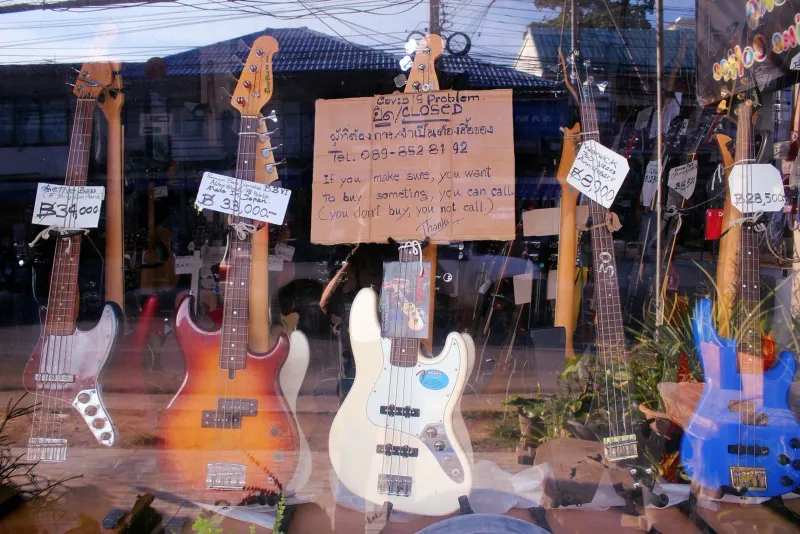
Rockestra Music & Rehearsal Studio in Maenam is the island’s one advertised combination of instrument shop, PA/pro-audio installer and rehearsal room, with a café attached. It is the practical answer for a touring or resident band that needs a room, a drum kit and a working PA without shipping gear in, rather than a place to cut a record. Outside Rockestra, backline hire on Samui runs informally through the resort and wedding-band circuit — sound companies that set up stages for hotels and events will rent out a kit or amps as a side service, but few advertise it as a standalone product the way a mainland city’s rehearsal studios do.
Where Bands Play Live
A short list of bars carries almost all of the island’s live original and cover music. In Chaweng, Soi Solo and Reggae Pub run bands most nights from around 7 to 11 PM on a stage built for a full four- or five-piece. In Lamai, Shamrock Irish Pub, open since 2005, is the long-running pick for live sport and live music most evenings. In Bophut, the Friday Walking Street market folds live music into its weekly food-and-craft street closure, which is as close as the island gets to a regular outdoor gig night. Most beach clubs, by contrast, run a resident DJ rather than a band — genuinely band-friendly rooms with backline and a real stage are rarer than the number of bars on the island suggests.
Recording on a Tropical Island
The obstacles nobody mentions in a studio listing are climate, power and customs, and all three shape how projects actually get made here. Samui’s humidity sits high for most of the year, which is hard on wooden instrument bodies, tape and older analog gear, and on electronics generally; running a dehumidifier in the control room and keeping cases sealed with silica between sessions is standard practice rather than a precaution, the same way it is anywhere in tropical Southeast Asia. Mains power on the island runs off the provincial grid rather than Bangkok’s, and brief outages during the rainy season are common enough that a serious studio keeps a UPS on anything mid-session, since losing power mid-take costs more than the interruption itself. Bringing instruments into Thailand for a temporary tour is more workable than most visiting musicians assume: Thailand has recognized the ATA Carnet system since 1995 through the Board of Trade of Thailand, letting professional equipment enter and leave duty-free as long as it goes back out again. That shortcut does not apply to gear brought in to stay — a drummer relocating to Samui and shipping a kit to keep faces ordinary import duty and VAT like any other imported goods, not a carnet exemption.
Why Most Records Still Finish in Bangkok
Bangkok remains Thailand’s real music-industry center, home to the major labels and production houses — GMM Grammy alone runs thirteen record labels and the country’s biggest artist rosters — and with that scale comes a depth of studios, mix engineers and mastering houses no island scene can match. For a Samui-based band, the practical pattern is to track basic parts locally, where the room and the setting are cheap and the vibe is right, then send stems to Bangkok — or further afield — for a second set of ears on the mix and a proper mastering pass. That split is not a failure of the local scene; it is simply where the specialist infrastructure lives, and it is the same reason a band based in most Thai provinces eventually makes at least one trip to the capital before a release goes out.
Getting In the Door
Every verified studio on this page runs on direct contact rather than an app or a public calendar — an email through the studio’s own site is the standard first move, and a reply describing your project gets you a quote and a date rather than an instant booking. For a rehearsal slot, Rockestra’s retail-and-rehearsal setup is the closest thing to a walk-in option since it is built around short sessions rather than multi-day production blocks. If you are chasing session players, the honest route is watching the resort and beach-club gig circuit for musicians whose playing you like, since that is where most of the island’s working talent already has a stage most nights of the week.
FAQ
Is there a real recording studio on Koh Samui?
Yes, though the scene is small. Sunrise Studio in Lamai and The Lab Creator Studio in Maenam both run active, dated websites offering recording, mixing and production. Samui Sight & Sound Studio near Na Muang lists similar services but shows no recent activity online, so it is worth confirming directly before assuming it is still operating.
How much does it cost to record at a Koh Samui studio?
No studio on the island publishes a day rate. All of them ask you to describe your project by email or contact form and quote back individually, which typically covers engineer time and room use, with accommodation as an optional add-on at Sunrise Studio’s residential setup.
Is there a rehearsal room on Koh Samui?
Rockestra Music & Rehearsal Studio in Maenam is the island’s one clearly advertised rehearsal room, combining a practice space, instrument sales and a PA/pro-audio installation service, with an attached café.
Do Samui-based musicians mix and master their own records?
Mostly no. The island has no dedicated mastering house, and the common pattern is to track locally, then send files to Bangkok or elsewhere for mixing and mastering, where the specialist studios and engineers are concentrated.
Is it difficult to bring instruments into Thailand?
Touring gear entering and leaving Thailand can move duty-free under an ATA Carnet, a system Thailand has recognized since 1995. Gear brought in to stay permanently does not qualify for that exemption and is subject to ordinary Thai import duty and VAT instead.
Where can I hear a live band on Koh Samui tonight?
Soi Solo and Reggae Pub in Chaweng run bands most nights from around 7 PM, Shamrock Irish Pub in Lamai has carried live music most evenings since 2005, and Bophut’s Friday Walking Street folds live music into its weekly night market.
Turning Up
There is no drop-in studio scene to walk into on Koh Samui — every verified studio here works by appointment, arranged over email in advance. What you can turn up to tonight is the live-music side: Reggae Pub or Soi Solo in Chaweng most evenings from around 7 PM, Shamrock Irish Pub in Lamai any night of the week, or the Friday Walking Street market in Bophut if your visit lands on a Friday. For studio time, plan a few days ahead and expect a conversation about your project before a date gets set.
Published on
About the author

Mike Brochlowski
Travel photographer & writer
Travel photographer and island explorer. Mike has spent years documenting Southeast Asia's hidden gems, from secluded beaches to jungle waterfalls.
Articles by Mike →More in Island Life
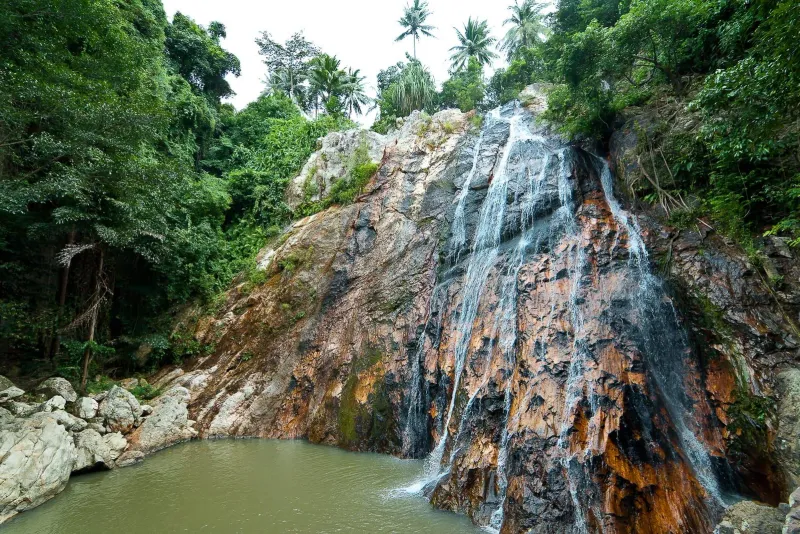
Na Muang Waterfalls — Samui's Purple Cascades and Jungle Pools
Explore Na Muang Waterfalls on Koh Samui — the accessible 18m Purple Waterfall with its swimming pool and the 80m jungle trek to the isla…
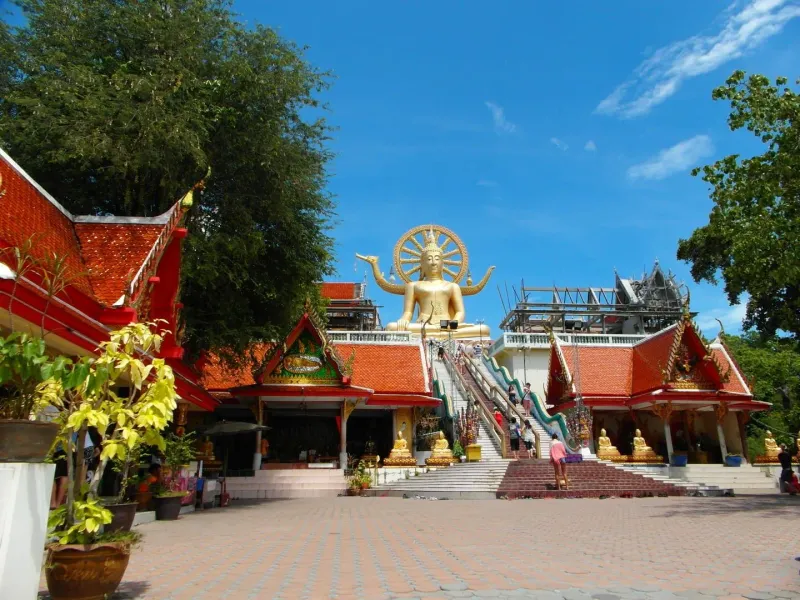
Wat Phra Yai — Big Buddha Temple on Koh Samui
Visit Wat Phra Yai (Big Buddha) on Koh Samui: a 12-meter golden Buddha, naga staircase, panoramic views, and market stalls.
Apirom Viewpoint — Koh Samui's Closed Hillside Lookout Above Ban Tai
Apirom Viewpoint: a ~304m hilltop lookout inland of Ban Tai, Koh Samui, its restaurant closed since the pandemic but the hillside track s…