Contents
Koh Samui sits inside Surat Thani province, Thailand’s own robusta belt, yet almost every specialty café on the island pours arabica grown 800 km north in the Chiang Mai and Chiang Rai highlands. Roasting on Samui itself is real but rare — most “roasted” signage on the island means roasted somewhere in Thailand and shipped in, not roasted behind that counter.
Key takeaways
- Thailand’s coffee map is split in two: highland arabica in the north (Chiang Mai, Chiang Rai), lowland robusta in the south — including Surat Thani, Samui’s own province.
- Nearly every specialty café on Samui serves northern arabica, because that’s what the third-wave market wants; the south’s robusta mostly goes into instant coffee and export blends, not flat whites.
- A handful of Samui cafés advertise their own roasting; a roaster visible in a shop window is not proof it supplies that café’s own cups — ask, don’t assume.
- Humidity, hard groundwater and inconsistent power are real obstacles to roasting well on a tropical island, on top of the logistics of importing green beans at all.
- A flat white here runs about the same as Bangkok and somewhat more than Chiang Mai, mostly because of freight, rent and tourist-market pricing rather than the beans themselves.
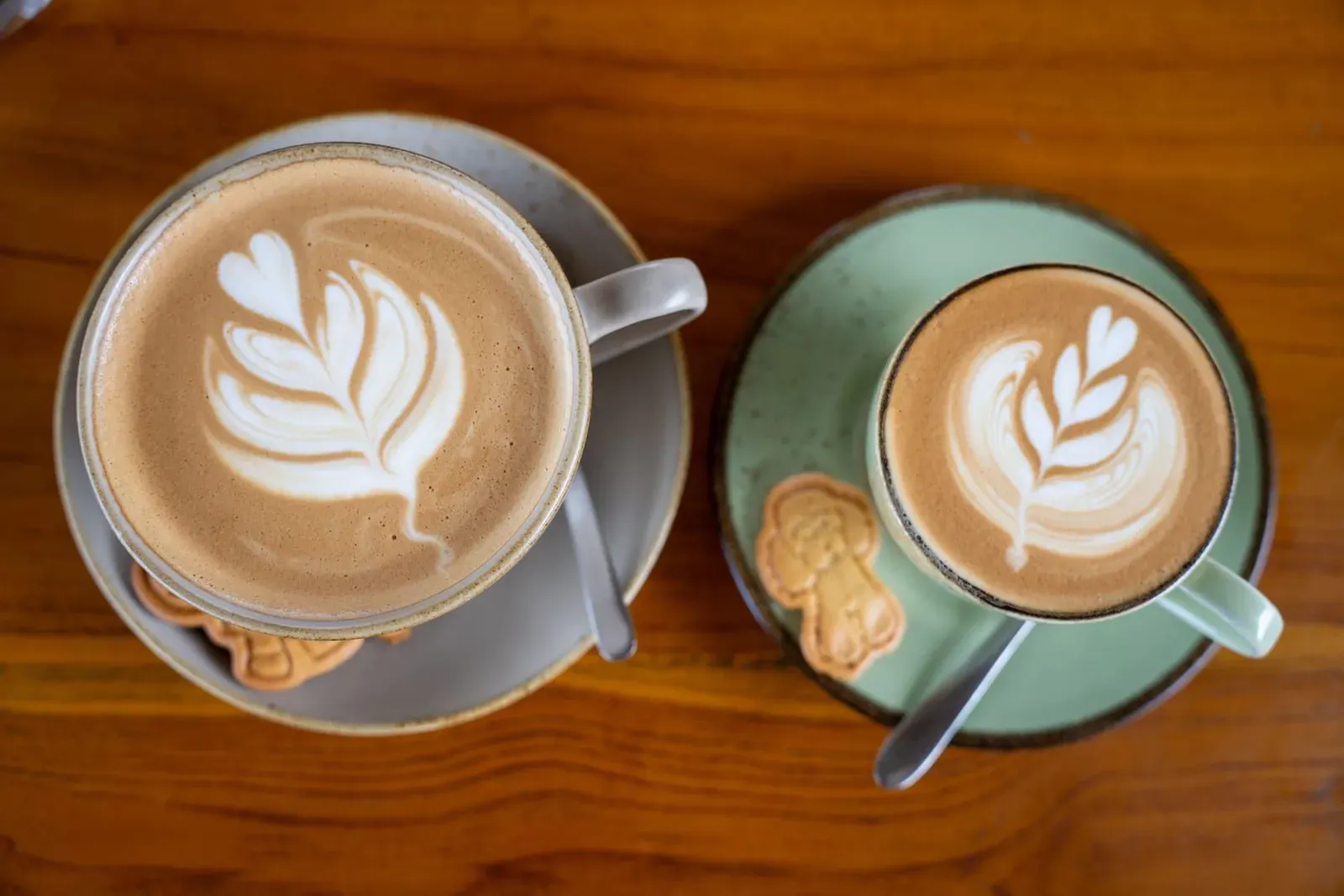
What This Actually Is
This page is about production, not where to drink the result. For café recommendations, brunch menus and wifi notes, see the cafés and brunch guide — that page ranks where to sit down with a cup. This one asks a different question: who is actually roasting the coffee Samui drinks, where do the green beans come from, and what does doing that on an island in the Gulf of Thailand involve. It’s a small, mostly invisible trade, easy to mistake for something bigger than it is because a hessian sack and a drum roaster in a café window photograph well.
Thailand’s Coffee Map
Thailand grows two different coffees in two different halves of the country, and the split runs almost entirely along a north–south line. Arabica is grown in the northern highlands along the Burmese and Lao borders — Chiang Mai, Chiang Rai and neighboring provinces — at elevations of roughly 800–1,200 meters, producing around 10,000 tonnes a year. Much of that cultivation traces back to the Royal Project Foundation, founded in 1969 after King Bhumibol Adulyadej visited an opium-growing hill-tribe village and began funding alternative cash crops instead; the foundation now runs 38 development centers across five northern provinces. The Doi Tung Development Project, started under the King’s mother, followed the same logic on a single mountain — hill-tribe communities there now farm roughly 3.5 million coffee trees, supporting close to 900 families where opium poppies once grew.
Robusta, by contrast, is a lowland southern crop, grown chiefly in Chumphon, Surat Thani, Nakhon Si Thammarat, Krabi, Phang Nga and Ranong — around 30,000 tonnes a year, three times the northern arabica volume. Koh Samui is administratively part of Surat Thani, which makes the island’s own province one of the country’s biggest robusta producers. And yet almost nobody visiting a Samui café tastes it as such: robusta here goes mostly into instant coffee, canned ready-to-drink cans and export blends rather than a barista’s hopper, because the international specialty market — and the customers who drive it — associates quality espresso with arabica’s lower caffeine, higher acidity and more complex flavor, not robusta’s harsher, higher-caffeine profile. So the island sits in the middle of Thailand’s robusta country while its cafés compete on how far north their arabica traveled.
Who Actually Roasts on Samui
“Roasted on Samui” and “roasted in Thailand” are different claims, and the island’s café scene blurs them constantly. Three cafés in the cafés and brunch guide advertise their own roasting as of September 2026: Roastery Village and Paupau Coffee Roaster, both in Bophut’s Fisherman’s Village, and Flo Coffee Roaster in Chaweng. All three describe in-house roasting on their own menus and signage — we could not independently confirm a standalone public website for any of the three, so treat the in-house-roasting claim as the café’s own description rather than something we audited directly. A small drum roaster visible through a café window is a genuine sign someone here has the equipment and the interest; it is not, by itself, proof that the coffee in that day’s pour actually came off that machine rather than a pre-roasted mainland supply kept in reserve for busy days.
We could not find an independently confirmed roastery on Samui that operates purely as a wholesale supplier — a roasting operation separate from its own café storefront, selling beans on to other cafés, hotels or shops on the island. If one exists, it keeps a low enough public profile that it did not surface in this research; that gap itself is telling, since a real wholesale roastery normally advertises to attract café accounts. What we can confirm is the far more common pattern: most Samui cafés buy pre-roasted beans from mainland suppliers. Northern arabica reaches Thai cafés nationwide through wholesale roasters based in Chiang Mai and Bangkok — Hillkoff, a Chiang Mai roaster and coffee-processing company linked to Thailand’s Highland Research and Development Institute, is one example of the kind of highland-connected supplier that feeds cafés country-wide, Samui included, rather than every “specialty” cup on the island being a local craft product.
The Craft on a Tropical Island
Roasting well anywhere is a fight against variables; roasting well on a small tropical island adds a few the trade doesn’t usually have to think about. Humidity sits high most of the year in the Gulf of Thailand, and green beans are hygroscopic — they absorb ambient moisture, which changes how they roast and how fast they stale, so serious storage means sealed containers with silica or a dedicated dry room, not an open sack by the counter. Freshly roasted beans also need to degas: roasting releases trapped CO₂, and a rest period — commonly a day or more at around 32°C before the bag is sealed or the beans are ground — lets that gas escape so the coffee doesn’t taste flat or over-extract when it’s pulled too soon after roasting.
Water is the other quiet variable. Samui’s supply is a patchwork rather than one uniform municipal line — many properties on the island rely on trucked deliveries or a private borewell rather than mains water, a pattern well documented on the villa-rental side of the site, and groundwater drawn this way tends to run harder and more mineral-heavy than a filtered city supply. Harder water changes extraction meaningfully enough that some cafés run their own filtration or reverse-osmosis systems before water ever reaches the espresso machine, rather than pulling straight from whatever arrives. Power matters too: an electric drum roaster needs a steady supply, and Samui’s grid — like its water trucks — is more exposed to monsoon-season outages between roughly September and November than mainland city power. Finally, there’s simply getting the beans here at all: green coffee arriving from the northern highlands has to cross the country and then a stretch of the Gulf of Thailand by ferry or air freight, adding cost and time before a single bean touches a roaster.
What You Can Do
A visitor genuinely interested in the production side, rather than just the drink, has a few honest options. Buying roasted-on-island beans is possible at the cafés above that claim their own roasting, though as noted, that claim comes from the café rather than independent verification — ask directly when you’re in-store whether what’s in the retail bag came off their own machine. Watching a roast happen is plausible at a café with a visible drum roaster during opening hours, though none publish a fixed roasting schedule, so it’s a matter of luck and timing rather than something to plan a trip around. We found no evidence of a public cupping session — a structured tasting event comparing origins or roast levels — currently running anywhere on the island; if one exists, it isn’t advertised anywhere we could find. The most useful skill for a visitor is simply learning to tell a working roastery from decoration: ask whether the machine in the window ran this week, whether staff can describe the origin and roast date of what’s in your cup, and whether the beans for sale are dated — a bag with no roast date, or a vague answer to a direct question, is a reasonable sign the display is more atmosphere than production. Samui’s wider craft and maker scene sits alongside this page in the same cluster.
What It Costs
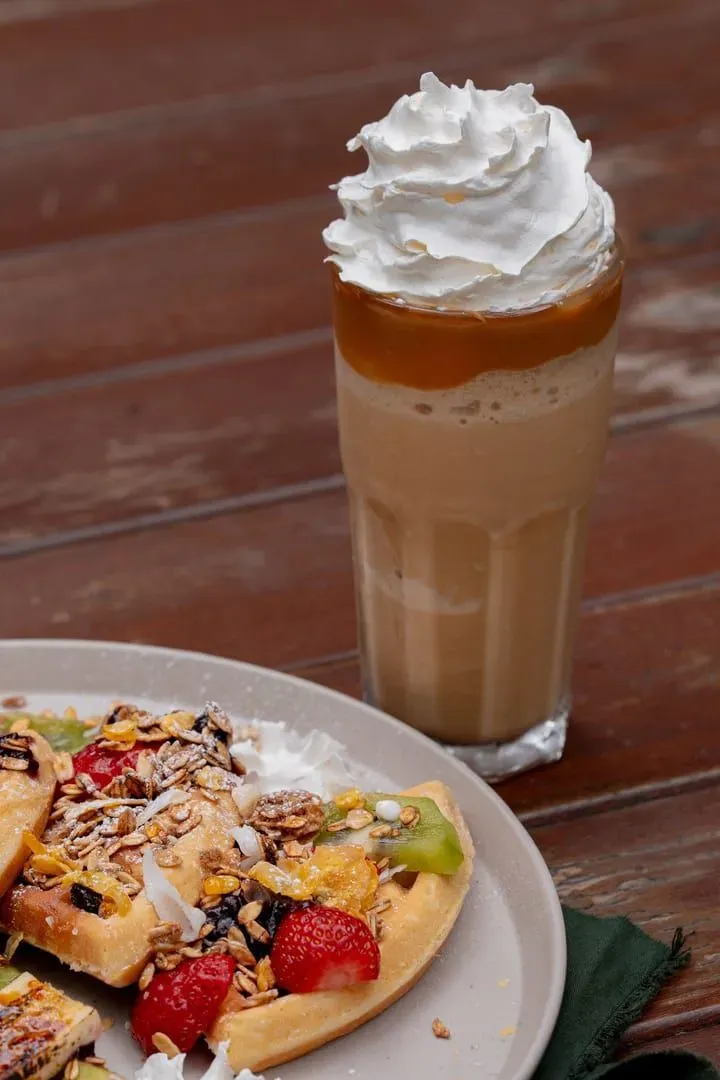
A specialty flat white or latte on Koh Samui runs 90–160 THB (~2.50–4.50 USD) as of September 2026, per the site’s own café research. Bangkok’s specialty scene, drawing on the same mainland roasters and paying comparable capital-city rent, prices similarly — commonly somewhere in the 80–150 THB range, though we did not independently re-audit Bangkok cafés for this page, so treat that as a general market comparison rather than a fresh count. Chiang Mai, sitting close to the arabica farms themselves with lower rents than a resort island or the capital, tends to price a little lower still, often in the 70–120 THB range. None of that gap is really about the beans: green arabica costs roughly the same wherever in Thailand a roaster buys it, so the difference between islands, capital and highlands is mostly freight, rent and how much a tourist market will pay, not the coffee itself.
A 250g bag of roasted specialty beans on Thai retail shelves commonly falls somewhere between 250–450 THB regardless of where you buy it, since the beans travel the same basic route — grown in the north, roasted at origin or in Bangkok or Chiang Mai, then shipped out — before a Samui retailer adds inter-island freight and a resort-market markup on top. That markup, more than any claim about rarity or craft, is the honest answer to why island coffee costs what it does: a small market, imported everything, and a customer base used to island prices.
FAQ
Is any coffee actually grown on Koh Samui?
Not that this research could confirm. Samui’s own province, Surat Thani, is a significant robusta-growing region, but the plantations are on the Thai mainland peninsula, not the island itself. No evidence of a working coffee farm on Samui surfaced in this research.
Why don’t Samui cafés serve local robusta instead of northern arabica?
The specialty coffee market that Samui’s cafés compete in is built around arabica’s flavor profile — third-wave customers expect it. Robusta from Surat Thani and the rest of the southern belt is grown in large volumes but mostly goes into instant coffee, canned drinks and export blends rather than café espresso.
Which Samui cafés actually roast their own beans?
Roastery Village and Paupau Coffee Roaster in Bophut’s Fisherman’s Village, and Flo Coffee Roaster in Chaweng, all advertise in-house roasting as of September 2026. We could not independently confirm a public website for any of the three, so this reflects what each café states about itself rather than outside verification.
Is there a wholesale coffee roastery on Koh Samui?
We found no independently confirmed roastery on the island supplying other cafés or hotels as a standalone business. Most Samui cafés instead buy pre-roasted beans from mainland Thai wholesale roasters based around Chiang Mai and Bangkok.
Does Samui’s climate make roasting coffee harder?
Yes, in specific ways: high humidity affects green-bean storage and requires sealed, dry storage; a proper degassing rest (commonly a day or more around 32°C) matters before beans are sealed or ground; and monsoon-season power interruptions, roughly September to November, can interrupt an electric roaster mid-batch.
Why does a 250g bag of coffee cost more on Samui than on the mainland?
Mostly freight and rent, not the beans. Green or roasted coffee has to travel from the mainland by ferry or air, then absorbs an island retail markup on top of resort-area rent — the same forces that make most imported goods cost more on Samui than in Chiang Mai or Bangkok.
Turning Up
There’s no scheduled roasting demonstration or public cupping to plan a visit around — this is a walk-in, ask-directly scene, not a bookable one. The most reliable move is to visit Roastery Village or Paupau Coffee Roaster in Bophut’s Fisherman’s Village, or Flo Coffee Roaster in Chaweng, during normal daytime opening hours, look for the drum roaster, and ask the staff directly whether it ran that week and what’s currently in the hopper. If you’re spending real time on the island working remotely, the digital nomad guide covers the wider café-and-coworking rhythm this scene sits inside.
Published on
About the author

Mike Brochlowski
Travel photographer & writer
Travel photographer and island explorer. Mike has spent years documenting Southeast Asia's hidden gems, from secluded beaches to jungle waterfalls.
Articles by Mike →More in Island Life
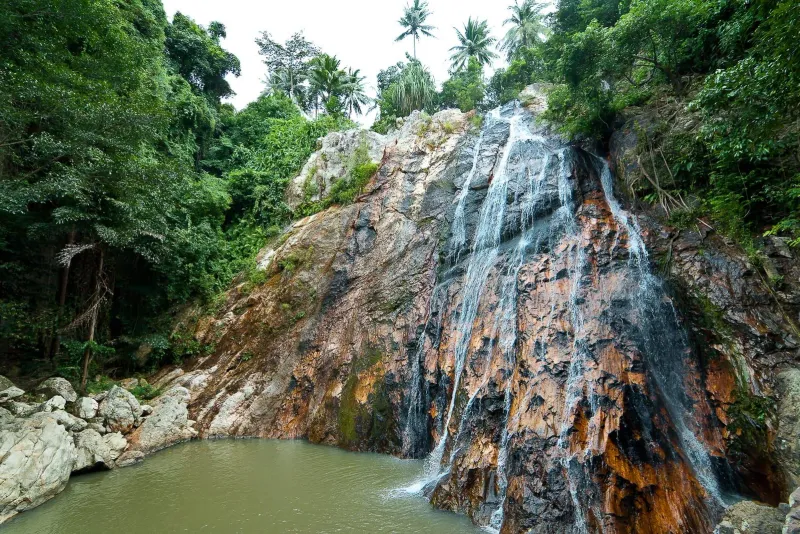
Na Muang Waterfalls — Samui's Purple Cascades and Jungle Pools
Explore Na Muang Waterfalls on Koh Samui — the accessible 18m Purple Waterfall with its swimming pool and the 80m jungle trek to the isla…
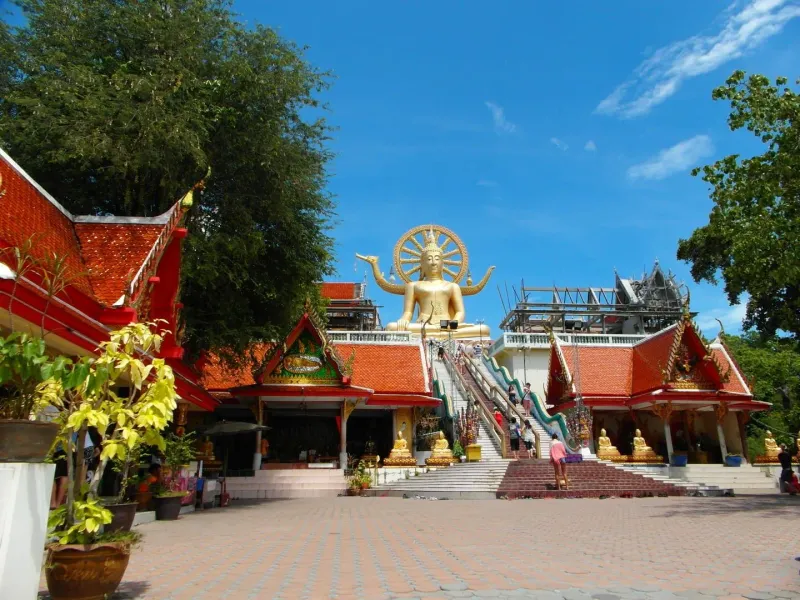
Wat Phra Yai — Big Buddha Temple on Koh Samui
Visit Wat Phra Yai (Big Buddha) on Koh Samui: a 12-meter golden Buddha, naga staircase, panoramic views, and market stalls.
Apirom Viewpoint — Koh Samui's Closed Hillside Lookout Above Ban Tai
Apirom Viewpoint: a ~304m hilltop lookout inland of Ban Tai, Koh Samui, its restaurant closed since the pandemic but the hillside track s…