Contents
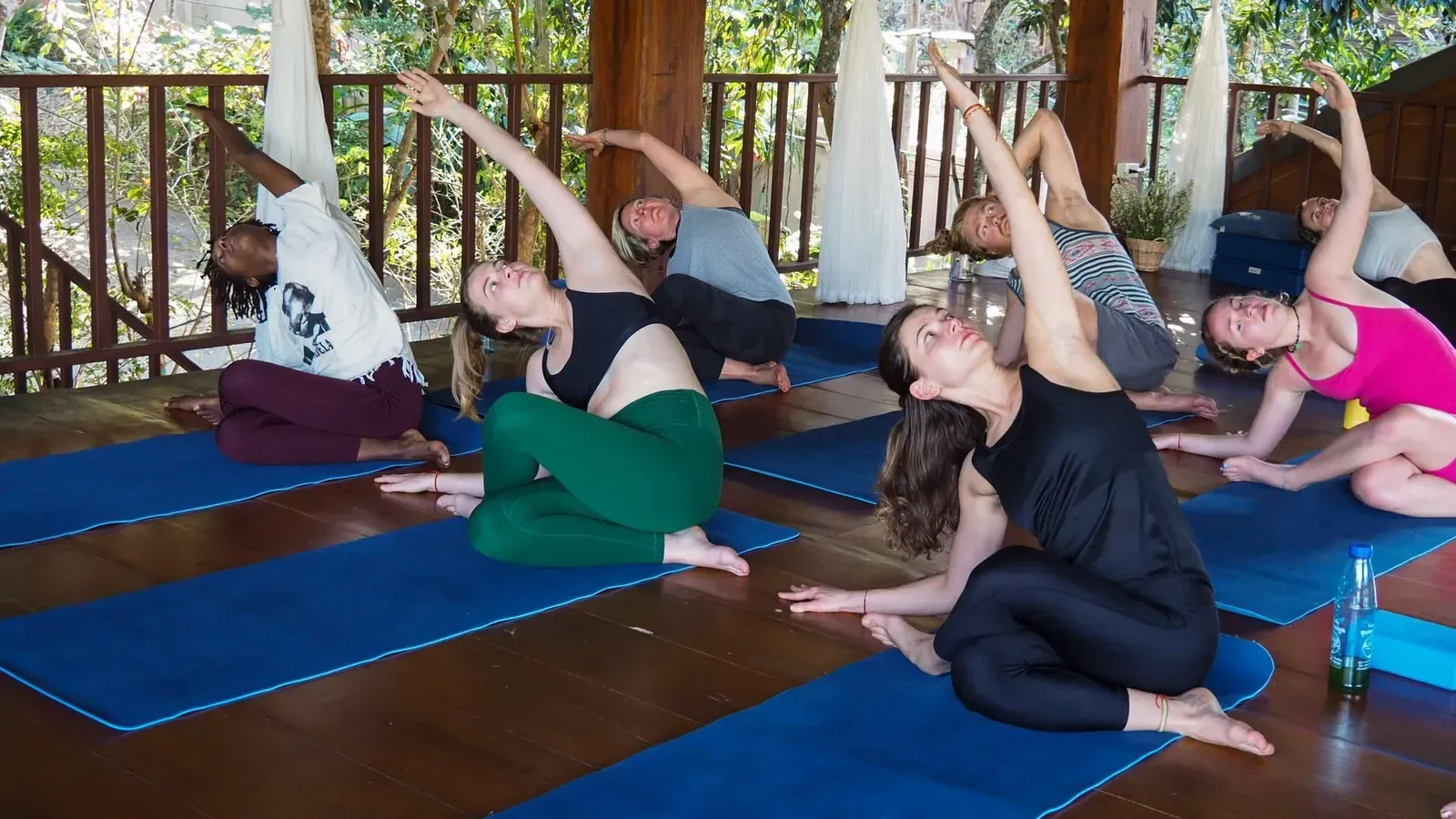
Yoga on Koh Samui splits into two scenes that barely overlap. One is the four-figure-a-night detox retreat. The other is a loose, low-cost community of studios, guesthouse shalas and beach mats where a class costs less than lunch and nobody signs a contract. This page is the second one — for anyone who lives here, or is staying three weeks, and just wants to practise twice a week.
Key takeaways
- A single drop-in class typically runs 300-600 THB (~8.50-17 USD); a week or month of unlimited classes brings the per-session cost down by roughly half.
- The island’s clearest yoga cluster sits in the quiet north — Maenam and Bang Po — with smaller pockets around Fisherman’s Village, Lamai and Chaweng.
- Vikasa, on the hillside between Chaweng Noi and Lamai, has the island’s most established public drop-in schedule and a running 200-hour teacher training programme; Shahda Yoga in Fisherman’s Village publishes a comparably detailed weekly timetable.
- Studios here open and close faster than almost any other business type on Samui — treat every name and price below as a starting point, not a booking.
What This Actually Is
This is the practising community, not the wellness industry — the people who roll out a mat two or three times a week between other things, not the guests on a seven-day cleanse. If you want the island’s medical-grade detox sanctuaries and multi-night retreat packages — Kamalaya, Samahita Retreat, Absolute Sanctuary — that comparison lives on the yoga and wellness retreats guide. Nothing here requires booking a room, a programme or a minimum number of nights.
Who Is In It
The regulars are long-stay expats and digital nomads based around Maenam who treat a class the way other people treat a gym membership, seasonal workers from the dive and hospitality trade filling an evening off, and short-stay travellers topping up a routine they already have at home. A smaller, more committed slice is on the island specifically to finish a 200-hour teacher training, which for a few weeks makes them the most visible yoga presence around — see the digital nomad guide for how the long-stay side of this crowd lives and works.
How It Works
Most classes are drop-in with no booking required: you show up 10-15 minutes early, pay in cash, and take a mat at the back if it is your first time in the room. A handful of guesthouse and hotel-run sessions ask for a same-day message so they know whether to open the shala at all — worth doing if a place lists a contact method, since a class with two people signed up is the first one to get cancelled.
What It Costs
A single class across the island’s independent studios commonly runs 300-600 THB (~8.50-17 USD). Vikasa charges 600 THB (~17 USD) for a single class, 1,700 THB (~49 USD) for a 7-day unlimited pass, and 3,500 THB (~100 USD) for 30 days. A handful of the smaller studios now publish their own rates too: Sangha Yoga Studio in Bo Put and Marga Yoga in Taling Ngam both list 500 THB (~14 USD) a class (Marga also sells a 5-class pass for 1,800 THB, ~54 USD, valid two weeks), a pattern — roughly half the per-class cost once you commit to a week or a multi-class pass — that appears to hold island-wide even at studios that keep pricing off their website and set it at the desk instead. Donation-based sessions, where they exist, typically suggest 200-300 THB.
How To Join
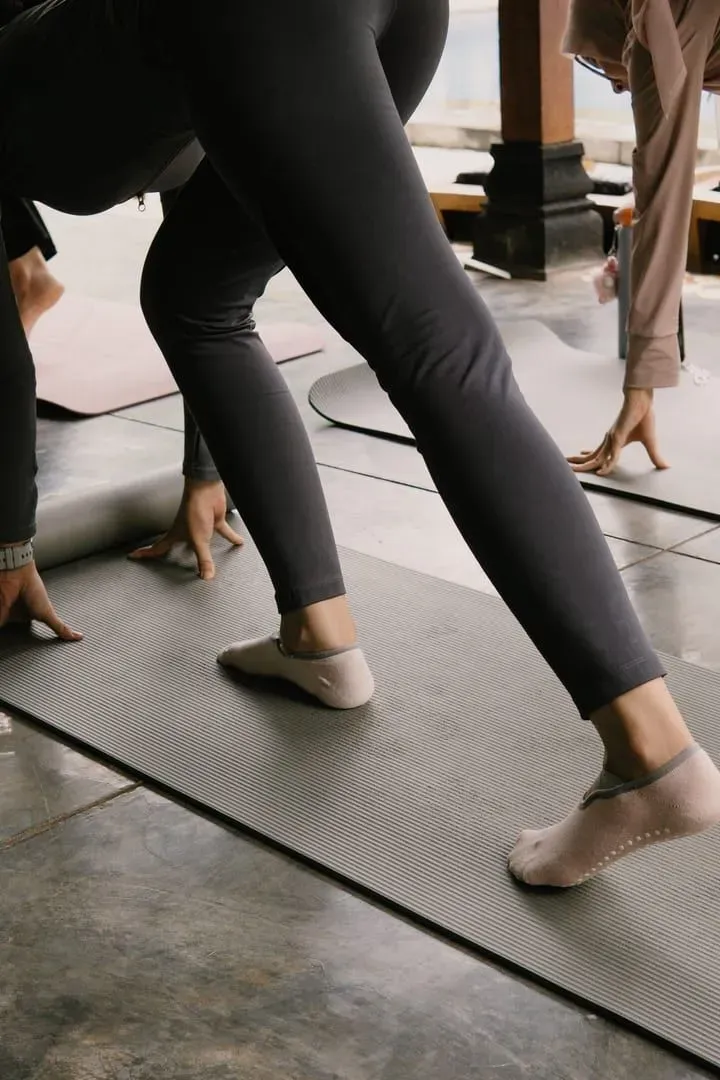
Turn up. That is the entire process for almost every class on this list — no membership, no app, no minimum commitment. Bring your own mat if you can; a few studios rent one for a small fee, and mats left in humid storage between sessions are not always in great shape.
Where The Studios Cluster
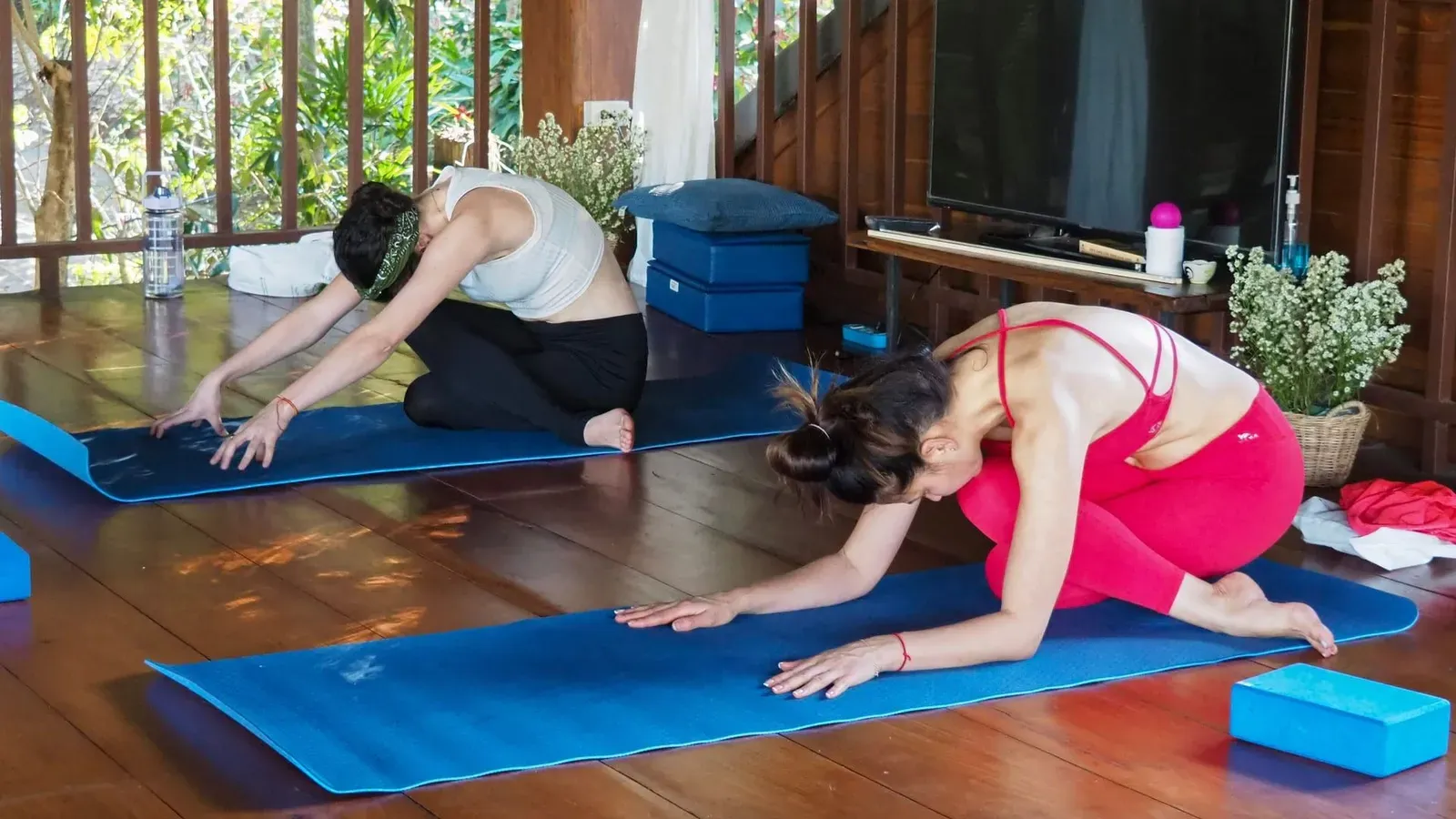
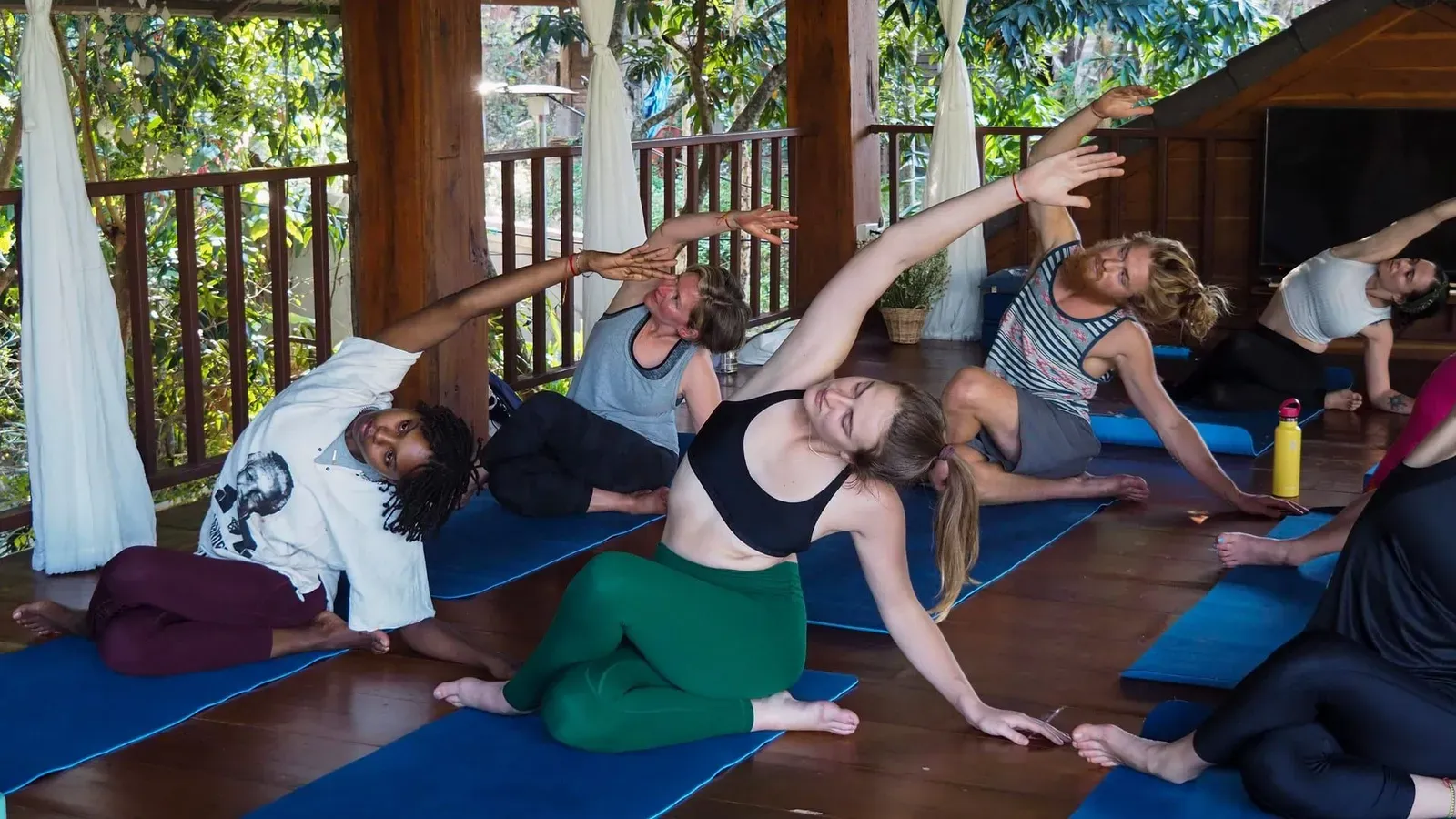
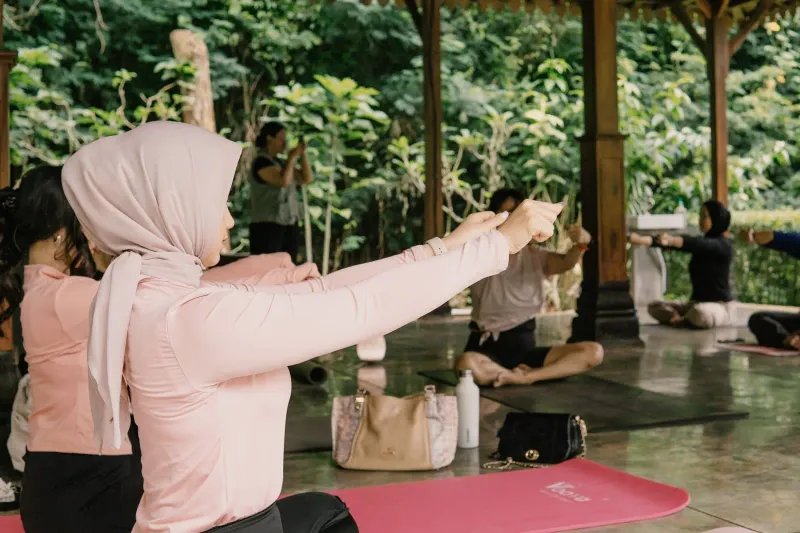
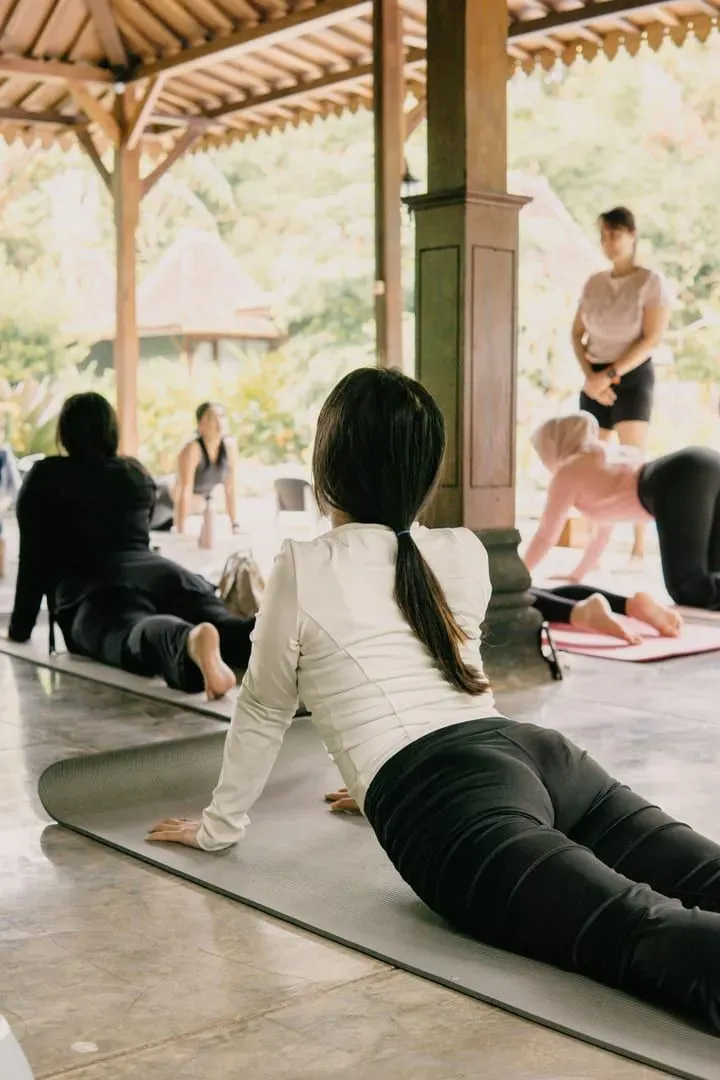
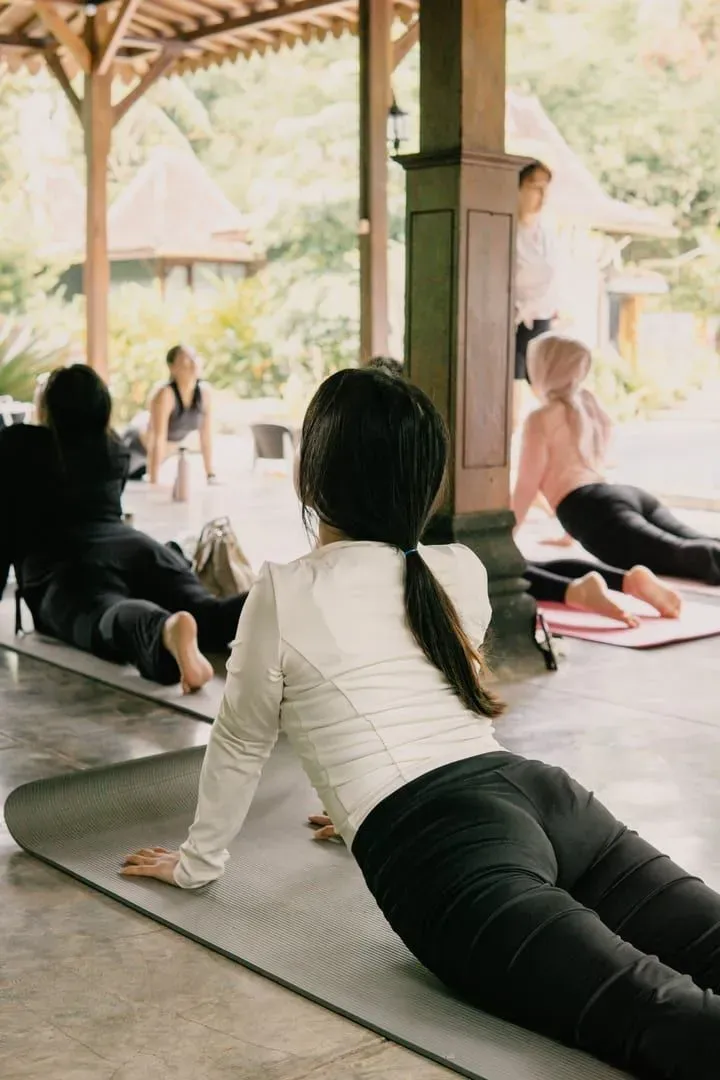
Samui’s yoga map has a real centre of gravity, and it is the quiet north. Maenam and Bang Po — the coastline the Maenam area guide frames as the island’s long-stay, family-and-remote-worker base — carry the highest concentration of small open-air shalas, most of them run as an amenity attached to a guesthouse or boutique hotel rather than as a standalone storefront business. That is a deliberate trade-off for the visitor: fewer of these have a polished website worth linking to, so the honest advice is to check Google Maps listings and a property’s own Instagram for this week’s timetable rather than expect one central booking page.
Fisherman’s Village in Bophut has grown into the island’s second real cluster: Shahda Yoga, based in the village itself, runs a published weekly timetable of hatha, vinyasa and functional-mobility classes from 7 AM to early evening; Sangha Yoga Studio, a few minutes away in Bo Put’s town centre, is a small air-conditioned room charging 500 THB (~14 USD) a class; and Tak Yoga, also in Bophut, runs a morning and an evening hatha class most days. None of the three keeps the exact walk-in ease of Vikasa’s model — Sangha and Tak are easiest reached by messaging ahead to confirm the day’s class is running. Lamai and Chaweng skew toward hotel-spa classes for guests (sometimes opened to outside visitors for a fee) plus the island’s most stable independent option: Vikasa, a cliffside studio and retreat on the hillside between Chaweng Noi and Lamai. Vikasa remains the anchor point for anyone island-wide who wants a dependable, publicly listed walk-in schedule rather than a guesthouse noticeboard. The island’s southwest coast has one further option: Marga Yoga in Taling Ngam, 30 metres from the beach, which sells single classes at 500 THB (~14 USD) but — unlike Vikasa — asks you to book by 4 PM the day before rather than just showing up.
Styles You Can Reliably Find
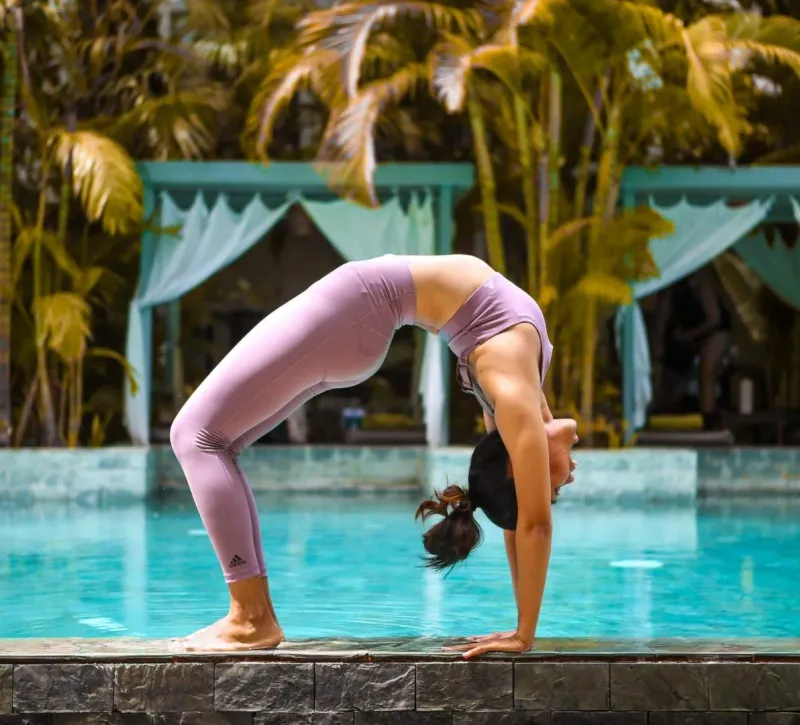
Vinyasa and hatha are the two styles you can count on finding somewhere on the island most days of the week — they are the default format for both hotel classes and independent studios. Yin turns up on quieter evening schedules, usually once or twice a week, aimed at the same crowd that trains Muay Thai or freedives during the day and wants a slow, static stretch rather than another flow class. Ashtanga in the traditional Mysore self-practice format is rarer and concentrated at studios built around a resident senior teacher rather than a rotating roster — Vikasa’s own class list has run Mysore-style sessions alongside its flow and restorative classes. Aerial yoga and yoga-Pilates hybrid classes exist but are the least stable offering on the island: they depend on a single piece of equipment (an aerial rig) and a specific instructor, so they are the first classes to disappear when a studio changes hands.
One style you will not find in any meaningful way is hot yoga — heated-room practice is largely redundant on an island that sits at 27-32°C and 70-85% humidity for most of the year. A handful of studios have tried a heated room as a novelty; ordinary outdoor and open-air classes here already run at a temperature most hot-yoga studios elsewhere are trying to recreate.
Beach Classes and Donation Sessions
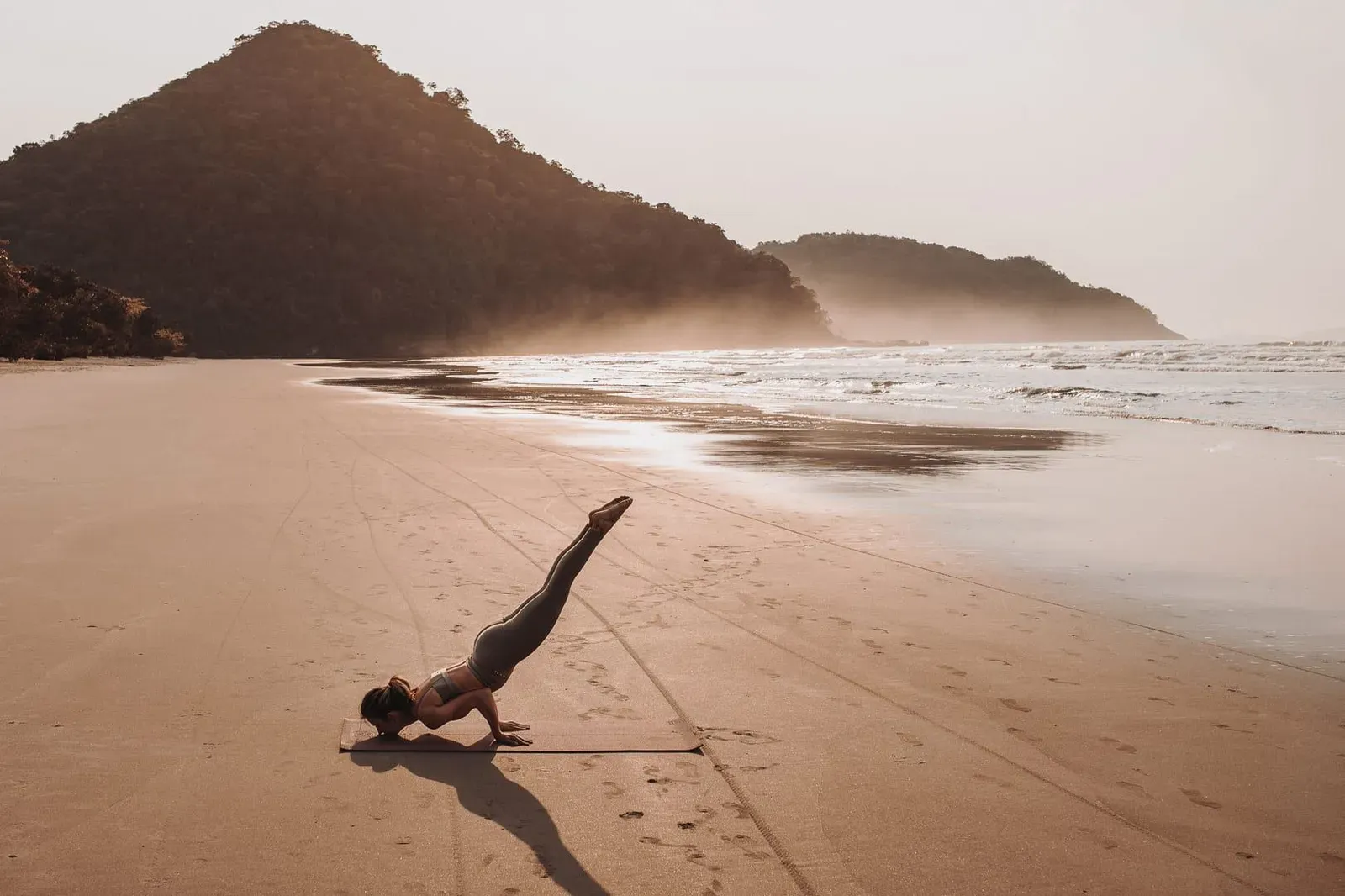
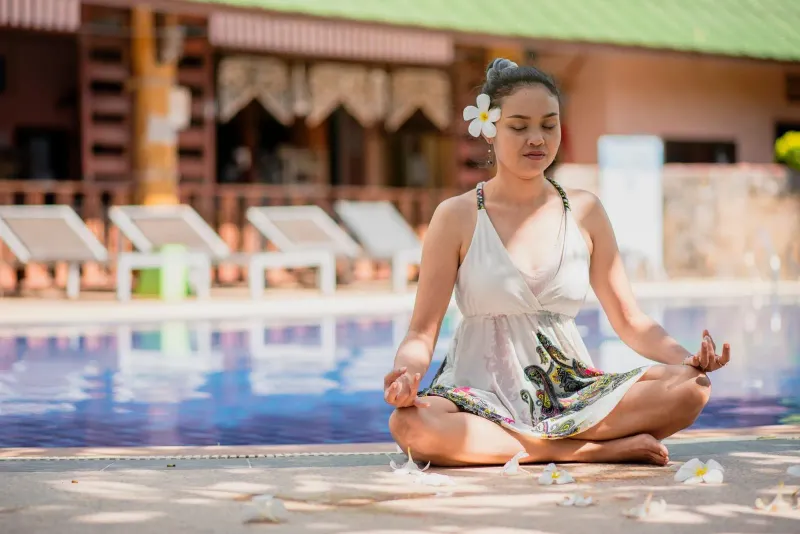
Free or donation-based beach yoga is real on Samui but informal by nature — sessions are organised by whoever is around that season, advertised through word of mouth or a hotel’s guest board rather than a permanent website, and they move or stop when that person moves on. Morning is the reliable window: 7:00-8:00 AM before the heat and the beach crowds build, most often on the calmer stretches of Maenam and Bang Po sand rather than the busier central strips of Chaweng and Lamai. Treat any specific beach-class time you find online as a lead to confirm locally, not a fixed listing — by design, this is the part of the scene with the shortest shelf life.
The Teacher-Training Circuit
Koh Samui runs an unusually large number of 200-hour yoga teacher training courses for an island its size, and the reasons are practical rather than spiritual: a warm climate that makes outdoor practice viable year-round, a month of cheap long-stay accommodation, an established wellness-tourism infrastructure that already markets to Western trainees, and a Yoga Alliance-recognised certification that travels well once you leave. Vikasa runs a 200-Hour Foundation Yoga Teacher Training with intakes through the year (confirmed running as of September 2026); Marga Yoga in Taling Ngam advertises 50, 100 and 200-hour tracks on its own booking site; other retreat-scale properties on the island run their own certification tracks for staying guests alongside regular retreat programming. A trainee cohort is usually the most visible concentration of yoga practitioners on the island for the three to four weeks a course runs — they fill the 6 AM classes and often practise again in the evening.
The Muay Thai and Freediving Crossover
A meaningful share of Samui’s yoga attendees are not there for yoga first — they are recovering from something else. Fighters training at Lamai’s cluster of Muay Thai camps, where daily pad work builds strength but not hip or shoulder mobility, show up to evening yin or hatha classes specifically for the stretch their sport does not provide; BXB Fight Lab’s on-site ice bath, sauna and physio setup reflects the same recovery instinct in a different form. Freedivers training breath-hold and flexibility out of the island’s dive operators lean on the same slow, breath-led practice for a related reason — static apnea and dynamic freediving both reward the diaphragm control and calm a regular yoga practice builds. Neither crossover has a dedicated studio built around it; it shows up as a handful of familiar faces from the gym or the dive boat turning up to the same evening class.
When The Island Empties Out
Samui’s yoga scene is seasonal in a way few visitors expect. High season (roughly November-March) fills 6-7 AM classes to capacity and adds extra evening sessions at busier studios. Low season (April-June and September-October, wet-season months covered in the best time to visit guide) does the opposite: afternoon classes with three students on the books get cancelled same-day, some guesthouse shalas stop running altogether until the crowds return, and teacher-training intakes thin out. If you are visiting in the shoulder months, mornings are still your best bet for a class actually running as scheduled.
FAQ
How much does a drop-in yoga class cost on Koh Samui?
A single drop-in class typically costs 300-600 THB (~8.50-17 USD) across Koh Samui’s independent studios. Vikasa publishes 600 THB (~17 USD) per class; monthly or weekly unlimited passes bring the per-class price down by roughly half compared to paying per session.
Is there yoga in Maenam or Bang Po?
Yes — Maenam and Bang Po form Koh Samui’s quietest and most concentrated yoga cluster, mostly small open-air shalas attached to guesthouses and boutique hotels rather than standalone studios. Schedules change often, so check a property’s Google Maps listing or Instagram for the current week’s timetable before travelling there.
Does Koh Samui have hot yoga?
Not in any meaningful sense — Koh Samui’s year-round heat and humidity make a heated room largely redundant. Most outdoor and open-air classes on the island already run warmer than a typical hot-yoga studio elsewhere, so the practice has never taken hold here as its own category.
Where can I do a 200-hour yoga teacher training on Koh Samui?
Vikasa, on the hillside between Chaweng Noi and Lamai, runs a 200-Hour Foundation Yoga Teacher Training with intakes through the year, confirmed running as of September 2026, and Marga Yoga in Taling Ngam advertises 50, 100 and 200-hour tracks. Several retreat-scale properties on the island also run certification tracks for staying guests — check the yoga and wellness retreats guide for the retreat side of that comparison.
Are there free yoga classes on Koh Samui?
Some — donation-based and free beach sessions exist, usually run informally by whoever is on the island that season rather than a registered business, and typically held in the 7:00-8:00 AM window before the day’s heat builds. They are the least stable part of the scene, so confirm locally rather than relying on an old online listing.
Turning Up
The most dependable walk-in option on the island is still Vikasa’s studio between Chaweng Noi and Lamai: arrive 10-15 minutes before class, pay in cash, no advance booking needed. In Fisherman’s Village, Shahda Yoga posts a real weekly timetable worth checking before you go; Sangha Yoga Studio and Tak Yoga, both in Bophut, and Marga Yoga in Taling Ngam are real, priced options too, but message ahead to confirm the day’s class rather than just turning up. Everywhere else — the shalas around Maenam and Bang Po, the free beach mats at sunrise — runs on a shorter, more local information chain: a hotel noticeboard, a studio’s own Instagram story, a message to whoever answers the phone that week. Check the specific place’s own page the same day you plan to go, especially outside the November-March high season, and you will find a class most weeks of the year.
Published on
About the author

Mike Brochlowski
Travel photographer & writer
Travel photographer and island explorer. Mike has spent years documenting Southeast Asia's hidden gems, from secluded beaches to jungle waterfalls.
Articles by Mike →More in Island Life
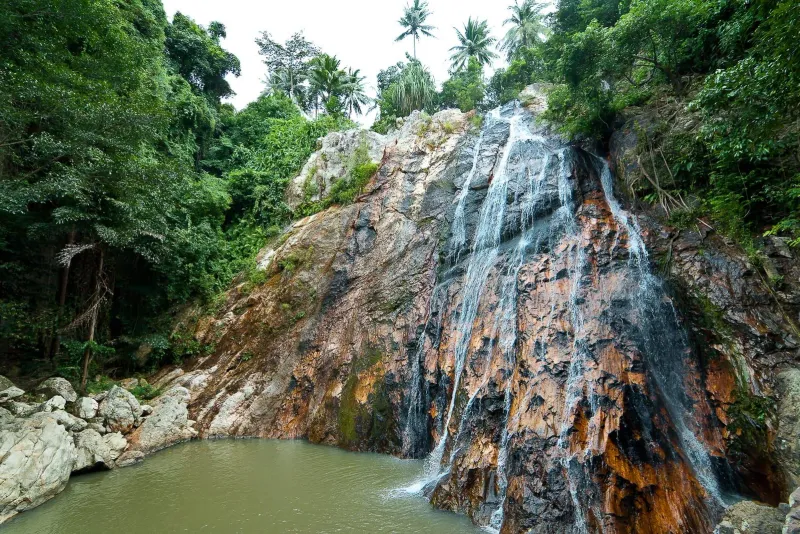
Na Muang Waterfalls — Samui's Purple Cascades and Jungle Pools
Explore Na Muang Waterfalls on Koh Samui — the accessible 18m Purple Waterfall with its swimming pool and the 80m jungle trek to the isla…
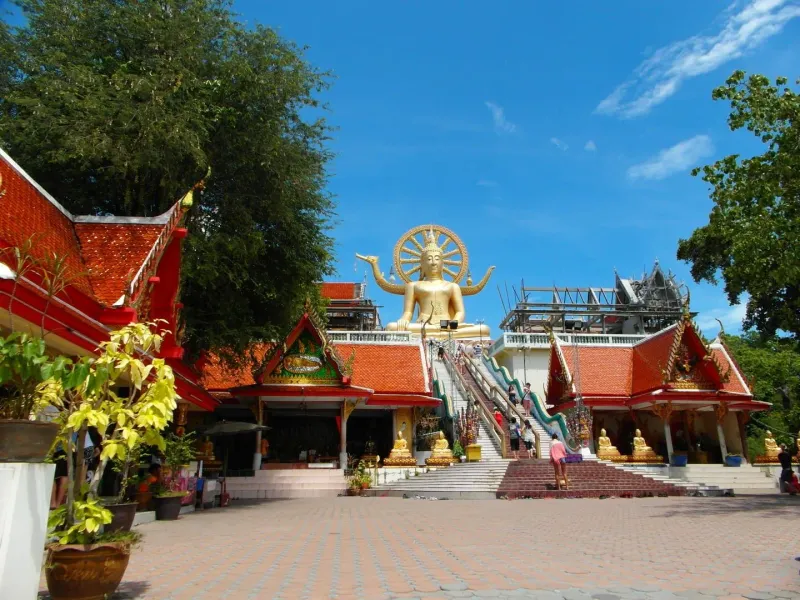
Wat Phra Yai — Big Buddha Temple on Koh Samui
Visit Wat Phra Yai (Big Buddha) on Koh Samui: a 12-meter golden Buddha, naga staircase, panoramic views, and market stalls.
Apirom Viewpoint — Koh Samui's Closed Hillside Lookout Above Ban Tai
Apirom Viewpoint: a ~304m hilltop lookout inland of Ban Tai, Koh Samui, its restaurant closed since the pandemic but the hillside track s…