Contents
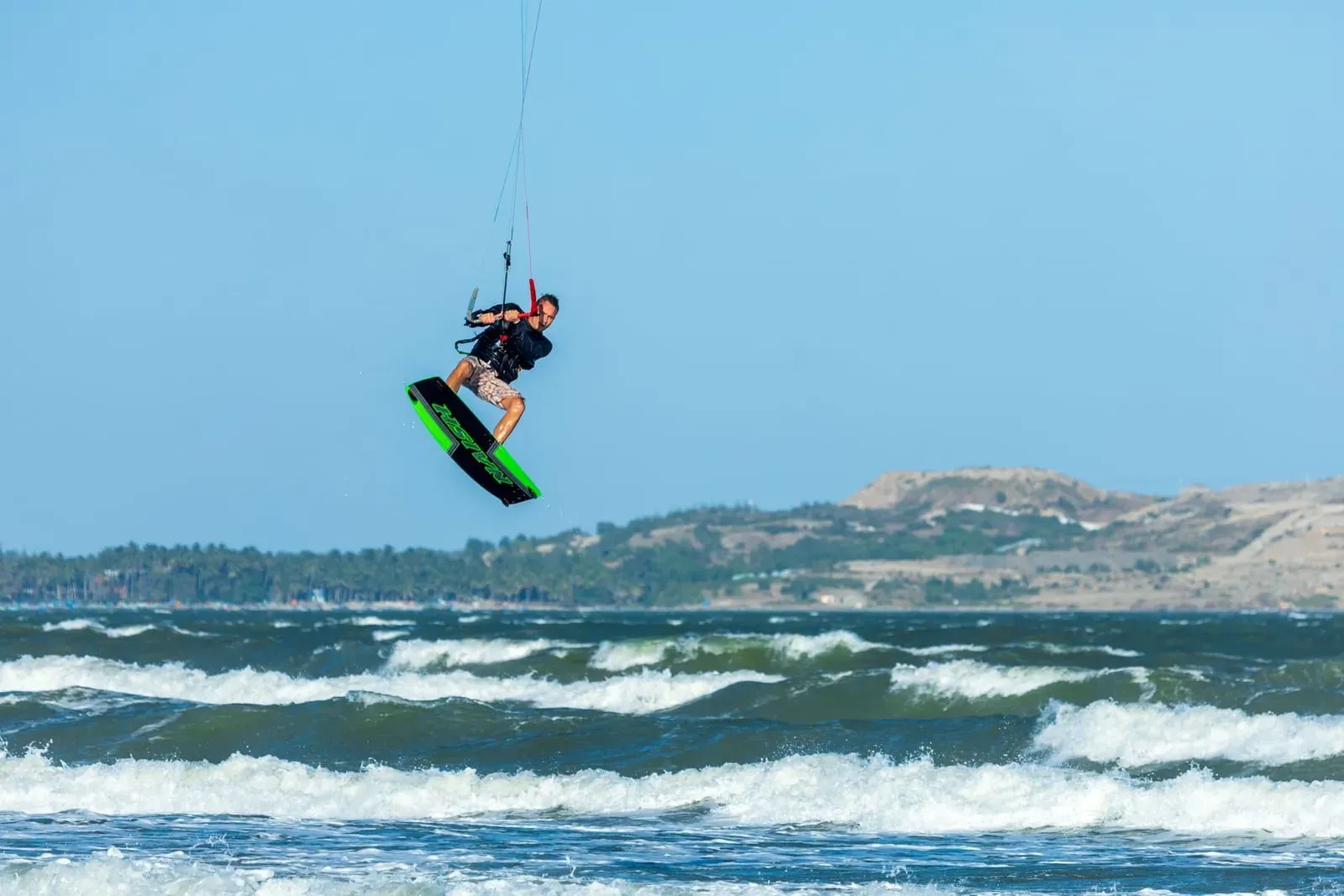
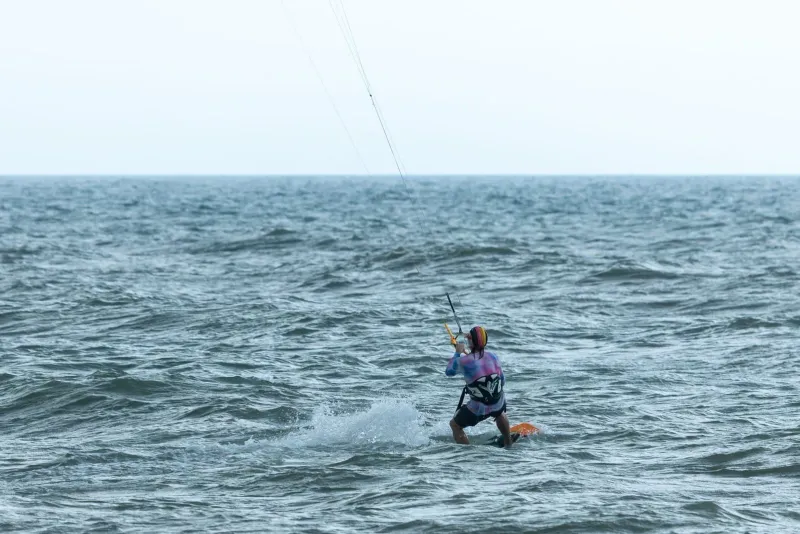
Kitesurfing on Koh Samui means chasing two monsoons: a stronger northeast wind from roughly November to March and a lighter, more thermal southwest wind from May to September. Samui itself only half-delivers on both — the island’s real kite culture is a small crew who split their sessions between two seasonal home beaches, run day trips to Koh Phangan, and make the overnight haul to Hua Hin and Pranburi on the mainland when they want a guaranteed flat-water lagoon instead of a maybe.
Key takeaways
- Two wind windows: NE monsoon (~Nov–Mar, wind from the north/northeast, typically 12–20 knots) and SW monsoon (~May–Sep, wind from the south/southwest, typically 8–15 knots and more afternoon-thermal).
- Samui’s own kite crew works two seasonal beaches — Hua Thanon (east coast, Dec–Apr) and Nathon (west coast, May–Nov) — switching sides as the wind direction flips.
- April and October–November are the dead zones: transitional wind, squall risk, best skipped.
- Hua Hin and Pranburi on the mainland, plus a flat lagoon on Koh Phangan, are where locals go for consistency Samui can’t promise.
- Certification runs on the IKO or VDWS ladder; a beginner riding unsupervised on Samui’s shallow, reef-edged south coast is the most common way people get hurt here.
What This Actually Is
Kitesurfing here is not a beach concession you rent for twenty minutes like a jet ski — it is a wind-dependent sport that only works a handful of days a month on Samui itself, so the people who do it seriously build their calendar around the forecast, not the other way round. A session means checking a wind model the night before, picking whichever coast is onshore-to-cross-shore that day, and driving a scooter with a kite bag strapped to the back to whichever beach is working. It rewards patience more than any other watersport on the island: a flat, windless Chaweng morning is the norm, not the exception, for most of the year.
Who Is In It
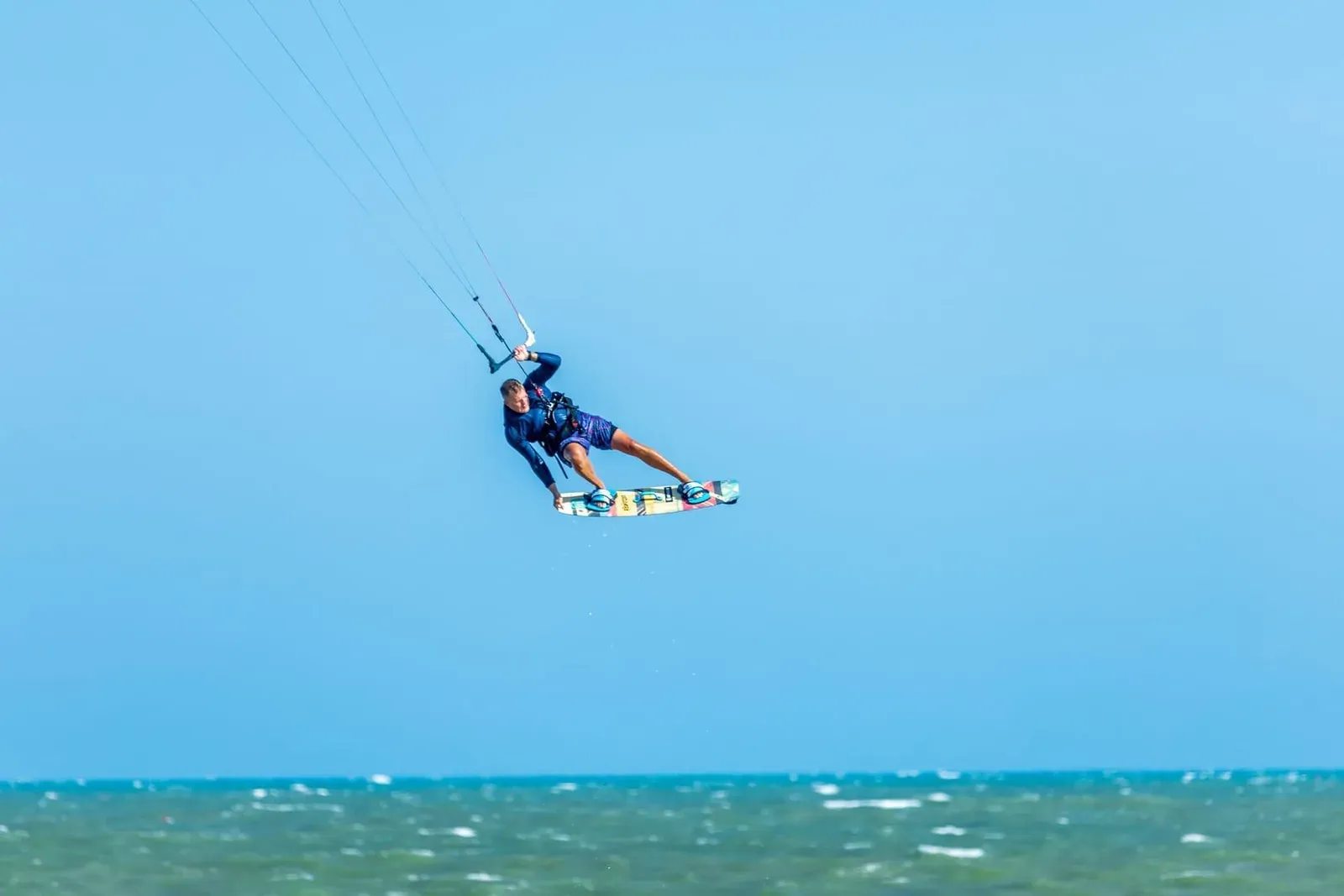
The resident crew is small: a rotating mix of long-term expats, a few Thai instructors working the seasonal schools, and visiting kiters who time their trip to a wind forecast rather than a beach holiday. There is no clubhouse and no membership — coordination happens informally, over group chats built around a shared wind app, where someone posts “Hua Thanon looks good at 2pm” and whoever is free shows up. Beginners usually meet the group through a lesson, since the schools double as the social entry point; nobody is kiting the reef-lined south coast alone on day one.
How It Works
A typical session starts with everyone checking the same forecast model, agreeing on a beach by early afternoon, and driving separately since gear does not fit more than one kite per scooter. Sessions cluster around the wind’s daily peak — late morning to early afternoon on the thermal-driven southwest days, any time the gradient wind is blowing during the steadier northeast months. Riders self-organize on the water: launch and land assists are traded between whoever is on the beach, which is also why solo beginners are discouraged — there is no lifeguard for kiters here, only each other.
What It Costs
Expect roughly 2,500–3,500 THB (~71–100 USD) for a 2–3 hour introductory lesson with an instructor, and a full multi-day IKO beginner course (enough to reach independent riding) typically runs in the 12,000–18,000 THB (~343–514 USD) range at Thai kite schools generally — confirm the current package with whichever school is running that season, since Samui’s operators shift location with the wind. A used complete kite-and-board setup suited to light Samui wind starts around 25,000–40,000 THB (~714–1,143 USD) secondhand; renting gear by the day, where a school has spare kit, runs a few hundred baht more than the lesson rate. Budget this as a mid-cost activity once you’re past the first lesson — it’s cheaper than diving certification, pricier than a SUP rental.
How To Join
Show up at whichever beach the crew is using that week with a booked lesson — schools are the on-ramp, not an afterthought. Kiteboarding Asia (KBA) operates seasonal kite locations directly on Koh Samui (Hua Thanon, December–April, and Nathon, May–November), plus stations on Koh Phangan and at Hua Hin on the mainland, and is affiliated with the International Kiteboarding Organization: kiteboardingasia.com — checked September 2026. Beyond a first lesson, the fastest way in is simply asking your instructor which group chat to join; the crew is small enough that everyone already knows everyone.
The Wind Season, Month by Month
The Gulf of Thailand runs on two monsoons, and Samui sits close enough to the middle of the gulf that neither one hits at full mainland strength — expect these as planning ranges, not a forecast, compiled from kite-school season pages and historical wind-model climatology (Windguru/Windy), checked September 2026.
| Month | Monsoon | Typical wind | Direction | Verdict |
|---|---|---|---|---|
| Jan | NE, peak | 12–20 kn | NE/N | Best window of the year |
| Feb | NE, strong | 10–18 kn | NE/N | Reliable |
| Mar | NE, tailing off | 8–14 kn | NE/E | Patchy, check daily |
| Apr | Transition, hot season | Under 10 kn most days | Variable | Skip — light and unreliable |
| May | SW, building | 8–14 kn | SW/W | Thermal-driven, afternoons |
| Jun | SW, established | 10–15 kn | SW/W | Steady afternoons |
| Jul | SW, peak | 10–16 kn | SW/W | Best of the SW window |
| Aug | SW, established | 10–15 kn | SW/W | Steady afternoons |
| Sep | SW, tailing off | 8–14 kn | SW/S | Squall risk rising |
| Oct | Wet season peak | Under 10 kn, squally | Variable | Skip — storms, not wind |
| Nov | NE, building | 10–16 kn | NE/N | Improving through the month |
| Dec | NE, established | 12–20 kn | NE/N | Reliable, with January |
The two-season split explains why the crew flips coasts rather than sticking to one beach: an onshore wind on the wrong coast is unrideable no matter how many knots it’s blowing, so the beach that works in December is often the one to avoid in July.
Why Samui Itself Is a Compromised Spot
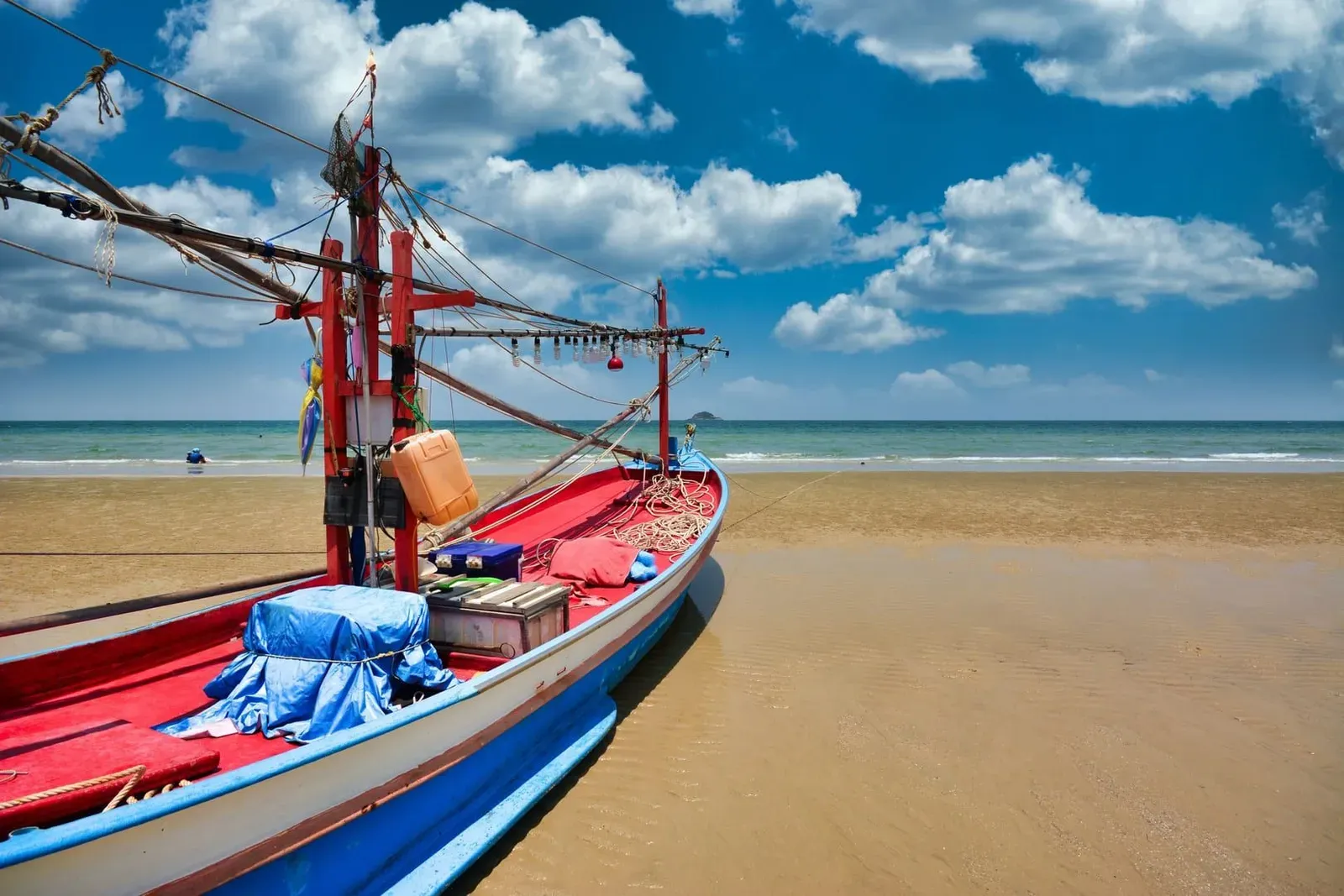
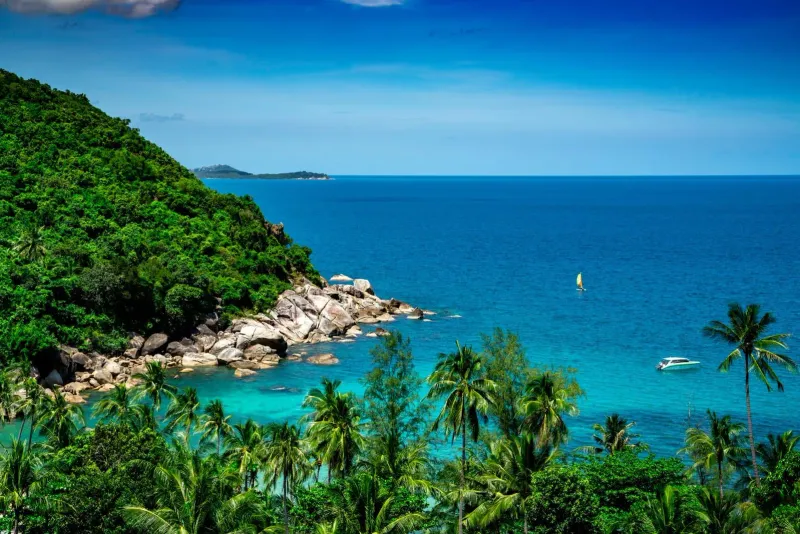
Samui is a compromise because it is a round island, not a coastline built for one dominant wind: whichever monsoon is blowing, only one or two stretches of coast catch it side-on instead of straight onshore, and both of those stretches share the beach with fishing boats, longtail traffic and swimmers. Compare that to a dedicated lagoon like Pranburi’s, walled off from boat traffic and swell by a sandbar, and it’s clear why serious riders treat Samui as a home-base default rather than a destination: fine for maintaining skills between trips, not the place that built the sport’s reputation in Thailand.
Where People Actually Kite
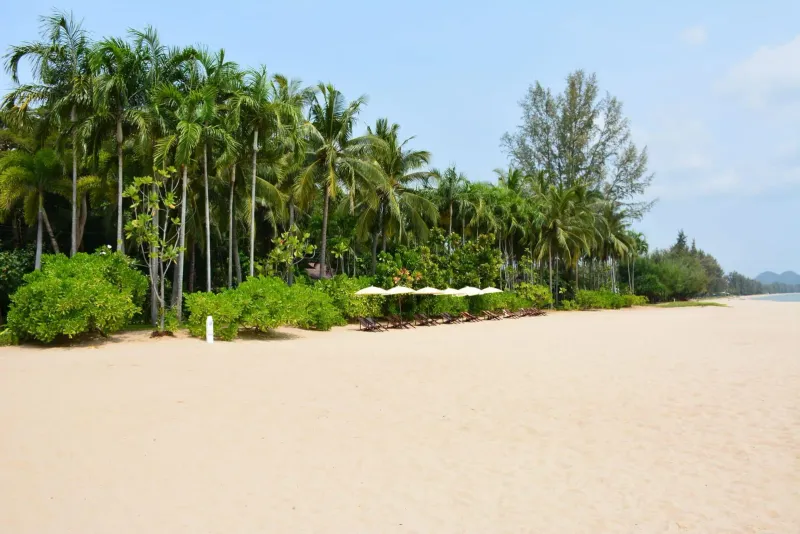
Locals split sessions between Samui’s own seasonal beaches and day or overnight runs to more consistent water elsewhere. On the island, Hua Thanon on the southeast coast is the December–April spot — shallow, sheltered by an offshore reef, and rated by operators as one of the easier beginner setups in the country for that window. Nathon, the ferry-pier town on the west coast, takes over May–November when the wind swings southwest, working directly off the town’s waterfront. The south coast around Na Khai and Laem Set also catches a rideable cross-shore breeze in the same SW window as an alternative when Nathon is crowded with ferry traffic; the shallow flats further along the south and west coast near Thong Krut, Taling Ngam and Lipa Noi see occasional independent sessions from riders with their own transport, but none of them host a standing school — check wind and depth yourself before rigging there.
For anyone who wants more than an occasional good day, the real upgrade is off-island. Koh Phangan is a 30–45 minute ferry away and has its own kite locations with a genuine flat-water bay; day trips are common when Samui’s forecast is dead. Hua Hin and Pranburi, roughly a 1–1.5 hour flight plus transfer or a long overnight bus/van from Samui, hold Thailand’s best-known kite lagoons — shallow, sandbar-protected water with steadier northeast-season wind than the Gulf islands get. Serious Samui-based riders plan a multi-day trip there at least once a season rather than waiting out a flat month at home.
Schools and the Progression Ladder
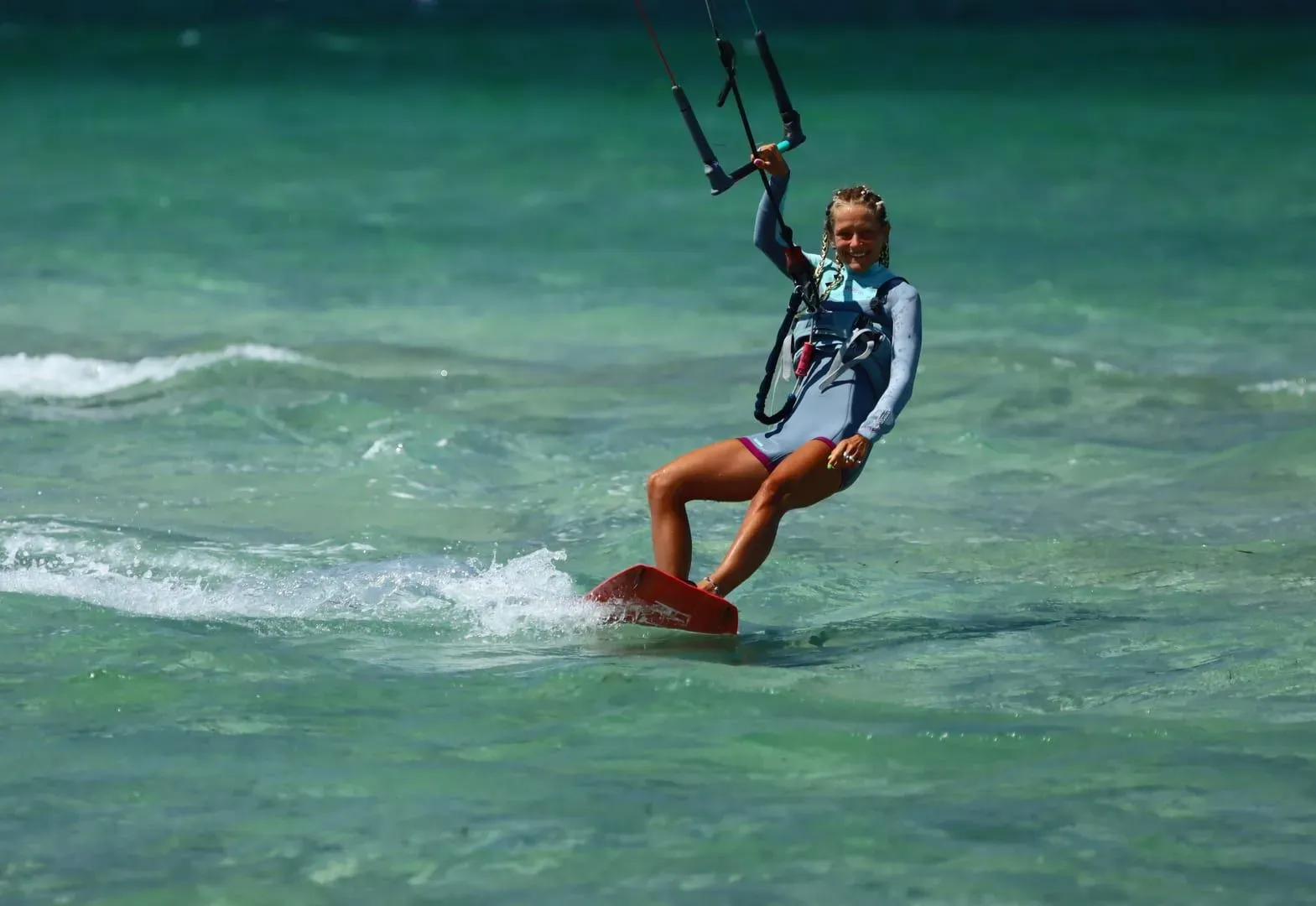
Certification on Samui runs the same two international ladders used worldwide: the International Kiteboarding Organization (IKO) and the German VDWS, both structured around a beginner-to-independent-rider progression rather than a single lesson. IKO’s path runs roughly Level 1 (kite control on land, body dragging), Level 2 (water relaunch, board start), to Level 3 (independent riding, basic upwind), typically split across a 9–12 hour course booked in half-day blocks over several days rather than one sitting. VDWS uses an equivalent-level structure through European schools operating in Thailand. Skipping straight to buying gear without at least reaching independent-rider level is how most beginner injuries here happen — see safety below.
Kit for a Light-Wind Island
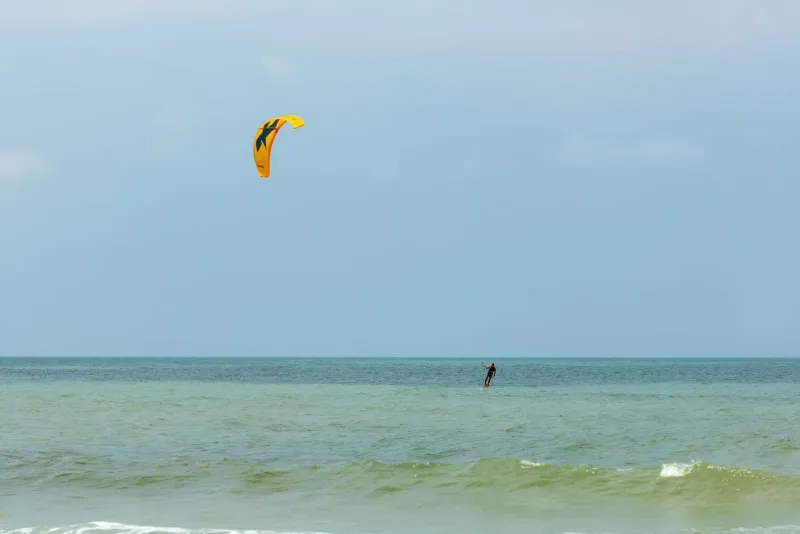
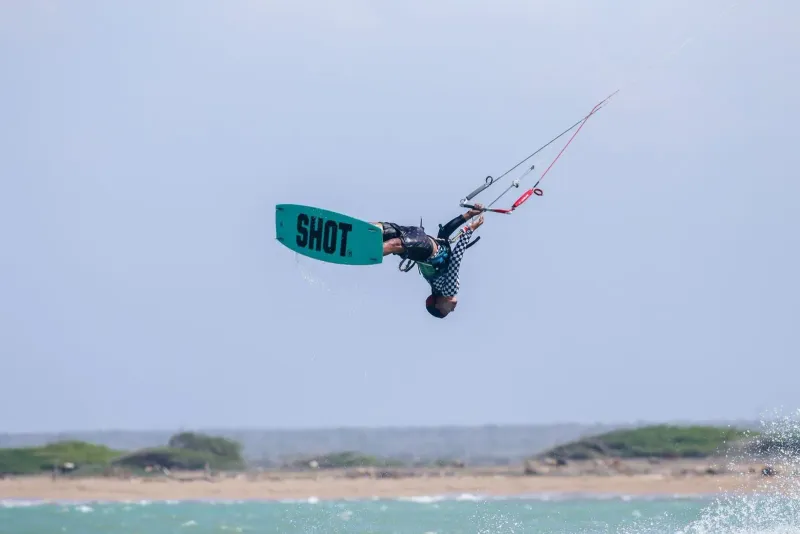
Samui’s wind rarely tops 20 knots even in its best month, so the crew’s gear leans toward bigger kites and boards built for light-wind efficiency rather than the smaller, high-wind kit you’d bring to a stormier coast. A typical light-wind quiver runs a 12–14m kite as the workhorse size, with foil boards increasingly popular among the resident crew specifically because a hydrofoil rides efficiently in the marginal 8–12 knot range that would leave a traditional twin-tip board stalled. Anyone buying rather than renting should budget for at least two kite sizes to cover both monsoon windows, since a kite sized for December’s 18 knots is dead weight in a July 10-knot afternoon.
Safety on a Shallow, Shared Coast
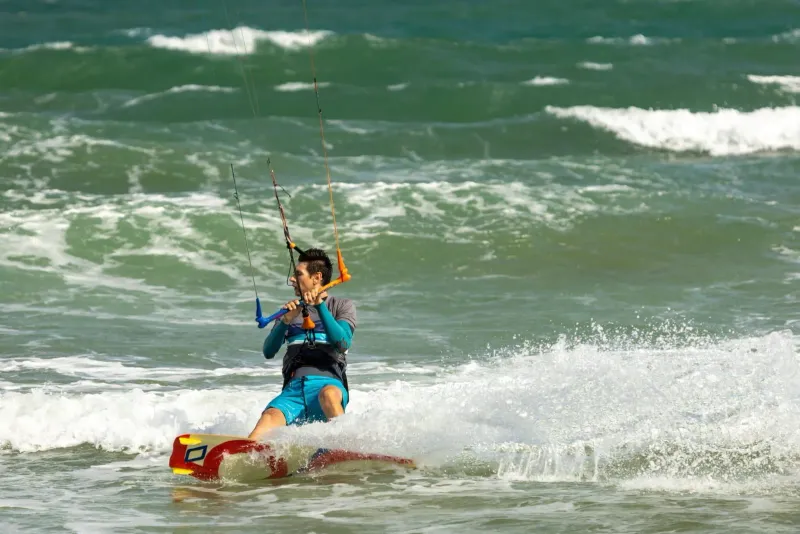
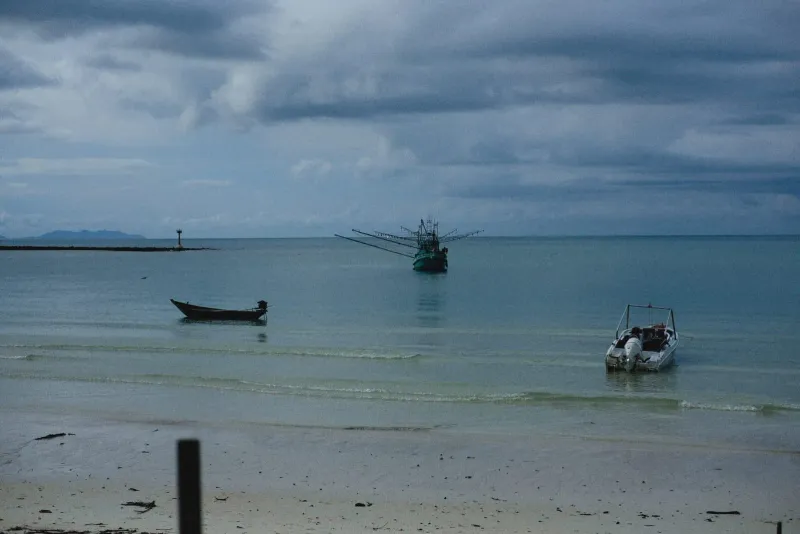
Wind direction relative to the beach is the first safety call every session: an offshore wind can carry an out-of-control rider straight past the reef and out to open water with no way back, while an onshore wind pins a downed kite against the sand — reputable instructors teach reading this before anything else. Samui’s south-coast launch spots sit close to shallow reef flats and sea-urchin beds exposed at low tide, which is why every serious school insists on checking the tide table alongside the wind forecast, not instead of it. The same beaches carry fishing longtail traffic and, at Nathon, ferry movements right off the pier, so a rider’s line of sight to the water has to include boat lanes, not just other kiters. The wet-season shoulder months (April, October–November) bring fast-forming squall lines that can turn a moderate afternoon into an unrideable, then dangerous, one within twenty minutes — the standard advice from operators is to come off the water the moment a dark line builds on the horizon, not to wait and see. IKO- and VDWS-affiliated schools require a supervised progression through the levels above before certifying independent riding, and most standard travel insurance policies exclude kitesurfing/kiteboarding injuries entirely unless a specific adventure-sports or extreme-sports rider has been added — check the policy wording, not the marketing page, before assuming you’re covered. Riding unsupervised as a beginner on this reef-edged coast, without that progression or that cover, is the single most common way people get hurt here.
Learn Here or Somewhere Windier?
Honestly: Samui is a fine place to take a first lesson and a reasonable place to keep your skills current between trips, but it is not where you go to guarantee a week of wind. If the whole point of the trip is to progress fast with consistent conditions, book a multi-day course at Hua Hin or Pranburi instead, where the lagoon setup and northeast-season reliability beat anything Samui’s split, seasonal beaches can promise. If kitesurfing is one part of a broader Samui trip and you can build in flexibility — a few spare afternoons, a willingness to check the wind daily — a lesson with the island’s own crew is a legitimate way to try the sport without leaving your beach holiday behind.
FAQ
Is Koh Samui good for kitesurfing?
Koh Samui works for kitesurfing seasonally rather than reliably: Hua Thanon on the east coast catches the northeast monsoon (roughly December–April) and Nathon on the west coast catches the southwest monsoon (roughly May–November). Wind is lighter than Thailand’s dedicated mainland lagoons, so treat Samui as a home-base spot for maintaining skills, not a guaranteed-wind destination trip.
When is kitesurfing season in Koh Samui?
There are two windows: the northeast monsoon, roughly November to March, with the strongest and steadiest wind (typically 12–20 knots), and the lighter southwest monsoon, roughly May to September, with more afternoon-thermal wind (typically 8–15 knots). April and October–November are transitional months best avoided.
Do I need a certification to kitesurf on Samui?
Yes, in practice — schools teach through the IKO or VDWS levels to reach independent riding, and that progression is what keeps a beginner off the reef and clear of boat traffic. Most travel insurance also excludes kitesurfing injuries unless an adventure-sports rider is added, so an uncertified, uninsured session carries real financial and physical risk.
Where do experienced kiters on Samui go for better wind?
The regular upgrade is Koh Phangan for a day trip, or Hua Hin and Pranburi on the mainland for a multi-day session in a proper flat-water lagoon with steadier northeast-season wind. Samui’s own crew makes this trip at least once a season rather than waiting out a flat month at home.
How much does a kitesurfing lesson cost on Koh Samui?
Expect roughly 2,500–3,500 THB (~71–100 USD) for a 2–3 hour introductory lesson, and 12,000–18,000 THB (~343–514 USD) for a full multi-day beginner course reaching independent-rider level, in line with typical Thai kite-school pricing generally. Confirm the current rate directly with whichever school is operating that season, since Samui’s own schools relocate with the wind.
Turning Up
There’s no fixed schedule to show up to — sessions happen when the wind does, coordinated day-of over the crew’s group chat rather than on a calendar. The reliable way in is to book a lesson with an operating school (Hua Thanon in the December–April window, Nathon from May–November) and let the instructor route you into that chat afterward. If you land on Samui outside both windows — April, or October into early November — don’t force it: use those weeks for the island’s other watersports instead and save the kite bag for a wind month.
Published on
About the author

Mike Brochlowski
Travel photographer & writer
Travel photographer and island explorer. Mike has spent years documenting Southeast Asia's hidden gems, from secluded beaches to jungle waterfalls.
Articles by Mike →More in Island Life
Na Muang Waterfalls — Samui's Purple Cascades and Jungle Pools
Explore Na Muang Waterfalls on Koh Samui — the accessible 18m Purple Waterfall with its swimming pool and the 80m jungle trek to the isla…
Wat Phra Yai — Big Buddha Temple on Koh Samui
Visit Wat Phra Yai (Big Buddha) on Koh Samui: a 12-meter golden Buddha, naga staircase, panoramic views, and market stalls.
Apirom Viewpoint — Koh Samui's Closed Hillside Lookout Above Ban Tai
Apirom Viewpoint: a ~304m hilltop lookout inland of Ban Tai, Koh Samui, its restaurant closed since the pandemic but the hillside track s…