Contents
The Verdict — Beachfront or Hillside?
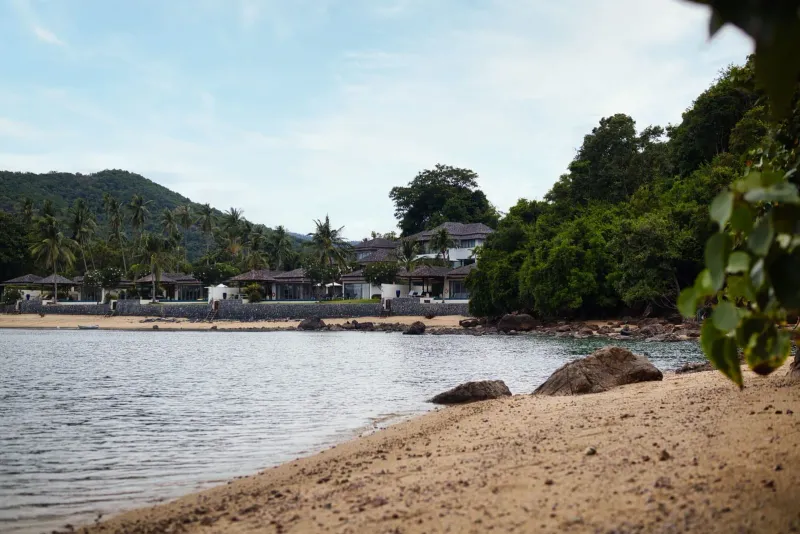
A koh samui beachfront hotel puts you on the sand in under 10 seconds but usually charges 13-41% more than a comparable hillside stay, according to a Thailand-wide hotel-rate study, and trades that price for road noise, biting sandflies at dawn and dusk, and swimming that depends on the tide. A hillside villa buys the postcard view, a private pool, and a lower rate per square metre, at the cost of a scooter or buggy ride every time you want dinner, especially on the island’s steeper access roads. Neither option is objectively better — the right pick depends on how much you value walking barefoot onto sand versus waking up above it.
Key takeaways
- Beachfront rooms run ~13-41% pricier than equivalent hillside rooms in Thai coastal markets, per a peer-reviewed hotel-pricing study.
- Hillside stays trade beach-in-10-seconds convenience for a 2-10 minute buggy, shuttle or scooter ride to sand and dinner.
- Sandflies bite worst at dawn, dusk and after rain on quiet, shaded, seaweed-lined beachfronts — not on wide, wind-exposed sand.
- Not every beach swims at low tide: Big Buddha Beach (Bang Rak) stays swimmable, Bang Po and Laem Nan mostly don’t.
- The steepest hillside access roads are in Taling Ngam and parts of Choeng Mon and Bophut — some properties actively discourage scooter use.
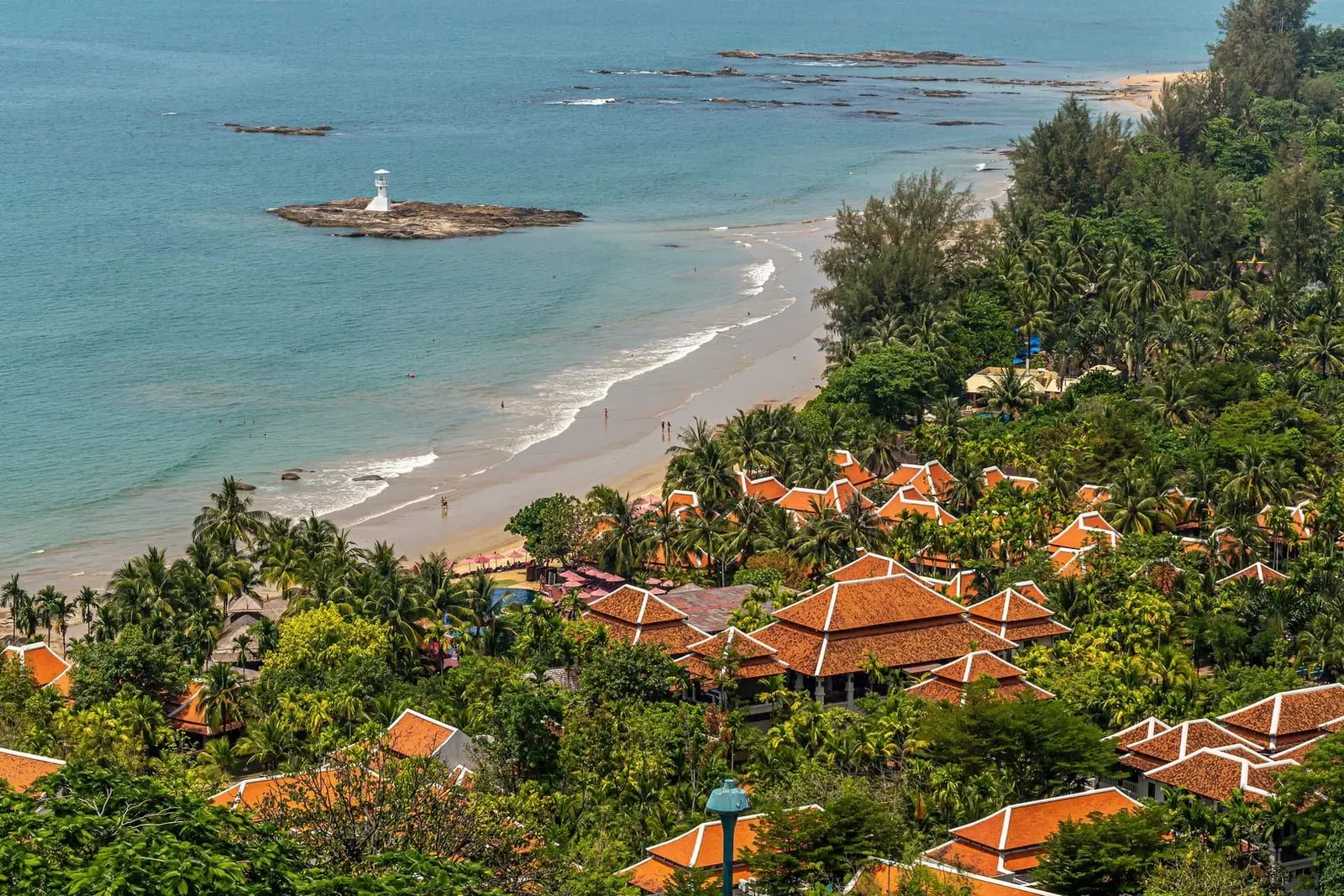
Beachfront vs Hillside Koh Samui — Comparison Table
The table below compares the two accommodation types across the criteria that actually change a trip, not just the marketing photos.
| Criterion | Beachfront | Hillside |
|---|---|---|
| Price vs equivalent room | Baseline (often +13-41% over hillside) | Typically 10-30% cheaper per room, sometimes more per square metre |
| Time to sand | 0-50 m, under 10 seconds | 2-10 min by buggy, shuttle, scooter or a steep footpath |
| View | Sea-level — sand, water, other guests | Elevated — full bay, sunset arc, often no neighboring roofs |
| Noise | Beach bars, longtail boats, beach-road traffic | Quiet, wind and insects instead of engines |
| Sandflies / bugs | Higher risk on shaded, seaweed-lined stretches | Lower — bugs cluster at the waterline, not the hilltop |
| Swimming | Tide-dependent on some beaches; check the specific bay | Irrelevant to the room — you still drive down to swim |
| Pool | Often shared with the resort | Private plunge pool common even at mid-tier villas |
| Getting to dinner | Walk | Scooter, buggy or hotel shuttle every time |
| Best for | First-timers, families with young kids, anyone without a scooter | Couples, photographers, longer stays, anyone renting a car |
The Price Gap — What the View Actually Costs
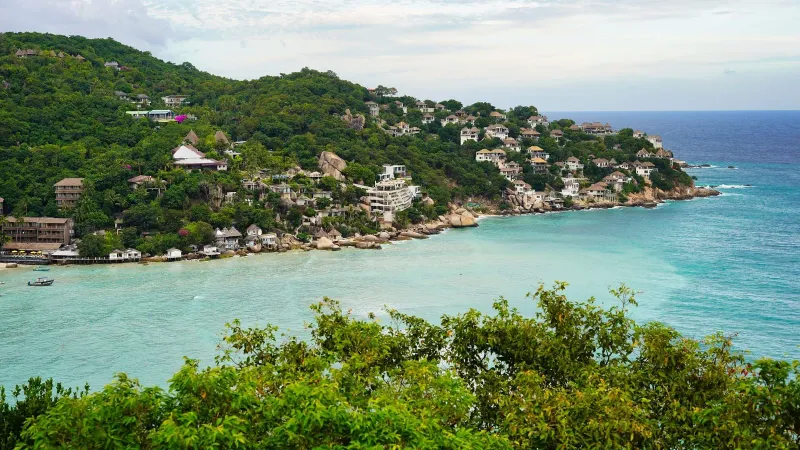
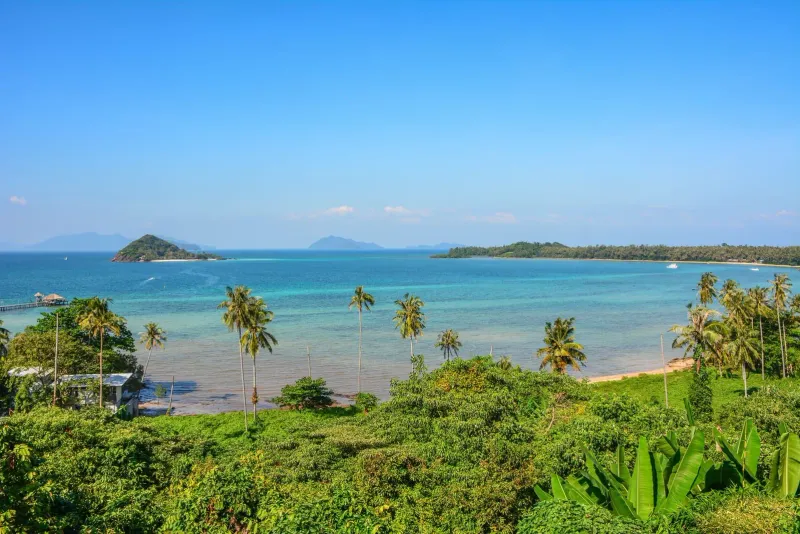
Beachfront rooms cost more than hillside or sea-view rooms in the same class, and the gap is measurable rather than anecdotal. A peer-reviewed hedonic pricing study of 3,319 hotel rooms across Thailand’s coastal sub-districts found that direct beachfront location raised average room rates by 13-41% compared with rooms set back from the sand, with the exact premium shifting by season, brand and beach quality (ScienceDirect, 2022). On Koh Samui specifically, industry pricing patterns land in a similar band: expect hillside sea-view rooms to run roughly 10-30% below a beachfront room in the same property tier, sometimes more once you compare price per square metre, since hillside land is cheaper to build on and villas there tend to be larger for the money.
That gap compounds at the luxury end. A beachfront pool villa in Choeng Mon or Chaweng during December-February peak season can run double a comparable hillside villa a 5-minute buggy ride from the same beach — the extra cost buys proximity, not necessarily a better view, since many hillside rooms look down over the same water.
Beach Access — Ten Seconds vs a Scooter Ride
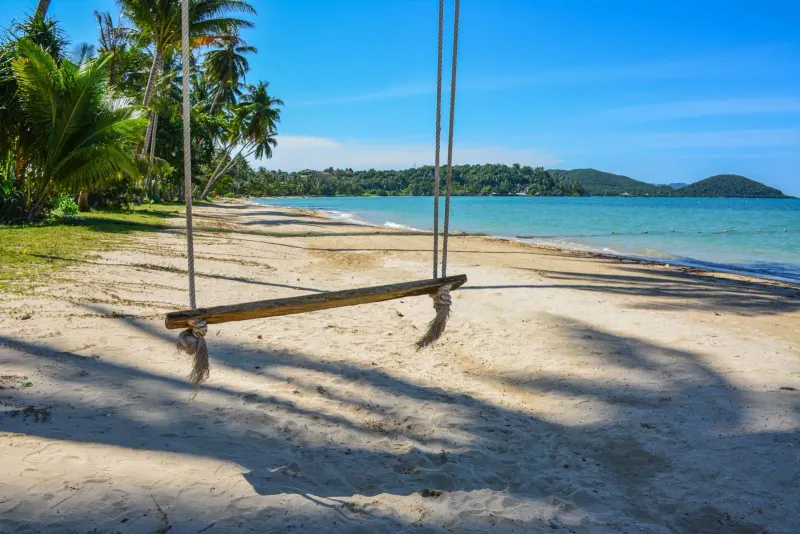
Beachfront rooms win decisively on access: most sit within 0-50 metres of the sand, so the walk from room to water is under 10 seconds and requires no transport at all. Hillside rooms trade that for a resort buggy, shuttle van or your own rented scooter — typically 2-10 minutes depending on how far the property climbs, and longer at the island’s larger hillside resorts, where internal buggy waits of 5-25 minutes are a common guest complaint even when booked in advance. For a family that wants to duck down for a swim three or four times a day, or anyone who doesn’t want to rely on a scooter at all, that friction adds up fast; for a couple planning one or two beach sessions a day around a private pool, it barely registers.
Noise and Privacy
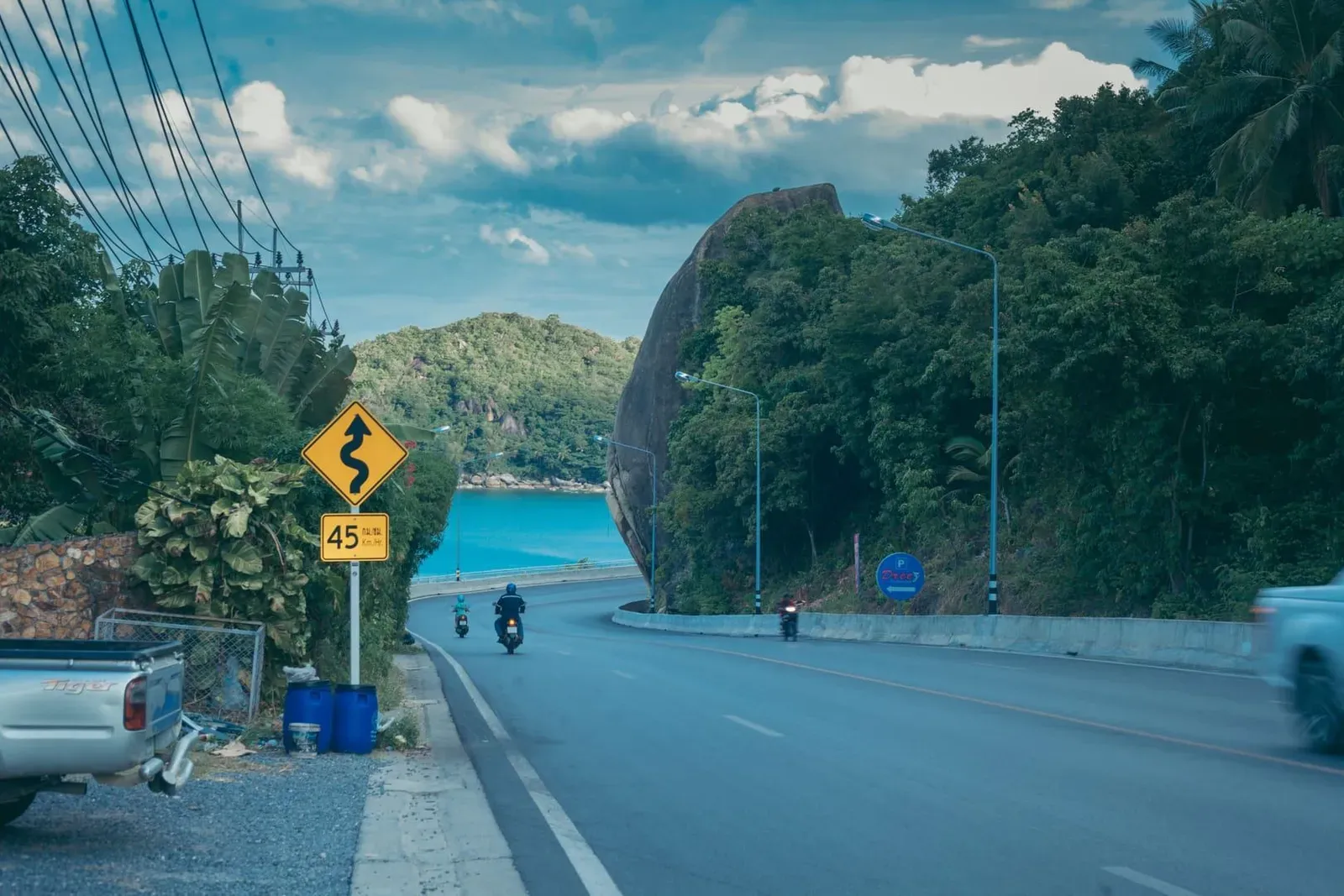
Hillside rooms are quieter, full stop — beachfront rooms sit closest to the beach bars, longtail boat engines, and the coastal road traffic that runs parallel to almost every developed beach on the island. Chaweng and Lamai beachfronts in particular carry bar-strip noise well past midnight in high season, while a hillside room even a few hundred metres inland from the same beach is typically insulated by elevation, distance and vegetation. Privacy follows the same pattern: beachfront walkways are semi-public by convention (locals and other guests use the sand as a through-route), where hillside villas more often sit behind a gate with no passing foot traffic at all.
Sandflies and Bugs
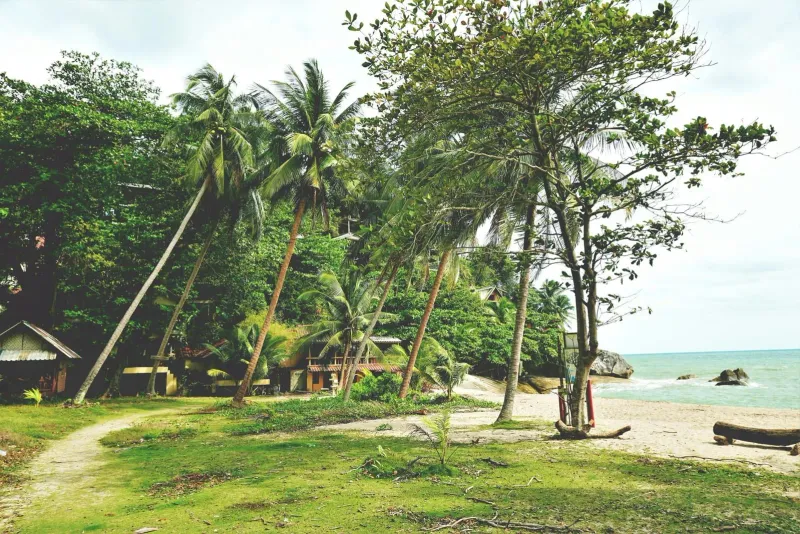
Sandflies (biting midges) are a real beachfront-specific nuisance, and hillside stays mostly avoid them because of where the insects actually live. According to our beach critters guide, Koh Samui’s sandflies bite most at dawn, dusk and in the day or two after rain, and they cluster on quieter, shaded beaches with seaweed lines or overhanging vegetation — not on wide, wind-exposed sand like central Chaweng. A beachfront bungalow tucked under trees on a quiet cove is far more exposed than a hillside room 100+ metres above the waterline, where the biting midges that plague ankles at sunset simply don’t reach. If sandflies have ruined a past beach trip, that alone is a reasonable argument for booking hillside.
The Gradient Problem — Which Areas Are Actually Steep
Not all hillside stays involve the same climb, and the steepness varies sharply by area. Taling Ngam, on the island’s southwest coast, is the extreme case: the Conrad Koh Samui (formerly InterContinental) is built across roughly 7 levels spanning about 100 metres of elevation, and guest reviews consistently advise against renting a scooter there at all, relying on the resort’s buggy shuttle instead. Bophut and parts of Choeng Mon have gentler hillside pockets — mostly low-to-moderate grades, with a few genuinely steep access roads mixed in — while Chaweng’s hillside villas sit on a headland with a mix of both. Beyond individual driveways, Route 4169, the island’s 51 km ring road, has two stretches our scooter guide flags as genuinely hazardous for any rider: the Nathon-Maenam hill climb, and the Chaweng-Lamai section, which turns slick within minutes of rain. Island officials estimate roughly 3,000 road accidents and 50 deaths a year on Koh Samui, with motorcycles involved in most fatal crashes, and helmet fines now reach up to 2,000 THB (~57 USD) per unhelmeted rider (Sep 2026) — numbers worth knowing before committing to a steep hillside stay that assumes daily scooter trips down to dinner. See our getting around Koh Samui guide for the full transport picture, including where a hotel buggy or Grab beats a self-driven scooter entirely.
Tide and Swimming — Which Beaches Actually Work at Low Tide
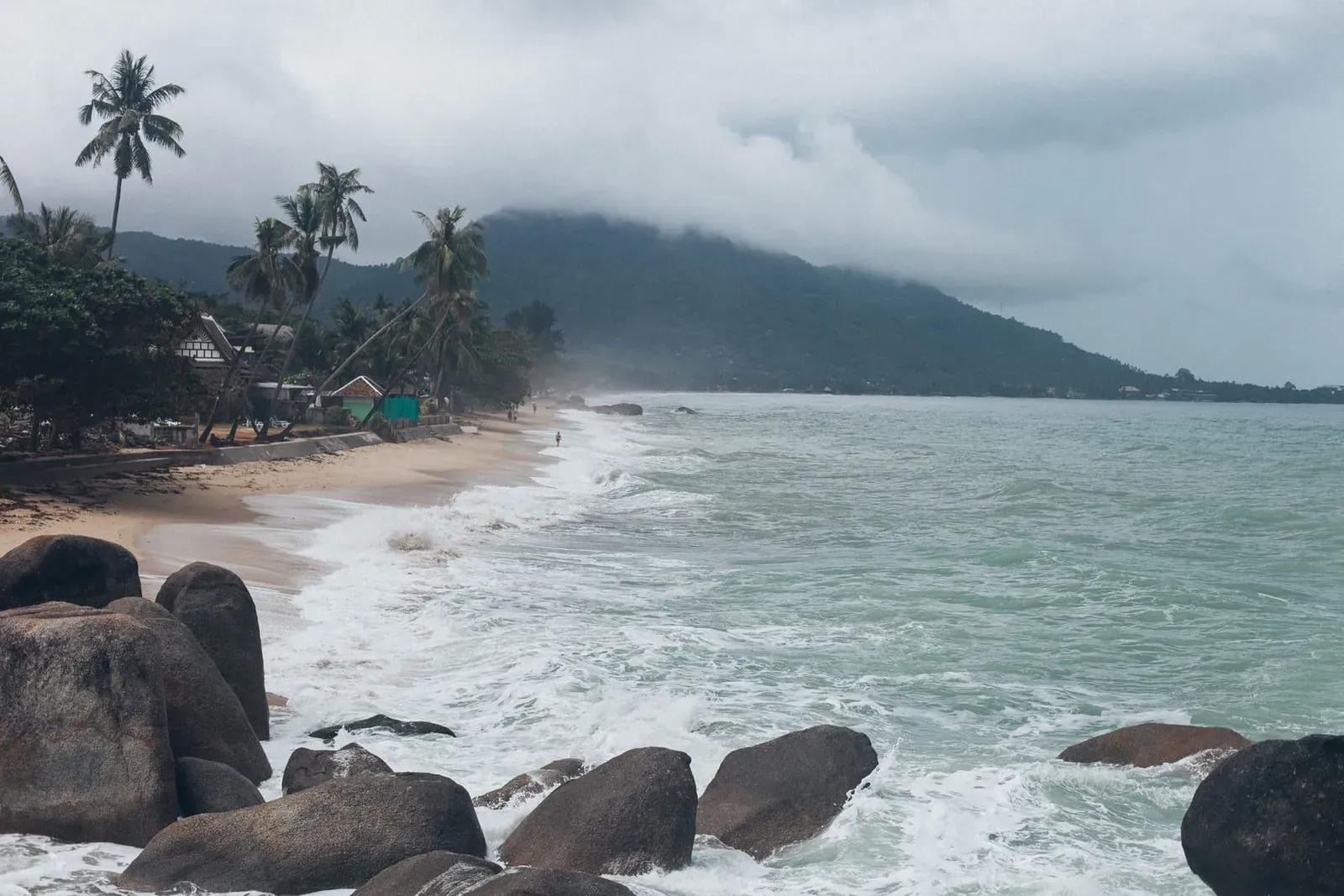
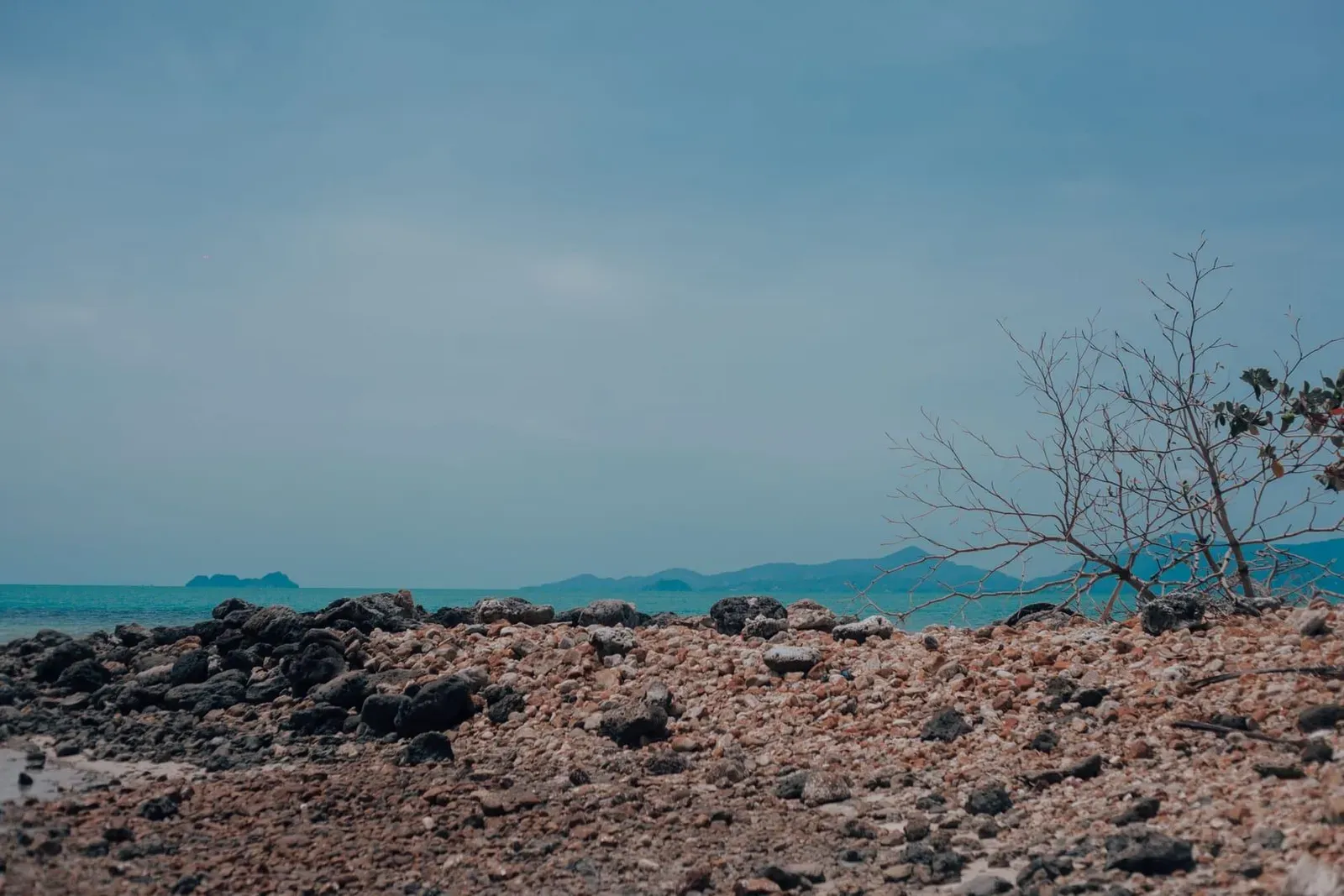
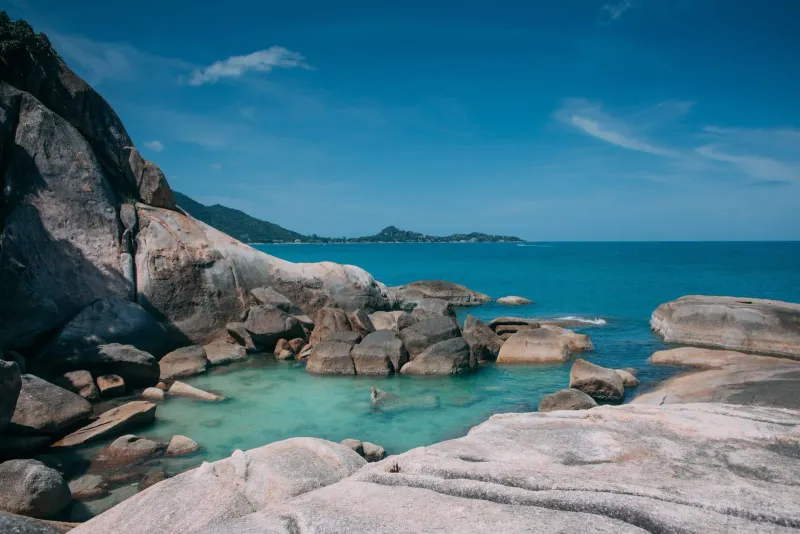
Booking beachfront doesn’t guarantee swimmable water at every hour — several Koh Samui beaches recede sharply at low tide regardless of which side of the road your room sits on. Big Buddha Beach (Bang Rak) stays swimmable through the tide cycle and is one of the more reliable choices. Choeng Mon swims well most of the year but can run very shallow from May to October. Bang Po is close to unswimmable at low tide — good for shell hunting, not for a swim — and Laem Nan’s roughly 500 m low-tide shoal makes it more of a photo stop than a lap-swimming beach, a pattern covered in more depth in our east vs west coast comparison. Before booking a beachfront room specifically for the swimming, check the individual beach rather than assuming “beachfront” means “swimmable all day” — a hillside villa near a tide-dependent beach loses nothing by being uphill, since you’d be walking down to the same water either way.
Best for Every Type of Traveler
| Traveler | Pick | Why |
|---|---|---|
| First-timers, no scooter | Beachfront | No transport needed, walk straight to sand and dinner |
| Families with young kids | Beachfront (tide-checked beach) | Fastest access for multiple short swim sessions a day |
| Couples, honeymoons | Hillside | Private pool, sunset view, quieter nights |
| Photographers | Hillside | Elevation gives the wide bay shot beachfront rooms can’t |
| Budget-conscious, want space | Hillside | More villa per baht once you compare price per square metre |
| Anyone sensitive to sandflies | Hillside | Bugs cluster near shaded, seaweed-lined waterlines, not up the hill |
| Longer stays (1+ week) | Hillside | The daily scooter/buggy trip matters less amortized over more days |
| Uncomfortable on steep roads | Beachfront, or hillside in Bophut/Chaweng over Taling Ngam | Avoids the island’s steepest access climbs |
FAQ
Is beachfront worth it on Koh Samui?
It depends on how you use the beach. Beachfront is worth the 13-41% price premium if you want to swim several times a day without transport, are traveling with young kids, or don’t have a scooter. It’s less worth it if you’re sensitive to road noise or sandflies, or plan to spend most days by a private pool instead — in that case a hillside villa often delivers more space and a better view for less money.
How much more expensive is a koh samui beachfront hotel than a hillside villa?
Beachfront rooms typically cost 13-41% more than equivalent hillside or sea-view rooms, based on a Thailand-wide hotel-pricing study of over 3,000 coastal rooms. On Koh Samui, hillside sea-view rooms commonly run 10-30% cheaper than a beachfront room in the same property tier, and often deliver more villa per baht once you compare price per square metre.
Which Koh Samui hillside areas have the steepest roads?
Taling Ngam has the steepest hillside access on the island — some resorts there span roughly 100 metres of elevation across multiple levels and discourage scooter use entirely, relying on buggy shuttles instead. Parts of Choeng Mon and Chaweng also have steep individual driveways, though the areas overall mix gentle and steep sections. Bophut’s hillside pockets are generally the gentlest of the main hillside areas.
Do sandflies only bite on the beach, not up a hillside?
Sandflies (biting midges) cluster on quieter, shaded beaches with seaweed lines or overhanging vegetation right at the waterline, biting most at dawn, dusk and after rain. Hillside rooms set back and elevated from that waterline are largely outside their range, which is one practical reason hillside stays report fewer bug complaints than beachfront bungalows on shaded coves.
Which Koh Samui beaches are swimmable at low tide?
Big Buddha Beach (Bang Rak) stays swimmable through most of the tide cycle. Choeng Mon swims well most of the year but can run shallow from May to October. Bang Po and Laem Nan are the least reliable — Bang Po is close to unswimmable at low tide, and Laem Nan’s roughly 500 m shoal makes it more of a photo stop. Always check the specific beach rather than assuming any beachfront room guarantees all-day swimming.
Is a scooter necessary if I stay hillside on Koh Samui?
Not always — many hillside resorts run buggy shuttles or shuttle vans to the beach and nearby restaurants, and Grab or a hotel taxi cover the rest. But if you want to explore independently, a scooter (150-450 THB/day, ~4-13 USD) is the common choice; just check your specific property’s driveway grade first, since a handful of hillside resorts, mainly in Taling Ngam, actively discourage scooter use on their own access road.
Final Recommendation
Choose beachfront if you’re a first-timer without a scooter, traveling with young children, or simply want to walk onto the sand without thinking about it — accept the 13-41% price premium, the beach-road noise, and the sandfly risk on shaded coves as the cost of that convenience. Choose hillside if you’re a couple, a photographer, or staying a week or longer, and don’t mind a 2-10 minute buggy or scooter ride to trade for a quieter room, a private pool, and a view no beachfront room can match — just confirm the property’s road grade first, especially in Taling Ngam. Either way, pair this decision with our where to stay in Koh Samui hub to pick the right area first, since beachfront and hillside options exist side by side in almost every one of the island’s nine visitor areas.
Published on
About the author

Mike Brochlowski
Travel photographer & writer
Travel photographer and island explorer. Mike has spent years documenting Southeast Asia's hidden gems, from secluded beaches to jungle waterfalls.
Articles by Mike →More in Travel Guides
Also in Where to Stay in Koh Samui
Best Mid-Range Hotels in Koh Samui — €50–150 a Night (2026)
12 verified mid-range Koh Samui hotels, €50–150 (~1,800–5,500 THB) a night in 2026, by area — beach access, pools, honest price bands and…
Also in Where to Stay in Koh Samui
Bophut & Fisherman's Village — Guide to Samui's Prettiest Village
Bophut and Fisherman's Village on Koh Samui's north coast: Friday Walking Street, Coco Tam's, boutique hotels, and the best beach and foo…
Also in Where to Stay in Koh Samui
Bophut vs Maenam — Which North Coast Base Wins? (2026)
Bophut vs Maenam compared: beaches, prices, nightlife, long-term rentals and getting around Koh Samui's north coast, with a clear verdict…